Buddhist Approach to Uncertainty: Working with Doubt and Not-Knowing
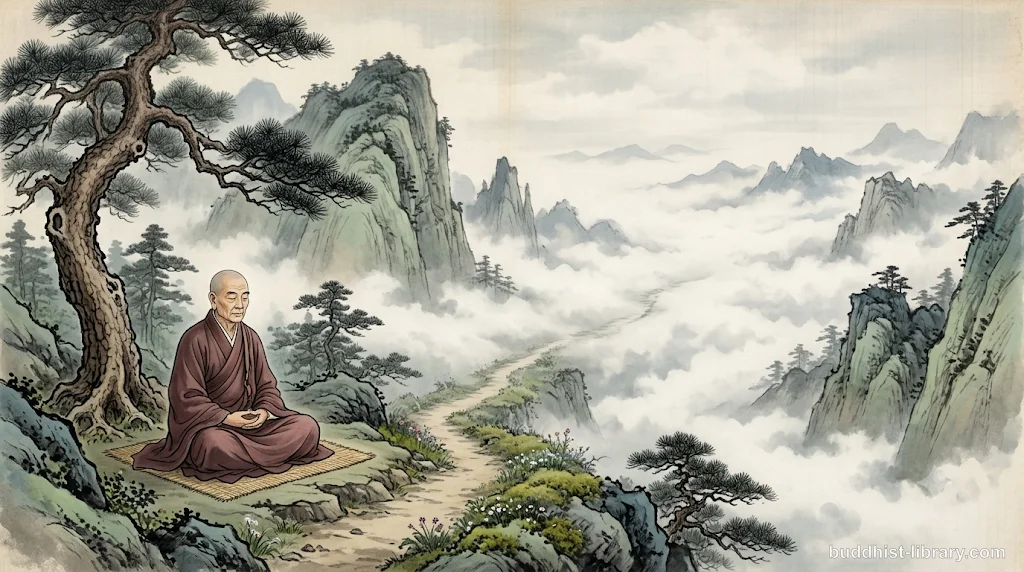
Uncertainty triggers deep anxiety. That’s normal. But the Buddha pointed to something surprising: it’s our demand for certainty — not the uncertainty itself — that creates suffering. Buddhism offers practical methods to work with doubt and the discomfort of not-knowing, showing how these states can become doorways to wisdom rather than dead ends.
Why Does Uncertainty Feel So Uncomfortable?
The human mind craves stability and predictability. Face uncertainty about a relationship, a career move, your health, or even whether you’re doing this meditation thing right — and watch what happens. A primal anxiety kicks in. This isn’t weakness. It’s biology.
Buddhism offers a radical reframe: the problem isn’t uncertainty. It’s how we relate to it. We suffer when we insist that reality be knowable, controllable, and permanent — when it demonstrably isn’t any of those things. Reality is fundamentally impermanent (anicca), constantly in flux. So demanding certainty is like demanding that water stop being wet. The demand itself creates dukkha.
The Buddha addresses this directly in the Sabbasava Sutta (MN 2), teaching that some mental taints are removed through wise attention, some through restraint, and some through understanding. Uncertainty requires understanding — recognizing that our compulsive need for answers is itself a form of craving (taṇhā).
What Is Vicikicchā (Doubt as a Hindrance)?
Buddhist psychology distinguishes between healthy and unhealthy doubt. Healthy skepticism — the kind encouraged in the Kālāma Sutta (AN 3.65) — drives inquiry and investigation. The Buddha explicitly tells us not to accept teachings blindly, but to test them through experience.
Unhealthy doubt, called vicikicchā, is one of the Five Hindrances. This is paralyzing doubt that creates indecision and prevents practice. It manifests as:
- Endless questioning without investigation
- Inability to commit to a path or practice
- Rumination that goes in circles
- Distrust in one’s ability to understand or progress
The key difference: healthy doubt leads to exploration and clarity; vicikicchā leads to stagnation and confusion.
How Can We Work Skillfully with Uncertainty?
1. Recognize the Pattern of Craving for Certainty
Notice when uncertainty arises and observe your reaction. Do you immediately reach for your phone to research? Do you mentally rehearse scenarios? Do you seek reassurance from others? These aren’t wrong, but they reveal how we habitually respond to the discomfort of not-knowing.
The Buddha taught that craving (taṇhā) takes three forms: craving for sensory pleasure, craving for existence, and craving for non-existence. The demand for certainty often masks a craving for existence — we want our plans, our identity, our understanding to be solid and enduring.
2. Practice Mindfulness of Mental States
When uncertainty triggers anxiety, bring mindful attention to the experience itself. What does uncertainty feel like in the body? Is there tightness in the chest? Restlessness in the limbs? A racing mind?
Notice the thoughts that arise: “I need to know,” “What if…,” “I can’t handle this.” These are just mental formations (saṅkhāra), not objective truths. By observing them without identifying with them, we create space between the experience of uncertainty and our reactive response.
3. Distinguish Between What Can Be Known and What Cannot
The Vitakkasanthāna Sutta (MN 20) offers five methods for working with unwholesome thoughts, one of which is examining the danger in the thought. Apply this to uncertainty:
- Can this be known right now? If yes, investigate skillfully. If no, recognize that demanding an answer creates unnecessary suffering.
- Will knowing this serve liberation? The Buddha famously refused to answer metaphysical questions about the origin of the universe, saying they don’t lead to the end of suffering. Some uncertainties are simply not worth pursuing.
- Is this doubt driving investigation or paralysis? If you’re genuinely exploring, continue. If you’re ruminating without progress, shift your attention.
4. Develop Equanimity with Impermanence
Uncertainty is a direct encounter with impermanence. We don’t know what will happen tomorrow because reality is constantly changing. By practicing acceptance of this fundamental truth, we reduce the suffering that comes from resisting it.
This doesn’t mean becoming passive or fatalistic. It means recognizing that while we can act skillfully in the present moment, we cannot control outcomes. The Serenity Prayer captures this wisdom: change what you can, accept what you can’t, and cultivate the wisdom to know the difference.
5. Cultivate Trust in the Process
The Buddha encouraged faith (saddhā) not as blind belief, but as confidence based on experience. When we practice the Dhamma and see results — even small ones — we develop trust that the path works, even when we can’t see the full journey ahead.
This is different from needing certainty about outcomes. It’s trusting that if we practice mindfulness, ethical conduct, and concentration, beneficial results will follow, even if we can’t predict exactly how or when.
What Changes When We Stop Fighting Uncertainty?
The practical benefits are immediate and tangible:
Less anxiety. You stop adding a second layer of suffering to what’s already difficult. The situation may still be uncertain, but you’re no longer torturing yourself about the uncertainty itself.
Greater presence. When you’re not constantly trying to predict or control the future, you can actually be where you are. The present moment stops being a waiting room.
Deeper wisdom. Accepting not-knowing opens you to genuine learning. You stop forcing new information into old frameworks and start seeing what’s actually there.
More compassion. Once you recognize your own uncertainty, it’s easier to empathize with others who are also stumbling through an unpredictable world. We’re all in the same boat.
Spiritual maturity. Advanced practitioners discover something counterintuitive: even the deepest insights can’t be grasped as fixed knowledge. Reality must be known directly, moment by moment. Certainty was never the goal.
Key Points: Buddhist Approach to Uncertainty
- Uncertainty itself isn’t the problem — our craving for certainty creates suffering
- Healthy doubt drives investigation; unhealthy doubt (vicikicchā) creates paralysis
- Mindfulness allows us to observe uncertainty without being overwhelmed by it
- Distinguish between what can be known, what cannot, and what doesn’t need to be known
- Accepting impermanence reduces the anxiety that uncertainty triggers
- Trust in the practice develops through experience, not through demanding guarantees about outcomes
- Working with uncertainty cultivates wisdom, presence, and compassion
Frequently Asked Questions
Is doubt always a hindrance in Buddhism?
Not all doubt is a hindrance. Healthy skepticism (as in the Kālāma Sutta) leads to inquiry, while unhealthy doubt (vicikicchā) paralyzes practice. The difference lies in whether doubt drives investigation or creates immobility.
How can I practice with uncertainty without trying to control it?
Observe uncertainty as a changing mental state rather than a problem to solve. Notice the sensations, thoughts, and emotions that arise with not-knowing, and practice staying present without demanding immediate resolution.
What’s the difference between wise not-knowing and ignorance?
Wise not-knowing (accepting the limits of our understanding) is a form of wisdom. Ignorance (avijjā) is the fundamental delusion about the nature of reality. One is honest acknowledgment; the other is misperception that drives suffering.
Can meditation help with anxiety about uncertainty?
Yes. Meditation trains the mind to observe anxious thoughts and sensations without reacting compulsively. By developing concentration and insight, we learn to stay present with discomfort rather than being overwhelmed by it.
How do I know when to investigate and when to let go of a question?
Ask yourself: Does pursuing this question lead toward greater understanding and freedom, or does it feed endless rumination? If investigation brings clarity and reduces suffering, continue. If it creates more confusion and anxiety, redirect your attention to the present moment.
Conclusion
The Buddhist approach to uncertainty isn’t about finding all the answers or eliminating doubt. It’s about transforming our relationship with not-knowing — learning to stay present with the discomfort, recognizing the futility of demanding certainty in an impermanent world, and cultivating the wisdom to act skillfully even when we can’t see the full picture.
By practicing mindfulness of mental states, distinguishing healthy inquiry from paralyzing doubt, and developing trust in the path through direct experience, we can meet life’s inevitable uncertainties with greater ease, wisdom, and compassion.
Read more:
- Buddhist Approach to Anxiety and Worry: Working with Mental Restlessness — Learn complementary practices for working with the anxious mind that often accompanies uncertainty.
- What Is Vicikicchā? The Five Hindrances — Understand doubt as one of the five mental obstacles and how to overcome it in meditation.
- The Kālāma Sutta: The Buddha on Independent Inquiry — Explore the Buddha’s famous teaching on healthy skepticism and testing truth through experience.
📖 Source / license: Sabbasava Sutta (MN 2), Kālāma Sutta (AN 3.65), Vitakkasanthāna Sutta (MN 20)
Frequently asked questions
Is doubt always a hindrance in Buddhism?
Not all doubt is a hindrance. Healthy skepticism (as in the Kālāma Sutta) leads to inquiry, while unhealthy doubt (vicikicchā) paralyzes practice. The difference lies in whether doubt drives investigation or creates immobility.
How can I practice with uncertainty without trying to control it?
Observe uncertainty as a changing mental state rather than a problem to solve. Notice the sensations, thoughts, and emotions that arise with not-knowing, and practice staying present without demanding immediate resolution.
What's the difference between wise not-knowing and ignorance?
Wise not-knowing (accepting the limits of our understanding) is a form of wisdom. Ignorance (avijjā) is the fundamental delusion about the nature of reality. One is honest acknowledgment; the other is misperception that drives suffering.
Can meditation help with anxiety about uncertainty?
Yes. Meditation trains the mind to observe anxious thoughts and sensations without reacting compulsively. By developing concentration and insight, we learn to stay present with discomfort rather than being overwhelmed by it.