Asubha Meditation: Contemplation of the Body in Buddhist Practice
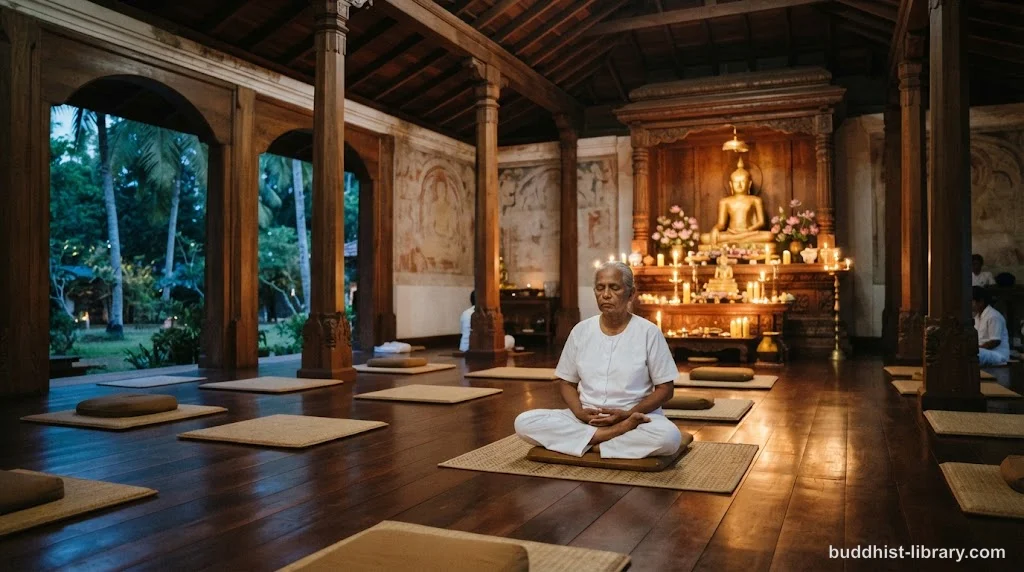
Asubha meditation (asubha-bhāvanā) is a traditional Buddhist contemplation that examines the unattractive, impermanent aspects of the body to weaken sensual desire and attachment. Rooted in the Satipaṭṭhāna Sutta, this practice helps meditators see the body realistically — neither idealizing it nor developing aversion — as a way to reduce craving and clinging.
For many practitioners, the body is a primary object of attachment and desire. We pour enormous energy into maintaining, beautifying, protecting it.
Asubha meditation offers a corrective lens. It invites us to look at the body’s less glamorous realities — its composition, its inevitable decay, its lack of inherent beauty. Not to cultivate disgust, but to develop dispassion and freedom.
What Is Asubha Meditation?
Asubha (Pali: asubha, “unattractive” or “not beautiful”) meditation is a contemplative practice that focuses on aspects of the body that counteract idealization and lust. The practice appears in the Satipaṭṭhāna Sutta (MN 10) as part of kāyānupassanā (contemplation of the body), one of the Four Foundations of Mindfulness.
The Buddha taught asubha meditation primarily to monks and nuns who struggled with sensual desire, but the practice has broader applications: it cultivates realism, reduces vanity, and deepens insight into impermanence (anicca) and non-self (anattā).
There are several traditional methods within asubha meditation:
- Anatomical Parts Meditation: Contemplating the body’s 32 parts (hair, nails, teeth, skin, flesh, organs, etc.) as unattractive and subject to decay.
- Cemetery Contemplations: Visualizing or observing stages of a corpse’s decomposition (traditionally practiced by monks visiting charnel grounds).
- Elements Analysis: Reflecting on the body as composed of the four elements (earth, water, fire, air) with no inherent beauty.
The most accessible form for modern practitioners is the anatomical parts meditation, which can be done safely without visiting cemeteries.
How Does Asubha Meditation Work?
Asubha meditation counteracts attachment through contemplative investigation. Simple. Instead of romanticizing the body or taking its appearance for granted, the meditator systematically examines it with clear-eyed awareness.
The Mechanism
- Deconstruction: The meditator mentally breaks down the body into its constituent parts — skin, bones, organs, fluids — and contemplates each part’s nature.
- Realism: By seeing the body as it actually is (a collection of perishable, unattractive elements), the mind loosens its grip on idealized fantasies.
- Dispassion: With repeated practice, the intense pull of sensual desire weakens. The body is seen as just a body — functional but not sacred, useful but not ultimately satisfying.
What Asubha Meditation Is NOT
Not self-hatred. Asubha doesn’t teach that the body is evil or disgusting. It teaches that the body is not as attractive as craving makes it seem.
Not aversion. The goal is dispassion (virāga), not hatred (dosa). Aversion is a hindrance. Dispassion is liberating.
Not a rejection of care. The Buddha encouraged proper care for the body. Asubha meditation simply prevents over-investment and attachment.
Why Did the Buddha Teach Asubha Meditation?
The Buddha taught asubha meditation as a direct antidote to kāma-rāga (sensual lust), one of the strongest fetters binding beings to suffering. In the gradual training, monks and nuns who had renounced household life still faced powerful sensual urges. Asubha meditation offered a skillful tool to weaken those urges without suppression.
In the Visuddhimagga (The Path of Purification), the great commentator Buddhaghosa explains that asubha meditation is particularly suited for those of a “lustful temperament” (rāga-carita). For such individuals, contemplating the body’s unattractiveness creates balance and prepares the mind for deeper concentration and insight.
Benefits of Asubha Meditation
When practiced correctly and with proper guidance, asubha meditation delivers real results.
It weakens obsessive attraction to physical appearance. Cultivates a grounded, non-romantic view of the body. Helps practitioners let go of clinging to sensory pleasures — the pull of lust, vanity, possessiveness.
Through direct observation, it reveals impermanence and non-self. And by reducing distracting desires, it steadies the mind for deeper samatha and vipassanā practice.
How to Practice Asubha Meditation: The 32 Parts Method
The most accessible asubha practice is the 32 Parts of the Body meditation. This method comes directly from the Satipaṭṭhāna Sutta and involves mentally reciting and contemplating the body’s anatomical components.
The Traditional 32 Parts
The Buddha lists 32 parts in two groups:
First 20 (earth element dominant):
- Hair of the head (kesā)
- Hair of the body (lomā)
- Nails (nakhā)
- Teeth (dantā)
- Skin (taco)
- Flesh (maṃsaṃ)
- Sinews (nahāru)
- Bones (aṭṭhi)
- Bone marrow (aṭṭhimiñjaṃ)
- Kidneys (vakkaṃ)
- Heart (hadayaṃ)
- Liver (yakanaṃ)
- Pleura (kilomakaṃ)
- Spleen (pihakaṃ)
- Lungs (papphāsaṃ)
- Intestines (antaṃ)
- Mesentery (antaguṇaṃ)
- Contents of the stomach (udariyaṃ)
- Feces (karīsaṃ)
- Brain (matthaluṅgaṃ)
Last 12 (water, fire, air elements): 21. Bile (pittaṃ) 22. Phlegm (semhaṃ) 23. Pus (pubbo) 24. Blood (lohitaṃ) 25. Sweat (sedo) 26. Fat (medo) 27. Tears (assu) 28. Grease (vasā) 29. Saliva (kheḷo) 30. Mucus (siṅghāṇikā) 31. Synovial fluid (lasikā) 32. Urine (muttaṃ)
Step-by-Step Practice
- Find a quiet place: Sit in a comfortable meditation posture.
- Establish mindfulness: Begin with a few minutes of mindfulness of breathing to settle the mind.
- Recite the parts: Mentally recite the 32 parts in order, slowly and deliberately. Visualize each part as clearly as you can.
- Contemplate impermanence: Reflect that each part is subject to decay, aging, and dissolution.
- Contemplate unattractiveness: Notice that when seen clearly, these parts are not inherently beautiful or desirable.
- Return to mindfulness: After completing the recitation, return to the breath or sit in silent awareness.
Duration: Start with 10–15 minutes. As you become familiar, extend to 20–30 minutes.
Frequency: Daily practice is recommended, especially during periods of strong sensual desire.
Important Precautions
- Practice with guidance: Asubha meditation is powerful and can stir difficult emotions. Work with a qualified teacher.
- Balance with mettā: Always balance asubha practice with loving-kindness meditation (mettā) to prevent aversion or self-loathing.
- Avoid if vulnerable: Those with body dysmorphia, eating disorders, or trauma should consult a teacher before attempting asubha meditation.
- Not for beginners: This practice is traditionally taught after foundational mindfulness is established.
Asubha Meditation in the Pali Canon
The Satipaṭṭhāna Sutta (MN 10) presents the 32-part body contemplation as part of the first foundation of mindfulness. The Buddha instructs:
“One reviews this same body… by way of elements: ‘In this body there are the earth element, the water element, the fire element, and the air element.’”
The Kāyagatāsati Sutta (MN 119) further elaborates on body contemplation, including asubha meditation, as a practice leading to the cessation of suffering.
In the Visuddhimagga, Buddhaghosa devotes an entire chapter to asubha meditation, detailing methods, benefits, and potential pitfalls. He emphasizes that the practice should lead to paṭikkūla-saññā (perception of repulsiveness) balanced by wisdom, not mere disgust.
Common Misconceptions About Asubha Meditation
”Asubha meditation hates the body”
Not true.
Asubha meditation isn’t about hating the body or cultivating self-loathing. It’s about seeing the body realistically — as it is, not as craving makes it appear. The Buddha never taught hatred of the body. He taught non-attachment to it. There’s a difference.
”It’s only for monks”
Partially true.
Historically, yes — asubha meditation was emphasized for monastics who had renounced sensual pleasures. But laypeople struggling with excessive attachment, vanity, or lust can also benefit from modified forms of the practice, under proper guidance.
”It causes depression”
Depends on how it’s practiced.
When practiced correctly — with balance, wisdom, and guidance — asubha meditation leads to freedom and dispassion. When practiced excessively or without proper foundation, it can lead to aversion or depression.
This is why guidance and balance with mettā are essential.
How Does Asubha Meditation Relate to Other Practices?
Asubha meditation is one of several body contemplations (kāyānupassanā) taught in Buddhism. It complements:
- Mindfulness of Breathing (Ānāpānasati): Develops concentration and calm.
- Four Elements Meditation: Analyzes the body as earth, water, fire, and air.
- Contemplation of Impermanence: Observes the body’s constant change and decay.
- Mettā Practice: Balances asubha by cultivating kindness toward oneself and others.
Together, these practices form a comprehensive approach to understanding and liberating the mind from attachment to the body.
Practical Tips for Modern Practitioners
- Start gently: Begin with just a few parts (e.g., hair, nails, teeth, skin) before memorizing all 32.
- Use a recording: Some teachers offer guided asubha meditations; these can help with memorization and pacing.
- Balance is key: For every session of asubha, do a session of mettā or compassion (karuṇā) meditation.
- Don’t force it: If the practice feels overwhelming or leads to aversion, pause and consult a teacher.
- Integrate with insight: As you become familiar with the practice, reflect on anicca (impermanence), dukkha (unsatisfactoriness), and anattā (non-self) in relation to the body.
Conclusion
Asubha meditation cuts through the illusions of sensual desire and attachment.
By contemplating the body’s unattractive, impermanent nature, practitioners develop dispassion — not hatred, but clear-eyed realism. Rooted in the Satipaṭṭhāna Sutta and refined over centuries, this ancient method remains a powerful tool for those seeking freedom from craving and deeper insight into the Three Marks of Existence.
But this isn’t a practice to approach casually. When practiced with wisdom, balance, and guidance, asubha meditation can be transformative. When practiced recklessly, it can backfire.
Know the difference.
Read more:
- Kāyagatāsati: Body Contemplation in Buddhist Meditation — explores the broader framework of body awareness practices.
- The Satipaṭṭhāna Sutta: Foundations of Mindfulness Explained — the canonical source for all body contemplation methods.
- What Is Virāga? Understanding Dispassion in Buddhism — the quality asubha meditation cultivates.
📖 Source / license: Satipaṭṭhāna Sutta (MN 10), translated by Bhikkhu Bodhi; The Path of Purification (Visuddhimagga), translated by Bhikkhu Ñāṇamoli
Frequently asked questions
Is asubha meditation safe for everyone?
Asubha meditation is powerful and can bring up difficult emotions. It's best practiced under guidance, especially for those with body image issues, trauma, or depression. Start gently and balance it with mettā (loving-kindness) practice.
Does asubha meditation mean hating the body?
No. Asubha doesn't cultivate hatred or disgust toward the body. It develops a realistic, non-romanticized view to counter lust and attachment. The goal is wise understanding, not aversion.
How is asubha different from regular body scan meditation?
A typical body scan develops neutral awareness and relaxation. Asubha specifically contemplates the body's unattractive, impermanent nature to reduce sensual desire and attachment. Both are valid but serve different purposes.