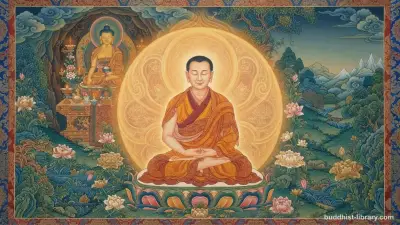
Buddhist Approach to Loneliness and Solitude: From Isolation to Inner Peace

Loneliness is suffering rooted in craving for connection, while solitude is a deliberate practice leading to freedom. Buddhism teaches that by understanding the nature of loneliness through mindfulness, cultivating loving-kindness, and developing wise solitude (viveka), we transform painful isolation into a path toward inner peace and awakening.
Loneliness has become an epidemic in modern life—yet the Buddha addressed this universal human experience 2,600 years ago. He distinguished between the painful mental state of loneliness (a form of dukkha) and the fruitful practice of solitude (viveka), which he considered essential for awakening.
This isn’t about suppressing your need for connection or pretending you’re fine when you’re suffering. It’s about understanding the difference between healthy aloneness and the painful craving that creates loneliness—and learning practical Buddhist techniques to work with both.
What Is Loneliness in Buddhist Psychology?
In Buddhist terms, loneliness is a form of dukkha (suffering) that arises from taṇhā (craving)—specifically, craving for sensory contact, companionship, and validation from others. It’s a vedanā (feeling) of unpleasantness combined with papañca (mental proliferation): the stories we tell ourselves about being unwanted, disconnected, or fundamentally alone.
The Buddha didn’t view loneliness as a character flaw. In the Bhaddekaratta Sutta (MN 131), he acknowledged that dwelling on the past or future—including ruminating on lost connections or imagined companionship—creates suffering. Loneliness often involves both: grieving past relationships and anxiously seeking future connection.
Key insight: Loneliness is not caused by being physically alone. It’s caused by the mind’s resistance to present-moment experience and its craving for a different state. You can feel lonely in a crowd and peaceful in solitude.
The Buddhist analysis breaks loneliness into components:
- Vedanā (feeling): the unpleasant sensation itself
- Saññā (perception): labeling the experience as “loneliness” or “being unwanted”
- Saṅkhāra (mental formations): the reactive patterns—withdrawal, seeking, or numbing
- Taṇhā (craving): the desire for the feeling to be different, for connection to arrive
By seeing these components clearly through mindfulness, the solid block of “I am lonely” begins to deconstruct. You’re not lonely—there’s simply a feeling arising and passing, and a mind adding stories to it.
How Is Solitude (Viveka) Different from Loneliness?
The Buddha regularly retreated into solitude for meditation. In the Pali Canon, viveka (seclusion or solitude) appears in three forms:
- Kāya-viveka (bodily seclusion): physical aloneness, withdrawing from crowds
- Citta-viveka (mental seclusion): withdrawing the mind from distractions and sensory craving
- Upadhi-viveka (seclusion from acquisitions): freedom from clinging to possessions, status, and identity
Loneliness and solitude occupy the same physical space (being alone) but have opposite mental qualities:
| Loneliness | Solitude (Viveka) |
|---|---|
| Involuntary, feels imposed | Chosen, purposeful |
| Craving for connection | Contentment with present experience |
| Mind scattered in past/future | Mind stable in the present |
| Breeds suffering (dukkha) | Leads to peace (sukha) and insight (paññā) |
| Rooted in sense of lack | Rooted in sufficiency |
The Buddha’s teaching is not that you should isolate yourself. Rather, solitude is a practice—a deliberate cultivation of inner stability that makes you less dependent on external conditions for peace. When you can be at ease alone, you bring that stability into relationships. When you can’t, relationships become strategies to escape discomfort.
What Did the Buddha Teach About Working with Loneliness?
1. Acknowledge It Without Aversion
The Buddha taught that the first step with any dukkha is to recognize it clearly (the First Noble Truth). Denying loneliness or judging yourself for feeling it only adds a second layer of suffering.
In the Satipaṭṭhāna Sutta (MN 10), the foundation of mindfulness practice is vedanānupassanā—observing feelings as they arise. When loneliness appears:
- Notice: “There is an unpleasant feeling.”
- Observe where it manifests in the body (chest, throat, stomach).
- Watch the mind’s stories without believing them.
Practice: When loneliness arises, pause. Place your hand on your heart and say silently, “This is a moment of suffering. Suffering is part of life. May I be kind to myself.” (Adapted from the mettā (loving-kindness) practice.)
2. Cultivate Mettā (Loving-Kindness)
The Mettā Sutta (Sn 1.8) presents loving-kindness as the antidote to isolation. Mettā is the deliberate cultivation of goodwill—first toward yourself, then radiating outward to others, and eventually to all beings.
Why mettā works for loneliness:
- It generates a sense of connection that doesn’t depend on anyone else being present
- It counteracts the aversive “I’m not good enough” thoughts that often accompany loneliness
- It reminds you that all beings experience loneliness, reducing the sense of isolation
Traditional mettā phrases:
- “May I be happy. May I be peaceful. May I be safe. May I live with ease.”
- “May you be happy. May you be peaceful. May you be safe. May you live with ease.”
- “May all beings be happy. May all beings be peaceful…”
Even five minutes of mettā practice daily rewires your relationship with loneliness. You’re training the mind to generate warmth internally rather than waiting for it to arrive externally.
3. Investigate the Craving Beneath It
The Second Noble Truth points to craving (taṇhā) as the cause of suffering. Loneliness is often driven by:
- Kāma-taṇhā (craving for sensory pleasure): wanting the pleasant feeling of being liked, touched, validated
- Bhava-taṇhā (craving for existence/identity): wanting to feel significant, to matter to someone
Ask yourself during meditation:
- What exactly am I craving right now? (Connection? Validation? Distraction from discomfort?)
- What do I believe will happen if I get it? (Will I finally feel complete? Safe? Worthy?)
- What is it like to simply sit with the wanting, without acting on it?
This isn’t self-denial. It’s investigating whether the craving, when fulfilled, actually delivers lasting peace.
Spoiler: it doesn’t. Understanding this directly is what liberates.
4. Develop Wise Solitude as a Practice
The Buddha encouraged periods of deliberate solitude—not as punishment, but as training. In the Upakkilesa Sutta (MN 128), he described spending long retreats alone to refine concentration and insight.
How to practice wise solitude:
- Set an intention: “I’m choosing this time alone to develop mindfulness and peace.”
- Create structure: Dedicate time to sitting meditation, walking meditation, reading Dhamma, or silent reflection.
- Notice the resistance: When loneliness arises, recognize it as the mind testing whether you can be okay without external stimulation. Breathe through it.
- Return to practice: Gently redirect attention to your meditation object (breath, mettā phrases, or body sensations).
Over time, solitude becomes refreshing rather than threatening. You discover that the mind, when not constantly seeking distraction, settles into a natural contentment.
Key Points: Buddhist Strategies for Loneliness
- Loneliness is dukkha caused by craving for connection—not by being alone. The Buddha taught that understanding this through mindfulness is the first step toward freedom.
- Solitude (viveka) is not loneliness. It’s a deliberate, peaceful practice that builds inner stability and is essential for deep meditation and insight.
- Mettā (loving-kindness) meditation is the most direct antidote to loneliness. It cultivates connection from within, independent of external circumstances.
- Investigate craving: Ask what you’re really seeking when loneliness arises. Often it’s validation, distraction, or a sense of identity—none of which lead to lasting peace.
- Balance solitude and community: The Buddha’s life modeled both retreat (for deep practice) and engagement (teaching and supporting the Saṅgha). Isolation is not the goal—inner freedom is.
- Practice vedanānupassanā (mindfulness of feelings): Observe loneliness as a changing, impersonal phenomenon rather than a solid truth about who you are.
Frequently Asked Questions
Is it normal to feel lonely during Buddhist practice?
Yes, especially for beginners. The Buddha acknowledged loneliness as a form of suffering (dukkha) and taught specific practices like mettā meditation and wise reflection to work with it. Solitude in practice is not about rejecting connection but developing inner stability.
Loneliness often intensifies when you first start meditating because you’re no longer distracting yourself. This is actually a sign the practice is working—you’re becoming aware of what was always there. The instruction is to meet it with mindfulness and kindness, not to make it go away.
How is Buddhist solitude different from social isolation?
Buddhist solitude (viveka) is chosen, purposeful, and leads to insight and peace. Social isolation is often involuntary and leads to suffering. The Buddha spent time in both solitude and community, teaching that wisdom comes from balancing inner work with compassionate engagement.
Unhealthy isolation stems from aversion (avoiding people out of fear or resentment) or depression. Healthy solitude stems from the intention to cultivate calm and clarity. If your time alone makes you more present and kind when you return to others, it’s viveka. If it breeds bitterness or disconnection, it’s isolation masquerading as practice.
What meditation practice helps most with loneliness?
Mettā (loving-kindness) meditation is the most direct antidote to loneliness. By cultivating goodwill toward yourself and all beings, you develop a sense of connection that doesn’t depend on external circumstances. Mindfulness of feeling (vedanānupassanā) also helps you observe loneliness without being overwhelmed by it.
For acute loneliness, try this sequence:
- Five minutes of mettā for yourself: “May I be happy. May I be at ease.”
- Five minutes for all beings: “Just as I experience loneliness, so do countless others. May we all be free from suffering.”
- Five minutes of mindfulness: Simply observe the feeling of loneliness in the body without trying to fix it.
This practice doesn’t eliminate loneliness instantly, but it shifts your relationship with it from enemy to teacher.
Can you be enlightened and still feel lonely?
According to early Buddhist texts, fully awakened beings (arahats) have abandoned the deep craving that causes loneliness. However, they may still experience physical solitude and choose it deliberately for meditation. The difference is that loneliness as suffering—the painful sense of disconnection—is absent.
The Buddha himself spent years in solitude before and after his awakening. But he did so from a place of fullness, not lack. Arahats, having uprooted taṇhā (craving), don’t experience the ache of “I need someone to make me feel whole.” They can be alone without feeling lonely.
How do I balance solitude practice with the need for community (Saṅgha)?
The Buddha emphasized kalyāṇamittatā (spiritual friendship) as essential to the path. Even he relied on the Saṅgha for support and teaching. The key is to alternate between retreat (for intensive practice) and community (for encouragement, correction, and service).
A practical balance might look like:
- Daily practice in solitude (30–60 minutes of meditation)
- Weekly Saṅgha connection (Dhamma discussion, group meditation, or volunteering)
- Annual retreat (a few days to a week of intensive solitary practice)
Solitude without community can become self-absorbed. Community without solitude can become superficial. Both are needed.
Conclusion: From Loneliness to Liberation
Loneliness is one of the clearest teachers of the First Noble Truth: clinging to impermanent things causes suffering. When we crave connection, validation, or companionship as a condition for peace, we suffer every time those conditions change—and they always do.
The Buddhist path doesn’t ask you to stop caring about connection. It invites you to investigate: Can you be fundamentally okay whether connection is present or absent? Can solitude become a refuge rather than a punishment?
Through mindfulness, you learn to observe loneliness without drowning in it. Through mettā, you learn to generate warmth that doesn’t depend on anyone else. Through wise solitude, you discover that the peace you’ve been seeking in others has been available within you all along.
This doesn’t happen overnight. The Buddha’s own journey included years of solitary practice before awakening. But every moment you choose to meet loneliness with awareness and kindness rather than avoidance is a step toward freedom.
As Ṭhānissaro Bhikkhu writes, “Solitude is not the absence of company. It’s the presence of mind stable enough not to need distraction.”
Read more:
- The Bhaddekaratta Sutta: The Buddha’s Teaching on Living in the Present Moment — Learn how dwelling in past or future relationships creates suffering and how to anchor in the present.
- Mettā: The Practice of Loving-Kindness — A complete guide to cultivating the warmth that transforms loneliness into connection.
- Buddhist Approach to Grief and Loss: Working with Bereavement Mindfully — Loneliness often follows loss; this guide offers Buddhist practices for working with the pain of separation.
📖 Source / license: Grounded in the Bhaddekaratta Sutta (MN 131), Mettā Sutta (Sn 1.8), teachings on viveka (solitude) throughout the Pali Canon, and contemporary commentaries by Bhikkhu Bodhi and Ṭhānissaro Bhikkhu on working with difficult emotions.
Frequently asked questions
Is it normal to feel lonely during Buddhist practice?
Yes, especially for beginners. The Buddha acknowledged loneliness as a form of suffering (dukkha) and taught specific practices like mettā meditation and wise reflection to work with it. Solitude in practice is not about rejecting connection but developing inner stability.
How is Buddhist solitude different from social isolation?
Buddhist solitude (viveka) is chosen, purposeful, and leads to insight and peace. Social isolation is often involuntary and leads to suffering. The Buddha spent time in both solitude and community, teaching that wisdom comes from balancing inner work with compassionate engagement.
What meditation practice helps most with loneliness?
Mettā (loving-kindness) meditation is the most direct antidote to loneliness. By cultivating goodwill toward yourself and all beings, you develop a sense of connection that doesn't depend on external circumstances. Mindfulness of feeling (vedanānupassanā) also helps you observe loneliness without being overwhelmed by it.
Can you be enlightened and still feel lonely?
According to early Buddhist texts, fully awakened beings (arahats) have abandoned the deep craving that causes loneliness. However, they may still experience physical solitude and choose it deliberately for meditation. The difference is that loneliness as suffering—the painful sense of disconnection—is absent.