Buddhist Approach to Self-Doubt: Working with Vicikicchā
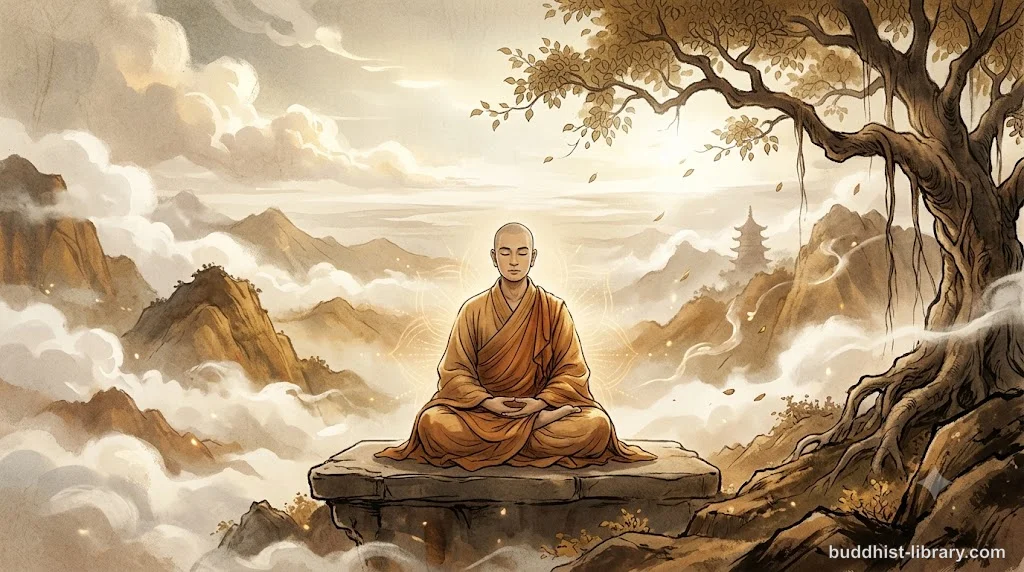
Self-doubt in Buddhist practice takes two forms: healthy questioning that deepens understanding, and vicikicchā—paralyzing skeptical doubt that freezes progress. The Buddha taught specific methods to work with doubt skillfully, transforming it from an obstacle into an opportunity for deepening faith and wisdom through direct experience.
Doubt is the most misunderstood hindrance in Buddhist practice. Western practitioners especially struggle here. We’re taught to question everything, to be skeptical, to demand proof—valuable qualities in many contexts. But doubt has a shadow side: the paralyzing kind that never resolves, that keeps you analyzing instead of practicing.
What Is Vicikicchā? Understanding Skeptical Doubt
Vicikicchā is not the same as healthy questioning. It’s a specific kind of doubt—skeptical, wavering, paralyzing. The Pali term comes from vi- (splitting, division) and -kicchā (trouble, difficulty). It literally means “trouble that divides”—the mind split between contradictory positions, unable to commit to any course of action.
The Buddha listed vicikicchā as one of the five hindrances to meditation and one of the ten fetters that bind beings to continued suffering. In the Sabbāsava Sutta (MN 2), he describes it as doubt about:
- The Teacher (Is the Buddha truly awakened?)
- The Teaching (Is the Dhamma actually true?)
- The Community (Is the Saṅgha worthy of respect?)
- The Training (Will this practice actually work?)
- The past (What was I in the past?)
- The future (What will I become?)
- Both (How does causality actually function?)
This kind of doubt doesn’t investigate—it paralyzes. It keeps you on the fence, unable to practice wholeheartedly because you’re not sure it’s worth the effort.
Why Does Doubt Arise in Practice?
Five common sources feed this kind of doubt:
Lack of direct experience. You doubt the teachings because you haven’t verified them yet. Natural enough. The Buddha never asked for blind faith. But when doubt prevents you from gathering the very experience that would resolve it, you’re stuck in a loop.
Comparing ourselves to ideals. “I’m not calm enough, focused enough, wise enough to meditate properly.” This form of doubt comes from measuring yourself against imagined standards rather than simply showing up and practicing.
Intellectual habit. Academic training teaches you to pick apart arguments, find flaws, demand proof. Useful in scholarship. In meditation? It becomes the mind’s favorite excuse to avoid sitting still and facing what’s actually there.
Fear of commitment. Sometimes doubt is a defense mechanism. If you never fully commit to the practice, you can’t fail at it. You remain safe in the land of “maybe someday.”
Genuine confusion. Buddhism has many schools, many interpretations, contradictory-sounding claims. Sometimes you doubt because you’re genuinely lost in conflicting information.
How Did the Buddha Address Doubt?
The Buddha’s approach to doubt was neither “just believe” nor “figure it all out intellectually first.” He offered a middle way:
The Kālāma Sutta Approach: Test Through Practice
In the famous Kālāma Sutta, the Buddha told the Kālāmas not to accept teachings based on authority, tradition, or logical reasoning alone. Instead:
When you know for yourselves: ‘These qualities are unskillful; these qualities are blameworthy; these qualities are criticized by the wise; these qualities, when adopted and carried out, lead to harm and to suffering’—then you should abandon them.
An empirical approach. Test teachings through direct experience. Does greed lead to suffering? Try it. Does letting go bring peace? Experiment and find out.
But here’s the catch: you have to practice to gather that experience. Doubt that stops you from practicing is doubt that blocks its own resolution.
The Sabbāsava Sutta: Seven Ways to Abandon Mental Influxes
In the Sabbāsava Sutta, the Buddha outlines seven methods for abandoning the āsavas (mental influxes or taints). Regarding doubt specifically, he emphasizes:
1. Abandoning through seeing (dassanā pahātabba). Some doubts dissolve when you see reality clearly through meditation. You doubt whether impermanence is really universal? Observe your experience closely. You’ll see everything changing, moment to moment.
2. Abandoning through restraint (saṃvarā pahātabba). Guard the sense doors. Much doubt arises from scattered attention, from constantly feeding the mind new information that raises new questions before old ones are resolved.
3. Abandoning through use (paṭisevanā pahātabba). Use things wisely. In the context of doubt, this means using the teachings—actually practicing them—rather than endlessly analyzing them.
4. Abandoning through enduring (adhivāsanā pahātabba). Some doubt just needs to be endured. You practice with it present, not waiting for perfect certainty before you begin.
5. Abandoning through avoiding (parivajjanā pahātabba). Avoid unhelpful questions. The Buddha famously refused to answer certain metaphysical questions—about the eternality of the world, the nature of the self after death—because they don’t lead to liberation.
6. Abandoning through removing (vinodanā pahātabba). Actively remove distracting thoughts. When doubt arises in meditation, recognize it, note it, and return to the object of concentration.
7. Abandoning through developing (bhāvanā pahātabba). Develop the seven factors of enlightenment. As your practice matures, doubt naturally lessens. Faith based on direct experience replaces faith based on hope.
Practical Methods for Working with Doubt
Recognize the Pattern
When doubt arises, pause and investigate:
- Is this doubt asking a question that practice can answer?
- Or is it a mental loop that has no exit?
- Does entertaining this doubt make me more likely to practice or less likely?
If it’s the latter, you’re dealing with vicikicchā as a hindrance, not healthy inquiry.
Distinguish Investigation from Rumination
Dhamma-vicaya (investigation of phenomena) is one of the seven enlightenment factors. Vicikicchā (skeptical doubt) is a hindrance. What’s the difference?
Investigation: “I wonder how mindfulness of breathing affects the mind. Let me practice it for a week and observe.”
Rumination: “Does mindfulness of breathing really work? What if I’m doing it wrong? Maybe I should try a different technique. Or maybe meditation isn’t for me. But then again, everyone says it helps…”
Investigation leads to direct knowing. Rumination leads to more doubt.
Small Commitments, Direct Experience
You don’t need to resolve every doubt before practicing. Instead, make small commitments you can verify:
- “I’ll try mettā practice for five minutes a day for a week and see what happens.”
- “I’ll test whether the five precepts reduce suffering by following them carefully for a month.”
Let experience speak. The Buddha didn’t ask you to believe impermanence is universal; he asked you to look closely and see for yourself.
Find Reliable Guidance
Much doubt comes from conflicting information. Random internet sources? Inevitable contradictions. Get grounded in reliable sources:
- Access to Insight (dhammatalks.org) for solid Theravāda teachings
- SuttaCentral for accurate early Buddhist text translations
- A qualified teacher—even occasional contact cuts through conceptual doubt faster than a thousand books
Practice Anyway
This is the hardest and most important advice: practice with doubt present. You don’t need perfect faith to meditate. You don’t need to resolve every question before you sit down.
The Buddha compared the path to a raft. You don’t need to analyze the raft’s construction, debate its optimal design, or verify its buoyancy through peer-reviewed studies. You need to get on and paddle.
When Doubt Points to Real Problems
Sometimes doubt is trying to tell you something important:
- Doubt about a teacher may indicate that teacher isn’t trustworthy. Listen to that.
- Doubt about a practice may mean that practice isn’t right for you at this stage. Try a different approach.
- Doubt about cosmological claims (like literal rebirth) doesn’t need to prevent you from practicing. Focus on what you can verify—suffering, craving, peace, freedom.
The Buddha himself encouraged this kind of discernment. In the Kālāma Sutta, he explicitly told his audience not to accept teachings on his authority. Healthy skepticism protects you from harmful teachings and teachers.
The key is: does your doubt lead you toward practice and verification, or away from it?
The Paradox: Doubt Resolves Through Practice, Not Analysis
Here’s what doubt doesn’t want you to know: intellectual analysis rarely resolves it. You can read every book on Buddhism, master the Abhidhamma, memorize the Pali Canon—and still doubt whether the path works.
Direct experience resolves doubt. You sit with the breath. Craving arises. You watch it closely. It passes. Peace follows. Then you get it: “Oh. That’s what they meant.”
No one can do this for you.
Key Takeaways
- Vicikicchā is paralyzing skeptical doubt—different from healthy questioning and investigation.
- The Buddha taught empirical verification—test the teachings through practice, not blind belief.
- Doubt often prevents the very practice that would resolve it. Practice anyway.
- Small commitments work—you don’t need perfect faith to meditate for five minutes.
- Some doubt is protective—listen when it’s warning you about harmful teachings or untrustworthy teachers.
- Investigation moves forward; rumination spins—learn to recognize the difference.
- Direct experience dissolves doubt in a way analysis never can.
Frequently Asked Questions
What is the difference between healthy questioning and vicikicchā?
Healthy questioning (dhamma-vicaya) investigates reality to understand it better and leads to clarity. Vicikicchā is paralyzing skeptical doubt that prevents practice and keeps you spinning in indecision without moving forward.
How do I know if my doubt is a hindrance or genuine inquiry?
Ask: Does this doubt lead me toward testing the teachings through practice, or does it keep me stuck in endless mental loops? Does it energize investigation or drain my motivation? Genuine inquiry moves you forward; vicikicchā keeps you frozen.
Can I practice Buddhism if I have doubts about rebirth or karma?
Yes. The Buddha encouraged testing teachings through direct experience. Many Western practitioners focus on verifiable aspects—suffering, its causes, and the path to freedom—while remaining agnostic about cosmological claims. Practice what you can verify; let understanding mature naturally.
What if my doubt is about whether I’m capable of meditation or awakening?
This is one of the most common forms of vicikicchā. The Buddha taught that awakening is possible for anyone who practices sincerely. Doubt about your capacity is often based on comparing yourself to imagined standards rather than simply showing up and practicing consistently.
Conclusion: The Faith That Comes from Testing
The Buddha didn’t ask for blind faith. He asked for enough faith to try—provisional trust. Then direct experience does the rest.
Learning to swim works the same way. You can read about buoyancy, analyze stroke mechanics, watch Olympic swimmers. None of that teaches you to swim. Eventually you get in the water.
You might doubt whether you’ll float. Fine. Get in anyway.
The Buddha’s offer is simple: “Try this. See what happens.” Doubt wants certainty up front. The path doesn’t work that way. You walk it. Then you know.
Read more:
- The Five Hindrances (Nīvaraṇa): Overcoming Obstacles to Meditation — A comprehensive guide to the five mental obstacles that block concentration, including doubt, with practical methods from the suttas for working with each hindrance.
- The Kālāma Sutta: The Buddha on Independent Inquiry — The Buddha’s famous teaching on how to test spiritual claims through direct experience rather than blind acceptance, offering a framework for working skillfully with doubt.
- What Is Saddhā? Understanding Faith in Buddhism — An exploration of Buddhist faith as confidence based on experience rather than belief without evidence, showing how verified faith naturally replaces doubt through practice.
📖 Source / license: Access to Insight: Sabbāsava Sutta (MN 2), translated by Ṭhānissaro Bhikkhu; Vitakkasanthāna Sutta (MN 20)
Frequently asked questions
What is the difference between healthy questioning and vicikicchā?
Healthy questioning (dhamma-vicaya) investigates reality to understand it better and leads to clarity. Vicikicchā is paralyzing skeptical doubt that prevents practice and keeps you spinning in indecision without moving forward.
How do I know if my doubt is a hindrance or genuine inquiry?
Ask: Does this doubt lead me toward testing the teachings through practice, or does it keep me stuck in endless mental loops? Does it energize investigation or drain my motivation? Genuine inquiry moves you forward; vicikicchā keeps you frozen.
Can I practice Buddhism if I have doubts about rebirth or karma?
Yes. The Buddha encouraged testing teachings through direct experience. Many Western practitioners focus on verifiable aspects—suffering, its causes, and the path to freedom—while remaining agnostic about cosmological claims. Practice what you can verify; let understanding mature naturally.
What if my doubt is about whether I'm capable of meditation or awakening?
This is one of the most common forms of vicikicchā. The Buddha taught that awakening is possible for anyone who practices sincerely. Doubt about your capacity is often based on comparing yourself to imagined standards rather than simply showing up and practicing consistently.