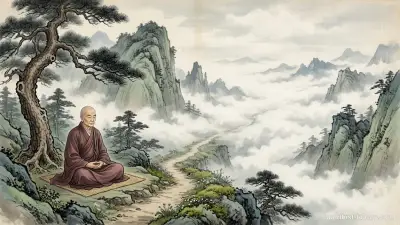
Buddhist Practice of Letting Go: Working with Attachment Mindfully
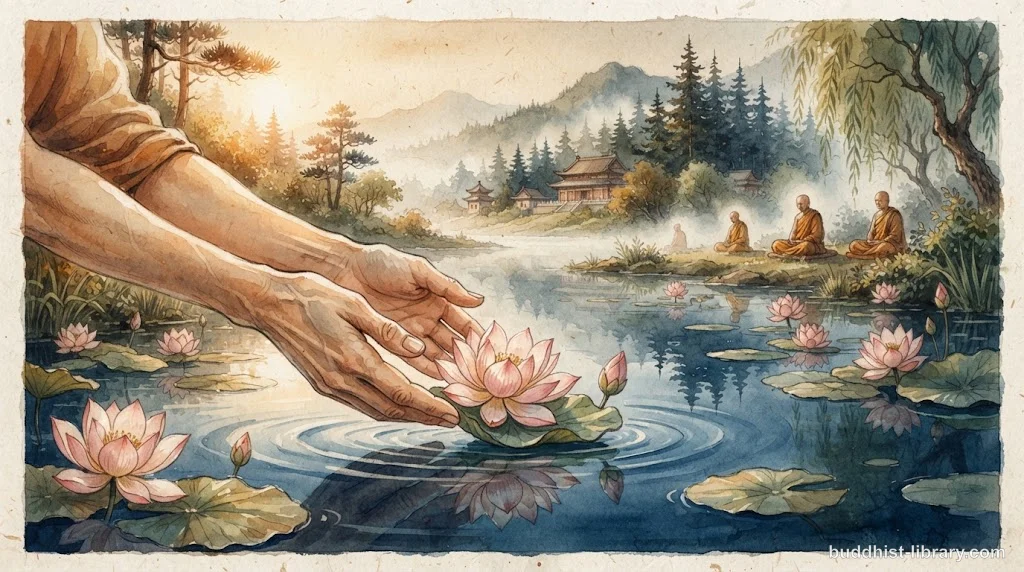
Letting go in Buddhism means releasing the tight grip of clinging (upādāna) that binds us to suffering. It’s about engaging fully while holding experiences lightly, without grasping or aversion—freeing the heart from what the Buddha called the root of dukkha.
The practice of letting go stands at the heart of Buddhist liberation. Yet it’s widely misunderstood.
Many imagine Buddhist non-attachment as cold detachment, a life stripped of care or pleasure. That’s backwards. Letting go means relating to all experience—joy and pain, people and possessions, even spiritual attainments—without the tight fist of clinging. The result is warmer engagement, not colder.
What Does Buddhism Mean by Attachment?
In Buddhist psychology, attachment refers to upādāna—a Pali term meaning clinging or grasping.
Not connection. Not love. Not healthy engagement with life.
Upādāna is the compulsive holding on, the refusal to allow change, the demand that experience be other than it is.
The Buddha identified four types of clinging:
- Clinging to sensual pleasures
- Clinging to views and opinions
- Clinging to rites and rituals
- Clinging to a belief in self
Each form of clinging creates suffering. Why? Because it attempts to make permanent what is inherently impermanent, to control what cannot be controlled, and to find a stable self in the five aggregates that are constantly changing.
The Sabbāsava Sutta (MN 2) teaches that some mental taints are abandoned through seeing clearly, others through restraint, others through proper use, others through endurance, others through avoidance, others through removal, and others through development. Letting go draws on all these strategies.
Why Do We Cling?
Clinging arises from a fundamental misperception. We cling because we believe—often unconsciously—that:
- Happiness comes from acquiring and keeping what we want
- We can make impermanent things permanent through effort or will
- There is a solid, permanent self that needs securing and defending
- Holding tight to experiences intensifies their pleasure or wards off pain
All four beliefs are forms of avijjā—ignorance or misunderstanding of how things actually are. The Buddha’s teaching on dependent origination traces suffering directly to this ignorance, which conditions craving (taṇhā), which conditions clinging.
As Ṭhānissaro Bhikkhu writes, “The mind’s hunger for becoming—to be this or that, to have this or that—is what keeps feeding the cycle of stress.” We cling to experiences, identities, relationships, and beliefs because we mistake them for sources of lasting security. But since everything is impermanent, clinging to the changing guarantees disappointment and suffering.
How Does Clinging Create Suffering?
Clinging creates suffering through several mechanisms:
Resistance to change. When we cling, we demand that things stay the same. But the nature of conditioned existence is flux—always has been, always will be. The tighter we hold, the more painful the inevitable loss becomes. A relationship that once brought joy? When we cling to how it was, it becomes a source of anxiety.
Identification and self-view. We cling to experiences, roles, possessions, opinions, and relationships as “me” or “mine.” This strengthens the illusion of a separate, permanent self—the very illusion the Buddha taught to see through. When what we’ve identified with changes or is threatened, we experience it as a threat to our very being.
Narrowed awareness. Clinging fixates attention. When obsessed with having or keeping something, we lose peripheral vision. We miss the fullness of the present moment, relating to people as means to our ends rather than as beings in their own right.
Energy depletion. Maintaining the tight grip of clinging is exhausting. Mental energy that could go toward wisdom, compassion, or creative engagement is instead consumed by worry, planning, defending, and strategizing to keep what we fear losing.
The Second Noble Truth teaches that craving and clinging are the origin of suffering. The Third Noble Truth teaches that the cessation of suffering comes through the cessation of this clinging.
What Isn’t Letting Go?
Before exploring how to let go, it helps to clarify common misconceptions:
Letting go is not indifference. The Buddha didn’t teach apathy or emotional numbness. Equanimity (upekkhā) is balanced, caring awareness—not cold detachment.
You can love deeply while not clinging desperately. In fact, you can love better that way.
Letting go is not rejection. You don’t have to push things away or deny their value. A beautiful sunset, a meaningful conversation, a beloved practice—these can be deeply appreciated without the added burden of “I must have this forever” or “I can’t bear for this to end.”
Letting go is not giving up responsibility. Non-attachment doesn’t mean abandoning commitments, work, relationships, or ethical duties. It means engaging fully without being driven by craving or fear, and without demanding specific outcomes as conditions for your peace.
Letting go is not a one-time event. It’s a continuous practice, applied moment by moment to the mind’s endless arising of preferences, demands, and identifications. Like mindfulness, it’s something you return to again and again.
How Do You Actually Practice Letting Go?
Buddhist tradition offers multiple approaches to cultivating the capacity to let go:
Mindfulness of Impermanence
The most direct method is repeatedly seeing and accepting that all conditioned phenomena are impermanent (anicca).
Not intellectual acknowledgment. Direct observation in meditation and daily life.
Notice the beginning, middle, and end of experiences. Watch sensations arise and pass in the body. Observe thoughts appearing and dissolving. See emotions peak and subside.
Each instance of clearly seeing impermanence weakens the habit of clinging.
The Satipaṭṭhāna Sutta instructs practitioners to contemplate the arising and passing away of phenomena in body, feelings, mind, and mental objects. This practice directly undermines the delusion that anything can be permanently grasped.
Understanding Non-Self
Clinging depends on the belief in “me” and “mine.” By investigating the five aggregates and seeing that none of them constitute a permanent, independent self, the ground for clinging erodes.
Ask: “Is this body me? Is this feeling me? Is this thought me? If they’re constantly changing, if they’re conditioned by countless factors beyond my control, in what sense are they mine to cling to?”
This isn’t a nihilistic practice—it doesn’t deny conventional functioning or responsibility. It questions the deeply held assumption that there’s a separate, solid self that needs defending and satisfying through clinging.
Generosity as Training
The practice of generosity (dāna) directly trains letting go. When you give something away—time, resources, energy, possessions—you literally release your grasp.
Start small. Give away something you mildly like. Notice the moment of releasing and any resistance that arises.
Generosity builds the mental muscle of non-attachment in a safe, gradual way. And it reveals something interesting: how much of clinging is simply habit, not necessity.
Wise Reflection
The Buddha taught specific reflections to loosen attachment:
- Reflect on death and impermanence regularly (see maraṇasati)
- Contemplate the inevitable separation from all that’s beloved
- Reflect on the drawbacks of clinging—the anxiety, narrowness, and suffering it brings
- Reflect on the peace and freedom of non-attachment
These aren’t morbid practices. They align the mind with reality, making it easier to hold experience lightly rather than desperately.
Meditation on Letting Go
In sitting practice, you can work directly with the process of releasing:
- Notice when the mind clings to a pleasant experience or resists an unpleasant one
- Recognize the clinging as clinging (not as the truth of how things must be)
- Gently release the grip—not by pushing away the experience but by relaxing the grasping around it
- Return to present-moment awareness, open and receptive
This can be practiced with breath, body sensations, thoughts, or emotions. The instruction is simple: notice clinging, release, return. Repeated thousands of times, this rewires habitual patterns.
Cultivating the Brahmavihāras
The four divine abodes—loving-kindness, compassion, sympathetic joy, and equanimity—offer a relational approach to letting go.
Loving-kindness (mettā) allows you to care without possessiveness. Compassion (karuṇā) opens the heart to suffering without drowning in it. Sympathetic joy (muditā) celebrates others’ happiness without envy or grasping. Equanimity (upekkhā) holds all experience in spacious balance.
Together, these qualities create a way of relating to life and beings that is warm, engaged, and free from clinging.
Letting Go in Relationships
One of the most challenging areas for letting go is human relationships. We fear that loving without clinging means loving less intensely.
The opposite is often true.
Clinging in relationships manifests as:
- Need for constant reassurance
- Attempts to control the other person’s behavior, thoughts, or feelings
- Fear-based attachment that prioritizes security over genuine connection
- Inability to accept change in the relationship or the other person
Loving without clinging means:
- Appreciating the person as they are, not as an object meeting your needs
- Wishing for their well-being unconditionally, not just when they satisfy you
- Allowing space for both people to grow and change
- Accepting that all relationships, like all conditioned things, are impermanent
This doesn’t mean passive acceptance of harmful behavior or lack of boundaries. Right action and wise speech still apply. But the motivation shifts from clinging need to clear-eyed care.
Letting Go of Views and Opinions
The Buddha taught that clinging to views (diṭṭhi-upādāna) is particularly dangerous because we rarely recognize it as clinging. We think we’re simply being right, standing on principle, or defending truth.
But notice how much suffering arises from rigid views:
- The need to be right in arguments
- The inability to hear other perspectives
- The anxiety when someone challenges a cherished belief
- The tribal identifications and us-versus-them thinking
The Buddha’s discourse to the Kālāmas encourages personal investigation rather than blind adherence to tradition, scripture, or authority. Even right views in Buddhism are meant to be used as tools, not clung to as ultimate truth. The famous simile of the raft from the Alagaddūpama Sutta teaches that even the Dhamma should be let go of once its purpose is served—like a raft left behind after crossing a river.
Practicing with view-clinging:
- Notice when you’re defending an opinion not because it’s helpful but because “it’s mine”
- Hold your beliefs as working hypotheses rather than absolute truths
- Be willing to say “I don’t know”
- Cultivate the humility to change your mind when evidence or wisdom suggests it
Letting Go and the Path to Liberation
In the larger context of Buddhist practice, letting go is both a means and an end. It’s cultivated along the Noble Eightfold Path and it leads to progressive stages of awakening.
The ten fetters that bind beings to cyclic existence are all forms of clinging. Each stage of awakening—from stream-entry to full liberation as an arahat—involves the release of progressively subtler forms of clinging.
The first fetter, self-identity view, is the clinging to a permanent self. The second and third, doubt and clinging to rites and rituals, are forms of clinging to externals for security. As practice deepens, even clinging to pleasant meditative states, to subtle forms of conceit, and to the very sense of a separate existence are gradually released.
This isn’t accomplished through force or willpower—the clinging itself is too subtle and pervasive. Instead, it’s undone through seeing clearly, developing the path factors, and allowing wisdom to do the work of releasing naturally.
As the Buddha taught in the Ānanda Sutta (SN 22.25): “For one who clings, there is agitation. For one who doesn’t cling, there is no agitation. When there is no agitation, there is calm. When there is calm, there is no bending. When there is no bending, there is no coming or going. When there is no coming or going, there is no passing away and arising. When there is no passing away and arising, there is neither here nor beyond nor in between. This is the end of suffering.”
Key Points on the Buddhist Practice of Letting Go
- Letting go means releasing clinging (upādāna), not rejecting life or becoming indifferent
- Attachment causes suffering because it demands permanence from what is inherently impermanent
- Clinging arises from ignorance about the nature of self and reality
- Non-attachment allows warmer, freer engagement with life, not colder detachment
- Practice includes mindfulness of impermanence, understanding non-self, generosity, wise reflection, and meditation
- You can love deeply, hold views, and honor commitments while holding them all lightly
- Progressive letting go is the path from stream-entry to full liberation
Conclusion
The Buddhist practice of letting go offers a fuller life, not a diminished one.
Trade anxiety for ease. Possessiveness for genuine care. The exhausting work of control for the freedom of flowing with things as they are.
It’s a gradual path. You won’t wake up tomorrow having released all clinging. But each small moment of recognizing the grip and gently loosening it—whether with a thought, a possession, a relationship, or an identity—moves you toward the peace the Buddha promised.
Not the peace of having everything you want forever. The peace of no longer needing that impossible security.
Begin where you are. Notice one thing you’re clinging to today. See it clearly. And in seeing, find the possibility of opening your hand just a little.
Read more:
- Upādāna: Understanding the Four Types of Clinging in Buddhism — Explore the Buddhist psychology of attachment and how it operates through sensual clinging, view-clinging, ritual-clinging, and self-doctrine clinging.
- The Five Aggregates (Khandhas): What We Mistake for ‘Self’ — Understand the five components of experience that we wrongly grasp as a permanent self, and why seeing their impermanent nature is key to letting go.
- Impermanence (Anicca): Why Everything Changes — Deepen your understanding of the universal characteristic of impermanence that makes clinging impossible and letting go wise.
📖 Source / license: Based on teachings from the Pali Canon on upādāna, particularly the Sabbāsava Sutta (MN 2), the Ānanda Sutta on non-attachment (SN 22.25), and Ṭhānissaro Bhikkhu's commentaries on clinging and release
Frequently asked questions
What is the difference between letting go and giving up in Buddhism?
Letting go means releasing unhealthy clinging while remaining engaged with life skillfully. Giving up implies passivity or defeat. The Buddha taught non-attachment—relating to experiences without grasping or aversion—not withdrawal from life. You can care deeply while holding lightly.
How do I let go of someone I love in a Buddhist way?
Buddhist letting go doesn't mean stopping to love someone; it means releasing the clinging, expectation, and need to control that creates suffering. Practice loving-kindness (mettā) while accepting impermanence. Wish for their well-being without demanding they meet your needs. This allows healthier, freer love.
Can you practice letting go without meditation?
Yes. While meditation strengthens the capacity to let go, you can practice in daily life through mindful awareness, wise reflection on impermanence and non-self, cultivating generosity (dāna), and noticing when you're clinging. Even small acts of releasing preferences train the mind in non-attachment.
Why is letting go so difficult even when I know attachment causes suffering?
Clinging is deeply conditioned—reinforced over countless moments and driven by fundamental ignorance (avijjā) about the nature of self and reality. Knowing intellectually differs from seeing directly through practice. The mind habitually seeks security in what's impermanent. Gradual training, not just insight, weakens these patterns.