The Cūḷagosinga Sutta: The Buddha's Teaching on Harmonious Living
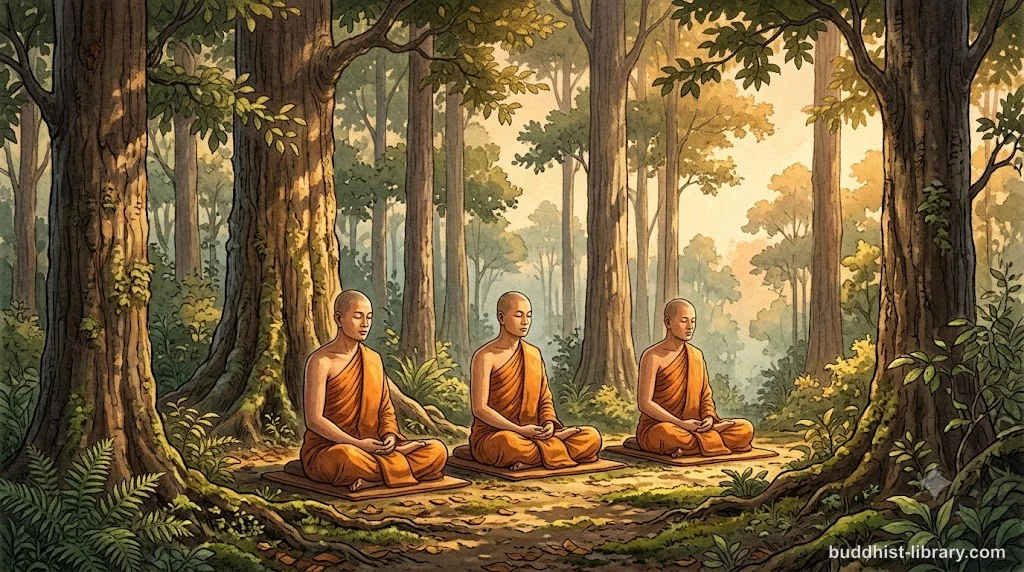
The Cūḷagosinga Sutta reveals the Buddha’s practical teaching on harmonious living through three arahant monks who achieved perfect concord. Their method — bodily, verbal, and mental goodwill; setting aside ego; sharing duties smoothly; and regular Dhamma discussion — offers a timeless model for any community seeking genuine harmony without sacrificing individual authenticity.
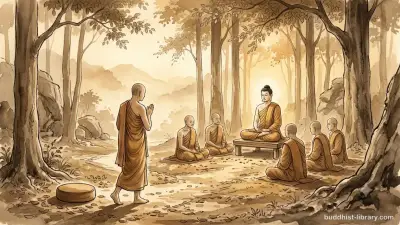
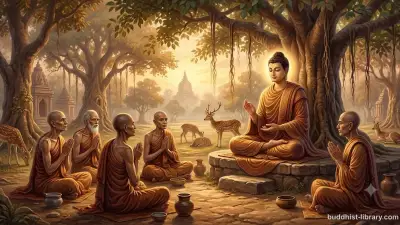
The Cūḷagosinga Sutta (MN 31), or “The Shorter Discourse at Gosinga,” ranks among the Buddha’s most illuminating teachings on communal life. Set in the Gosiṅga Sal-tree Forest Park, this discourse presents three accomplished monks — Anuruddha, Nandiya, and Kimbila — who lived together in perfect harmony. Not theoretical harmony. Real harmony.
When the Buddha visited, he noticed immediately. Their radiant joy. Their peaceful demeanor. He asked how they managed to live together “harmoniously, cordially, and without dispute, blending like milk and water, looking at one another with eyes of affection.” Their answer forms the heart of this sutta’s teaching — a blueprint that’s worked for 2,600 years and still works today.
What Is the Cūḷagosinga Sutta?
The Cūḷagosinga Sutta is the thirty-first discourse in the Majjhima Nikāya (Middle Length Discourses). It belongs to the category of suttas that teach through lived example rather than abstract doctrine.
The discourse unfolds simply: the Buddha observes, asks, and deepens. First, he sees their harmonious lifestyle. Then the monks explain their method. Finally, the Buddha asks about their meditative attainments — and discovers all three had achieved arahantship.
Unlike suttas focused purely on meditation or doctrine, this one tackles something messier: How do people with different temperaments actually live together peacefully?
How Did the Three Monks Maintain Harmony?
When the Buddha asked Anuruddha how they achieved such harmony, he described their method directly:
The Core Practices
Anuruddha explained: “I’m set on bodily acts of goodwill with regard to these venerable ones, to their faces and behind their backs. I’m set on verbal acts… mental acts of goodwill with regard to these venerable ones, to their faces and behind their backs.”
Then he added the crucial practice: “The thought occurs to me, ‘Why don’t I, having cast aside my own mind, conduct myself in line with the mind of these venerable ones?’ So, having cast aside my own mind, I conduct myself in line with the mind of these venerable ones. We are separate in body, but one—as it were—in mind.”
This wasn’t about suppressing differences. They honored individual temperaments while aligning on what mattered — the path to liberation, ethical purity, mutual support. Unity through shared commitment, not forced uniformity.
Practical Daily Living
They didn’t just speak theoretically. They lived practically:
Whoever returned first from alms-round laid out seats, set out water, and prepared the meal hall. Whoever came later ate the leftovers (if any), cleaned up, swept, and refilled water jars. When a task was too heavy for one person, they signaled silently — “using hand signals” — and helped together, joining hands to lift the water jar.
No negotiation. No keeping score. Just smooth cooperation.
Regular Dhamma Discussion
Every five days, they sat together through the whole night to discuss the Dhamma. Not casual chat — focused practice review and doctrinal inquiry.
This kept their understanding aligned and their practice sharp.
What Were Their Attainments?
The Buddha asked if they had achieved anything beyond harmonious living. They had.
All three had mastered the jhānas — all four material jhānas (first through fourth) and the four formless attainments (dimension of infinite space, infinite consciousness, nothingness, and neither-perception-nor-non-perception). Beyond even those, they had entered the cessation of perception and feeling, and achieved the complete ending of the mental effluents — arahantship.
Their harmony wasn’t just pleasant coexistence. It was the fruit of deep spiritual accomplishment.
Why Does This Matter for Modern Communities?
Here’s what matters: the Cūḷagosinga Sutta isn’t just monastic theory. Its principles work wherever people need to live or work together.
For Spiritual Communities
Practice centers, meditation groups, monasteries — they all face what the Gosinga monks faced. How do you maintain individual practice while supporting collective life?
The sutta’s answer: harmony doesn’t require everyone to meditate the same way. It requires genuine goodwill in body, speech, and mind; willingness to set aside ego; and regular meaningful discussion. That’s it.
For Families and Relationships
Families thrive when members practice what the Gosinga monks practiced:
- Acting with bodily, verbal, and mental goodwill
- Sharing resources and duties without keeping score
- Sometimes setting aside personal preference for the group’s benefit
- Returning regularly to shared values
For Workplaces and Teams
Modern organizations keep asking the Buddha’s question: How do we blend diverse individuals into something cohesive?
Not through rigid structure. Not through forced conformity. Through genuine goodwill in action and speech, fairness with credit and resources, and alignment on core values while allowing diversity of method.
How Do We Practice Harmonious Living?
The Cūḷagosinga Sutta offers concrete steps:
Practice Bodily, Verbal, and Mental Goodwill
Look for small ways to help without being asked. Speak appreciatively of others, whether they’re present or not. Genuinely wish them well — even when they annoy you. Even when they succeed where you’re stuck.
At home: prepare tea before someone asks. At work: help a colleague before the deadline turns urgent.
Share Duties Fairly
The monks didn’t negotiate who did what. Whoever arrived first laid out seats. Whoever came later cleaned up. When a task was too much for one person, they helped silently.
Put simply: no scorekeeping, just cooperation.
Set Aside Ego When It Matters
“Having cast aside my own mind, I conduct myself in line with the mind of these venerable ones.” Not every time. Not on everything. But when alignment mattered more than individual preference, they chose alignment.
This isn’t about losing yourself. It’s about recognizing when the group’s direction deserves your support more than your personal wish deserves its insistence.
Discuss What Matters Regularly
The monks sat together every five days to discuss the Dhamma. Not superficial check-ins — real inquiry into what mattered.
For any community: create space to discuss core values, review progress, and realign when drift happens.
What Did the Buddha Teach About Their Practice?
After hearing the monks’ explanation, the Buddha asked about their meditative attainments. Each had mastered different approaches to meditation — mindfulness of breathing, contemplation of the body, and other practices.
The Buddha’s point cuts deep: Individual paths can coexist within shared values. The monks didn’t need identical meditation practices. They needed identical commitment to liberation, ethical purity, and mutual support.
For any community, this matters: unity doesn’t mean uniformity. Diversity of method within alignment of purpose creates both richness and stability.
FAQ
What does “Cūḷagosinga” mean?
“Cūḷagosinga” (or “Cūḷagosiṅga”) means “shorter (discourse at) Gosinga” or “shorter Cattle-horn.” Gosiṅga was a beautiful forest grove of sal trees where the three monks lived. There’s also a longer discourse (Mahāgosinga Sutta, MN 32) set in the same location, hence the “shorter” designation.
Were Anuruddha, Nandiya, and Kimbila enlightened?
Yes. According to the sutta, all three had achieved arahantship — the complete ending of the mental effluents. They had mastered all the jhānas and the formless attainments. Anuruddha appears throughout the suttas as one of the Buddha’s foremost disciples, particularly skilled in the divine eye (dibbacakkhu).
Can laypeople practice these principles?
Yes. While the sutta features monks, the core practices apply to anyone. Laypeople can practice bodily, verbal, and mental goodwill; share resources and duties fairly; discuss values regularly; and sometimes set aside personal preference for family or community benefit. The principles scale to any relationship.
How is this different from just “being nice”?
These practices go deeper than surface politeness. “Being nice” can be performative and shallow. The Gosinga monks’ harmony required genuine goodwill (not mere etiquette), actual generosity with effort and resources (not just kind words), willingness to set aside ego (“casting aside my own mind”), and deep spiritual practice (all three were arahants). Harmony rooted in wisdom and virtue, not mere agreeableness.
What did Anuruddha mean by “we are separate in body but one in mind”?
This phrase captures their unity. Not that they thought identically or had no individual temperaments. They had aligned so deeply on the fundamentals — the path to liberation, the value of practice, ethical conduct — that their intentions unified. Each still had his own meditation practice. Each had distinct responsibilities. But their core orientation was the same. They’d each “cast aside” personal preference to align with the group’s shared direction.
Conclusion: Harmony as a Practice
Here’s what the Cūḷagosinga Sutta makes clear: genuine harmony isn’t accidental. The three monks at Gosinga didn’t just happen to get along. They actively cultivated concord through bodily, verbal, and mental goodwill; smooth cooperation on daily tasks; setting aside ego when it mattered; and regular Dhamma discussion.
Their example shows that harmony doesn’t require everyone to be the same. It requires commitment to the same values, expressed through how you treat one another.
The practices work whether you’re in a meditation community, a family, a workplace, or any group trying to function together:
Act with goodwill in body, speech, and mind. Share duties and resources fairly. Discuss what matters regularly. Sometimes set aside personal preference for the group’s benefit.
When these become habitual, harmony stops being something you hope for. It becomes something you create together.
Read more:
- The Sigālovāda Sutta: The Buddha’s Code of Ethics for Laypeople — another practical teaching on relationships and harmonious living in lay life.
- What Is Kalyāṇamitta? Understanding Spiritual Friendship in Buddhism — explores the quality of friendship that supports spiritual growth.
- What Is the Saṅgha? The Buddhist Community and Its Role — understanding the nature and purpose of the Buddhist community.
📖 Source / license: Majjhima Nikāya 31, translation by Ṭhānissaro Bhikkhu (dhammatalks.org)
Frequently asked questions
What is the Cūḷagosinga Sutta about?
The Cūḷagosinga Sutta (MN 31) describes three arahant monks living in perfect harmony at Gosinga. The Buddha visits them and they explain their method: bodily, verbal, and mental acts of goodwill, plus setting aside personal wishes to align with the group. They also share their deep meditative attainments.
How did the three monks at Gosinga maintain harmony?
They practiced bodily, verbal, and mental acts of goodwill toward each other, both publicly and privately. They shared daily chores without ego, discussed Dhamma every five days, and each had cast aside his own mind to conduct himself in line with the minds of the others. All three had also achieved arahantship.
What are the key practices for harmonious community living?
The sutta teaches bodily, verbal, and mental goodwill; sharing duties without keeping score; regular meaningful discussion; and the willingness to set aside personal preference for the group's benefit. The monks also maintained deep meditation practice.
Why is the Cūḷagosinga Sutta relevant today?
This sutta offers timeless principles for any community — whether spiritual, professional, or social. It shows that harmony comes from genuine goodwill and mutual support, not from rigid rules or forced agreement. The principles apply to families, teams, and organizations.