Hiri and Ottappa: The Two Guardians of the World in Buddhist Ethics
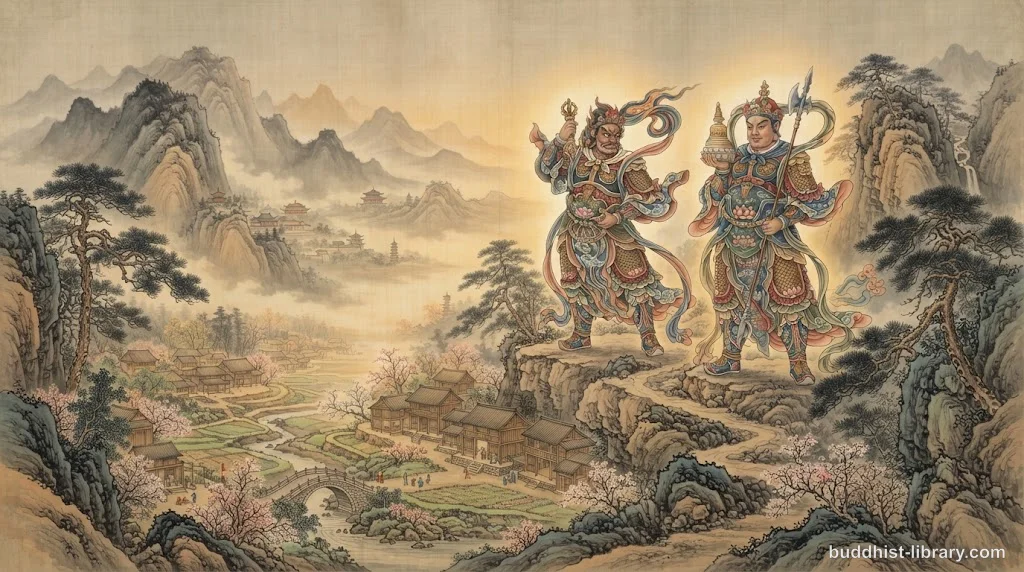
Hiri and ottappa — moral shame and moral dread — are the two qualities the Buddha identified as protecting both individuals and society from ethical collapse. Without them, he taught, the world would descend into chaos where people no longer recognize basic human relationships or boundaries. These internal guardians prevent wrongdoing before it occurs, making them foundational to Buddhist ethics and all wholesome development.
What Are Hiri and Ottappa?
These are complementary restraints that stop unwholesome actions before they happen. The Pali doesn’t translate cleanly, so English renderings often miss the mark.
Hiri gets called “moral shame” or “conscience” — but forget crushing religious guilt. This is healthy self-respect. You recognize certain actions as beneath you. The voice that says, “I’m better than this. This doesn’t fit who I’m becoming.”
Ottappa is “moral dread” or “fear of wrongdoing.” Not paranoid anxiety. This is clear-eyed recognition that actions have consequences, in this life and beyond. “If I do this, suffering follows — for me and others.”
The Buddha called them lokapālā dhammā — “qualities that guard the world.” Not an overstatement.
Why Did the Buddha Call Them “Guardians of the World”?
In the Itivuttaka, the Buddha says something stark:
“If these two bright qualities did not safeguard the world, there would be no discerning of ‘mother’ or ‘mother’s sister’ or ‘uncle’s wife’ or ‘teacher’s wife’ or the wives of other honored persons. The world would fall into promiscuity like goats, sheep, chickens, pigs, dogs, and jackals.”
He means it. Hiri and ottappa hold civilization together.
Without hiri — that internal sense of appropriateness — personal restraint vanishes. Every impulse gets acted on. No reflection on whether it matches your values or basic human dignity.
Without ottappa — awareness that actions have consequences — external restraint goes too. People ignore the harm they cause. Damage cascades through families and communities.
These qualities make trust possible. They create space for real relationship and cooperation. They’re the psychological infrastructure of human community, not just personal virtues.
How Do Hiri and Ottappa Work in Practice?
They catch you at different angles:
Hiri works from values. Your potential action meets your sense of self. “Is this who I am?” An artist with hiri won’t create shoddy work, even when no one’s watching. A teacher won’t mislead students for personal gain. The standard is internal, independent of who sees.
Ottappa works from consequences. Your action meets its results. “Where does this lead?” A doctor stays careful to avoid harming patients through carelessness. A business owner weighs how decisions affect people, not just profit. Pragmatic wisdom about cause and effect.
Together, they catch you at different moments:
- Hiri stops you before an action: “This isn’t me.”
- Ottappa stops you by showing results: “This will cause harm.”
- Both together: “I’m better than this, and the consequences confirm it.”
The Buddha taught that Right Action and the Five Precepts are supported by these deeper qualities. The precepts describe what not to do; hiri and ottappa explain why you refrain.
Are These Just Fear and Guilt?
No. The distinction matters.
Unhealthy guilt shows up after the fact. Self-punishment, rumination. “I’m fundamentally bad because I did that.” This is papañca — mental proliferation that produces suffering without change.
Healthy hiri works beforehand. Self-respect stops the action. “That doesn’t match my values. I won’t do it.” Forward-looking, empowering. Not the paralysis of looking backward.
Neurotic fear is free-floating anxiety disconnected from actual consequences. Something terrible will happen, for reasons you can’t name.
Healthy ottappa sees cause and effect clearly. A surgeon careful not to nick the wrong vessel. A driver checking blind spots. The “dread” is appropriate respect for how actions generate results — kamma-vipāka, not paranoia.
How Do Hiri and Ottappa Relate to Buddhist Practice?
These two guardians appear throughout the path:
In moral training (sīla), they provide the psychological foundation. You don’t just follow precepts mechanically; hiri gives you internal alignment with ethical behavior, while ottappa reminds you why it matters.
In meditation, they support Right Effort. When a hindrance arises — say, ill will toward someone — hiri recognizes, “Hatred diminishes me,” while ottappa sees, “This mental state leads to suffering.” Together, they motivate you to abandon the hindrance and cultivate its opposite.
In wisdom development, they protect against wrong views. Hiri prevents you from adopting teachings that degrade human dignity (like nihilism or fatalism). Ottappa prevents you from ignoring dependent origination — the truth that all actions have consequences.
The Buddha included these qualities among the wholesome mental factors that support awakening. They’re not just “beginner’s ethics” to be transcended — even arahats retain these qualities, though their manifestation changes. For an awakened being, there’s no longer a “self” that could feel shame, but there remains a natural inclination toward beauty and away from degradation.
How Can You Cultivate These Guardians?
The Buddha didn’t leave these as abstract ideals. Here are practical ways to develop hiri and ottappa:
Developing Hiri (Moral Shame)
-
Reflect on your values. What kind of person do you want to be? What qualities do you admire? When faced with a choice, ask whether the action aligns with those values.
-
Consider noble examples. The Buddha encouraged reflection on those who embody ethical maturity — whether Buddhist saints, wise teachers, or anyone whose character you respect. Would they do this action? Does it fit the life you’re trying to build?
-
Practice self-respect. Notice when you’re about to act in a way that diminishes you. This isn’t about being better than others — it’s about recognizing your own potential for nobility and not betraying it.
Developing Ottappa (Moral Dread)
-
Study karma. Understanding how kamma works isn’t about fearful belief in cosmic punishment. It’s about seeing clearly: actions rooted in greed, hatred, and delusion lead to suffering; actions rooted in generosity, loving-kindness, and wisdom lead to well-being.
-
Observe consequences. Pay attention to how your actions affect your mind and your relationships. Notice what follows from anger, what follows from patience, what follows from honesty versus deception. Let reality teach you.
-
Contemplate the Five Remembrances. Remembering that you are subject to aging, illness, death, separation from loved ones, and the consequences of your actions naturally cultivates appropriate dread of wasting this life on harmful pursuits.
Key Points About These Guardians
- Hiri is internal (self-respect, values-based) — “This isn’t who I am”
- Ottappa is consequential (wisdom-based, result-focused) — “This will cause harm”
- Together they prevent wrongdoing before it happens, not just punish after
- They protect both the individual from degradation and society from chaos
- They’re not neurotic guilt or paranoid fear, but healthy restraints
- They support all three trainings: sīla, samādhi, and paññā
- Even the fully awakened retain a natural inclination shaped by these qualities
Why These Qualities Matter Today
Current culture celebrates transgression. Restraint gets mocked as prudish or weak. Against that backdrop, the Buddha’s teaching on hiri and ottappa cuts deep: boundaries — internal and social — make flourishing possible.
Lose self-respect (hiri), and you’re enslaved to every impulse. No integrity, no self-directed life. Ignore consequences (ottappa), and you careen through the world generating suffering, baffled why things feel chaotic.
These guardians don’t restrict freedom. They enable it. Trust grows in the space they create. Relationships deepen. Communities function as more than power transactions.
The Buddha offered a test: to know if a quality is wholesome, observe whether beings without it fare better or worse. Try imagining a world minus hiri and ottappa. No relationship would be sacred. No one would pause to consider consequences. No boundary honored. Like animals, he said, driven by instinct and fear alone.
We can choose differently. Cultivate the internal guardian of self-respect and the wise guardian who sees consequences. That capacity is why Buddhist teaching holds human birth precious.
Read more:
- The Five Precepts: Buddhist Ethics in Daily Life — The specific ethical guidelines that hiri and ottappa support and make meaningful in practice.
- Kusala and Akusala: Wholesome and Unwholesome Actions in Buddhism — Understanding the broader framework of wholesome mental factors that includes these two guardians.
- Right Action (Sammā Kammanta): Buddhist Ethics in Body and Deed — How moral shame and moral dread underpin the third factor of the Noble Eightfold Path.
📖 Source / license: Itivuttaka 42 (Bhikkhu Ireland trans., BPS), Anguttara Nikaya 1.51-52 (Bhikkhu Bodhi trans.), Visuddhimagga I.14
Frequently asked questions
What is the difference between hiri and ottappa?
Hiri is moral shame — an internal sense that certain actions are beneath human dignity. Ottappa is moral dread — fear of the consequences of wrongdoing. Together they form complementary restraints: one personal, one consequential.
Why does the Buddha call them 'guardians of the world'?
The Buddha taught that without these two qualities, society would collapse into chaos. People would not recognize familial relationships or social bonds, living 'like goats and sheep.' They protect both individuals from degradation and communities from moral breakdown.
How can I develop hiri and ottappa?
Hiri develops through cultivating self-respect and awareness of your values. Ottappa grows through understanding karma and seeing the consequences of actions clearly. Regular reflection on the precepts, studying teachings on karma, and observing how actions affect yourself and others all strengthen these qualities.
Are hiri and ottappa just fear and guilt?
No — they are skillful restraints, not neurotic anxiety. Healthy hiri is like an artist refusing to create shoddy work; healthy ottappa is like a doctor being careful not to harm. They prevent unskillful action before it occurs, rather than creating suffering after the fact.