The Parābhava Sutta: The Buddha's Teaching on the Causes of Downfall
Downfall comes from choices, not fate. In this ancient discourse, the Buddha identifies twelve specific behaviors that lead to decline—from keeping bad company to neglecting responsibilities. Understanding these patterns helps us recognize what undermines prosperity and what supports genuine well-being.
What Is the Parābhava Sutta?
The Parābhava Sutta (Discourse on Downfall) is a teaching from the Sutta Nipāta, one of the earliest collections of the Buddha’s discourses. Unlike many suttas focused on monastic practice or advanced meditation, this one addresses everyday life concerns: What causes people to fail? What leads to ruin? What undermines prosperity?
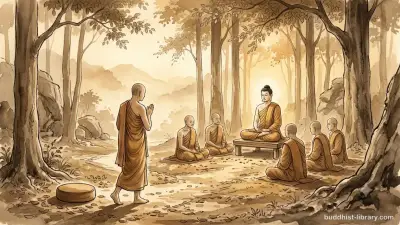
A celestial deity approaches the Buddha at night and asks: “What is the cause of downfall?” The Buddha responds with twelve specific conditions—clear, practical patterns of behavior that lead to decline.
The sutta’s genius lies in its simplicity. Each verse follows the same structure: “He who does X—this is the cause of his downfall.” No abstract philosophy. No technical terms. Just direct observation.
This teaching appears in both Theravāda and Mahāyāna collections, suggesting its universal relevance. It’s been memorized by laypeople across Buddhist Asia for centuries as practical guidance for living well.
What Are the Twelve Causes of Downfall?
The Buddha identifies twelve specific patterns. I’ll present them in contemporary language while staying true to the original meaning:
1. Delighting in Evil, Not Delighting in Good
When someone finds pleasure in harmful actions and has no taste for wholesome ones, they’re on the path to decline. This isn’t about rigid morality—it’s about direction. What we enjoy shapes what we become.
2. Loving Sleep, Loving Company, Not Being Energetic
Excessive sleep, constant socializing, laziness—these undermine accomplishment. The Buddha isn’t condemning rest or friendship. He’s pointing to patterns of avoidance. When someone chronically escapes through sleep or distraction, decline follows.
3. Being Rough, Insulting, and Cruel
Harsh speech and cruel behavior destroy relationships and reputation. The Buddha consistently emphasized right speech as foundational to both personal dignity and social harmony.
4. Having a Mother to Support, Having a Father to Support, But Not Honoring Them
Neglecting those who raised us—especially when they’re elderly and dependent—is a fundamental failure of gratitude and reciprocity. In traditional Asian societies, this was economic as well as moral: family networks were survival networks.
5. Deceiving a Brahmin, Contemplative, or Other Mendicant
Lying to spiritual teachers or those dependent on public support for their livelihood shows contempt for truth and the sacred. It corrodes one’s own integrity and damages the spiritual community’s trust.
6. Being Wealthy But Stingy, Miserly
Wealth gained but not shared becomes a trap. The Buddha taught dāna (generosity) as the foundation of spiritual life. Hoarding wealth while capable of giving creates both social isolation and inner constriction.
7. Being Conceited About Birth, Wealth, or Clan
Pride based on accidents of birth rather than character is hollow. Status that’s inherited offers no genuine ground for self-respect. Clinging to it breeds arrogance and fragility.
8. Being a Womanizer, Drunkard, or Gambler, Squandering What One Has Earned
Sexual misconduct, intoxication, and gambling drain resources and attention. These aren’t moral absolutes but practical observations: these behaviors consistently lead to ruin. The Five Precepts address most of these directly.
9. Not Being Content with One’s Own Wife, Seen with Prostitutes or the Wives of Others
Infidelity and sexual betrayal destroy trust and stability. This reflects the social context of ancient India, but the underlying principle remains: integrity in intimate relationships matters for both parties’ well-being.
10. Being Past One’s Youth, Taking a Young Wife, Unable to Sleep from Jealousy
Relationships driven by insecurity breed suffering. An older person marrying someone much younger and then consumed by jealousy—the Buddha saw this pattern clearly. Possessiveness masquerading as love leads only to torment.
11. Placing in Authority a Woman or Man Who Is a Drunkard and Wasteful
Entrusting power to those who lack self-control or wisdom invites disaster. Whether in family, business, or governance, leadership requires character. Delegating authority carelessly undermines everything.
12. Being of Little Wealth, Great Desire, Born in a Warrior Clan, Desiring Kingship
Ambition wildly exceeding one’s capacity or resources leads to overreach and downfall. The Buddha saw this especially in his own warrior caste—young nobles with modest means but grand political fantasies. Wanting what you can’t achieve and refusing to accept realistic limits breeds frustration and ruin.
Why Does the Buddha Focus on Downfall Rather Than Success?
The sutta’s framing is interesting: the deity asks about decline, not prosperity. Why?
One practical reason: people learn more from understanding what to avoid than from abstract ideals of success. Negative examples are vivid. Memorable. Telling someone “don’t do X” with clear consequences is often more effective than “strive for virtue.”
Buddhist teaching often works by elimination. By removing the causes of suffering and decline, well-being naturally arises. The Noble Eightfold Path works this way—it’s not about adding something artificial, but about removing what distorts and harms.
The sutta also implies the positive by negating the negative. If keeping bad company causes downfall, good friendship causes prosperity. If laziness causes decline, energy supports success. If stinginess causes ruin, generosity supports flourishing.
How Does the Parābhava Sutta Relate to Other Teachings?
This sutta complements several other practical discourses for laypeople:
-
The Sigālovāda Sutta outlines positive duties in six relationships (parents, teachers, spouse, friends, employees, spiritual guides). The Parābhava Sutta shows what happens when those duties are neglected.
-
The Maṅgala Sutta lists thirty-eight auspicious conditions for prosperity. It’s the positive complement to the Parābhava Sutta’s warnings.
-
The Five Precepts offer basic ethical guidelines. Many of the twelve causes of downfall are violations of those precepts—killing, stealing, sexual misconduct, lying, intoxication.
Together, these teachings form a comprehensive ethics for householder life: what to do, what to avoid, and why it matters.
Key Points: Understanding the Causes of Downfall
- The twelve causes are behavioral patterns, not isolated mistakes—chronic habits, not occasional errors
- Downfall is self-created through choices, not imposed by fate or external forces
- Many causes involve relationships: family, friends, intimate partners, community
- Economic and social dimensions matter—the Buddha wasn’t teaching purely spiritual ethics divorced from material life
- The teaching is preventive: recognizing these patterns early allows course correction
- By implication, the opposite of each cause points toward prosperity and well-being
- The discourse is aimed primarily at laypeople managing family, work, and social obligations
How Can We Apply This Teaching Today?
The social context has changed—few of us worry about “being born in a warrior clan” or “deceiving a brahmin.” But the underlying patterns remain relevant.
Bad company still corrupts. Who we spend time with shapes our values, habits, and futures. Choosing friends wisely matters as much now as in ancient India.
Laziness still undermines achievement. Chronic avoidance through distraction (now digital rather than sleep) still prevents genuine accomplishment.
Harsh speech still destroys relationships. Online or offline, cruelty corrodes connection.
Neglecting family still causes suffering. Aging parents still need care. Gratitude still matters.
Stinginess still isolates. Hoarding resources while capable of giving creates inner poverty, whatever the bank balance.
Integrity in intimate relationships still matters. Betrayal, jealousy, possessiveness—these patterns haven’t changed.
Choosing the wrong leaders still causes disaster. In business, politics, or personal life, entrusting authority to the incompetent or corrupt invites ruin.
Ambition exceeding capacity still causes failure. Overreach driven by ego leads to collapse.
The Parābhava Sutta offers what the Buddha often offered: a clear-eyed assessment of how things work. Not moralism, but observation. Not threats of cosmic punishment, but cause and effect.
Recognizing these patterns in ourselves—early, honestly—creates the possibility of change. That’s the real value: practical wisdom for choosing differently.
Read more:
- The Sigālovāda Sutta: The Buddha’s Code of Ethics for Laypeople — The positive complement to the Parābhava Sutta, outlining specific duties and relationships for householders.
- The Five Precepts: Buddhist Ethics in Daily Life — The foundational ethical guidelines that underlie many of the warnings in this sutta.
- Right Speech (Sammā Vācā): The Power of Wise Communication in Buddhism — Exploring one of the specific behaviors (harsh speech) that the Parābhava Sutta identifies as a cause of downfall.
📖 Source / license: Parābhava Sutta (Snp 1.6), translated by Thanissaro Bhikkhu and others on Access to Insight
Frequently asked questions
What is the Parābhava Sutta about?
The Parābhava Sutta is a discourse where the Buddha explains twelve conditions that lead to a person's decline or downfall in life, and by implication, what leads to prosperity. It's a practical teaching focused on everyday ethics and wise living.
Is the Parābhava Sutta only for monks or also for laypeople?
The Parābhava Sutta is explicitly directed at laypeople. The conditions it discusses—such as bad friendships, family responsibilities, work ethics, and social behavior—are all relevant to householder life, making it one of the most practical discourses for everyday living.
Where can I find the Parābhava Sutta in the Pali Canon?
The Parābhava Sutta appears in the Sutta Nipāta, one of the oldest collections in the Khuddaka Nikāya of the Pali Canon. It's the sixth sutta of the first chapter (Uraga Vagga), numbered as Snp 1.6.
How is the Parābhava Sutta structured?
The sutta follows a question-and-answer format. A deity visits the Buddha at night and asks about the causes of decline. The Buddha responds by listing twelve specific conditions, each introduced with the refrain 'This is the cause of downfall.' The structure is simple, memorable, and direct.