The Vinaya Piṭaka: Understanding the Buddhist Monastic Code
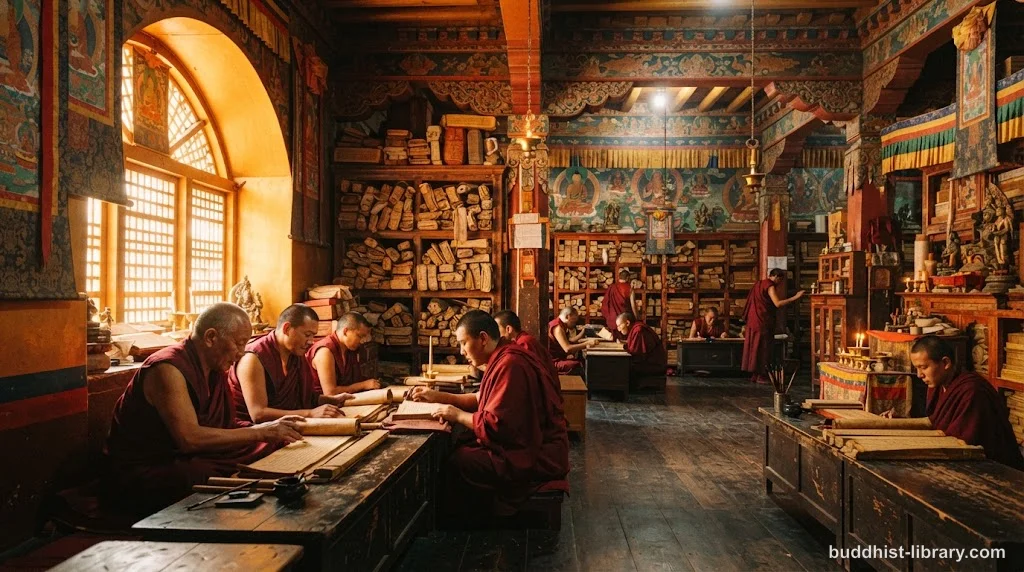
The Vinaya Piṭaka is the “Basket of Discipline”—one of three main divisions of the Pali Canon—containing the Buddha’s monastic code, training rules, and procedures that have guided Buddhist monastics for 2,500 years. More than just a rulebook, it preserves the Buddha’s responses to real situations, showing how ethical training supports liberation.
What Is the Vinaya Piṭaka?
The word vinaya means “leading out” or “discipline.” Piṭaka means “basket”—the ancient method of collecting palm-leaf manuscripts. Together, the Vinaya Piṭaka is the first of three divisions of the Pali Canon (Tipiṭaka), alongside the Sutta Piṭaka (discourses) and Abhidhamma Piṭaka (higher teachings).
Unlike the Suttas, which record the Buddha’s teachings on meditation and wisdom, the Vinaya focuses on sīla (ethical conduct) within the monastic community. It contains:
- Training rules for monks and nuns
- Procedures for ordination, confession, and communal acts
- Origin stories explaining the context in which each rule arose
- Case studies showing how to apply rules in specific situations
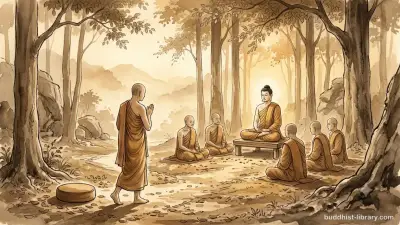
The Vinaya wasn’t written all at once. The Buddha established rules gradually, often in response to specific incidents. A monk behaves badly; the community brings it to the Buddha; he lays down a rule. This reactive approach shaped a code that balanced individual freedom with communal harmony.
The Three Divisions of the Vinaya
The Vinaya Piṭaka consists of three major parts:
1. Suttavibhaṅga (Analysis of the Rules)
This is the heart of the Vinaya. It contains the Pātimokkha (the 227 rules for monks and 311 for nuns) along with detailed commentary on each rule, including:
- The origin story (nidāna) explaining why the Buddha laid down the rule
- The precise wording of the rule
- Word-by-word analysis clarifying meaning
- Case law showing exceptions and applications
The Pātimokkha rules are organized by severity:
- Pārājika (4 rules): Defeat—expulsion from the Saṅgha
- Saṅghādisesa (13 rules): Formal meetings required for rehabilitation
- Aniyata (2 rules): Undetermined cases
- Nissaggiya Pācittiya (30 rules): Forfeiture and confession
- Pācittiya (92 rules): Confession
- Pāṭidesanīya (4 rules): Acknowledgment
- Sekhiya (75 rules): Training in etiquette
- Adhikaraṇasamatha (7 rules): Settling disputes
Every fortnight on Uposatha days, monastics gather to recite the Pātimokkha—an act of collective transparency and renewal.
2. Khandhaka (Chapters)
This section contains procedures and protocols for monastic life. It’s divided into two books:
Mahāvagga (Great Chapter) covers:
- Ordination procedures
- The Uposatha ceremony
- Rains retreat (Vassa)
- Medicines and food
- Robes and requisites
- The leather point (footwear rules)
Cullavagga (Lesser Chapter) includes:
- Formal acts of the Saṅgha
- Dispute settlement
- Schism and reconciliation
- The first and second Buddhist councils
- Rules for nuns (Bhikkhunī Khandhaka)
The Khandhaka portions often read like narrative, recounting the Buddha’s decisions as the early community grew and encountered new challenges.
3. Parivāra (Appendix)
A later compilation unique to the Theravāda tradition, the Parivāra serves as a reference manual. It reorganizes and cross-references material from the first two sections using:
- Summaries
- Mnemonic aids
- Question-and-answer formats
- Analysis by category
This section shows how later generations systematized the Vinaya for easier study and recitation.
Why Did the Buddha Establish Rules?
The Buddha didn’t impose rules arbitrarily. Each rule arose from a specific situation, balancing pragmatism with principle. When asked why he established the training rules, the Buddha gave ten reasons:
- For the excellence of the Saṅgha
- For the comfort of the Saṅgha
- For the restraint of evil-minded people
- For the ease of well-behaved monastics
- For the restraint of present defilements
- For protection against future defilements
- For the benefit of non-believers
- For increasing the number of believers
- For establishing true Dhamma
- For supporting the Vinaya itself
Rules weren’t meant to restrict freedom, but to create the conditions in which freedom from suffering could flourish. A monastic community riddled with misconduct or interpersonal conflict would struggle to practice meditation and attain insight.
The Purpose of Monastic Discipline
Modern readers sometimes see rules as rigid or outdated. Wrong frame. The Buddha designed the Vinaya with three aims that still matter.
1. Individual Restraint
Training rules help monastics guard their senses and actions. The Pātimokkha isn’t about punishment—it’s about developing hiri (shame) and ottappa (fear of wrongdoing), the two guardians that prevent harmful action. When these operate, external enforcement becomes unnecessary.
2. Community Harmony
Many rules exist solely to prevent conflict. A community riddled with disputes over property, status, or boundaries cannot sustain deep meditation practice. The Saṅgha functions when members trust one another, live simply, and settle disagreements fairly. Rules around sharing resources, confessing offenses, and resolving conflicts create the container for that trust.
3. Public Confidence
The Buddha knew something pragmatic: the Saṅgha depended on lay support. If monastics behaved irresponsibly—stealing, lying, indulging in luxuries—laypeople would lose faith and support would dry up. The Vinaya maintains the integrity that allows the teachings to spread across generations.
The Pātimokkha: The Core Training Rules
The Pātimokkha is recited in Pali every fortnight at the Uposatha gathering. Monastics listen in silence; if they’ve broken a rule, they must confess afterward. This practice of regular confession prevents offenses from festering and keeps the community transparent.
The four Pārājika rules (defeat offenses) are the most serious:
- No sexual intercourse
- No stealing
- No intentional killing of a human being
- No false claims of superhuman attainment
Breaking any of these results in permanent expulsion. There’s no second ordination.
The thirteen Saṅghādisesa rules cover serious misconduct requiring formal Saṅgha meetings—such as groundless accusations, causing schism, or building an oversized dwelling without permission. These offenses require a period of probation and rehabilitation.
Most rules fall into lighter categories—pācittiya (confession), pāṭidesanīya (acknowledgment), and sekhiya (training in manners). These include:
- Not eating after noon
- Not handling money
- Not sleeping in the same dwelling as an unordained person for more than three nights
- Proper deportment (not eating noisily, not swinging arms while walking)
Even minor rules serve a purpose: cultivating mindfulness, humility, and respect.
Relevance for Laypeople
Although the Vinaya governs monastics, laypeople benefit from understanding it. The same principles that underlie the Pātimokkha inform the Five Precepts:
- Not killing
- Not stealing
- Not engaging in sexual misconduct
- Not lying
- Not taking intoxicants
Studying the Vinaya also reveals how the Buddha approached ethical questions—not through absolutes, but through wisdom, compassion, and attention to context. The detailed case law shows him weighing intentions, consequences, and circumstances.
For laypeople supporting monastics, knowing the Vinaya helps you offer appropriate support. It explains why monks don’t handle money, why they eat only before noon, and why certain interactions are restricted—not as arbitrary taboos, but as deliberate training.
Common Misconceptions
”The Vinaya is outdated.”
Some rules—like those on oxcart repairs or acceptable bowl materials—seem archaic. But the principles remain relevant: simplicity, restraint, community accountability, and mindfulness in all activities. Modern monastic communities adapt minor details while preserving the core.
”The Vinaya is only for monks.”
While the detailed rules apply to monastics, the Vinaya embodies ethical training (sīla) that supports all Buddhist practice. Laypeople following the Eight Precepts on Uposatha days experience a taste of monastic discipline.
”Breaking a rule is unforgivable.”
Except for the four Pārājika offenses, all other violations can be confessed and purified. The Buddha emphasized honesty and learning over punishment. The Vinaya includes detailed rehabilitation processes for serious offenses.
How to Study the Vinaya
For English readers, the most accessible resource is The Buddhist Monastic Code I & II by Ṭhānissaro Bhikkhu (available free at dhammatalks.org). These volumes explain the Pātimokkha rules with commentary, background, and practical application.
The complete Vinaya Piṭaka is available in English translation from the Pali Text Society, though it’s dense and lengthy. Studying even portions of it offers insight into how the Buddha shaped a community designed to last millennia.
Key Takeaways
- The Vinaya Piṭaka contains the Buddhist monastic code—rules, procedures, and origin stories that have guided the Saṅgha for 2,500 years.
- It consists of three parts: the Suttavibhaṅga (analysis of rules), Khandhaka (procedures), and Parivāra (appendix).
- The Pātimokkha contains 227 rules for monks and 311 for nuns, organized by severity.
- Rules weren’t arbitrary—they arose from real situations and serve individual restraint, community harmony, and public confidence.
- While detailed rules apply to monastics, the Vinaya’s principles of ethical training benefit all practitioners.
Conclusion
The Vinaya Piṭaka is more than a rulebook. It’s a manual for living with mindfulness, integrity, and accountability—one that’s survived 2,500 years because it works.
The Buddha didn’t impose discipline from above. He responded to the needs of a growing community, balancing freedom with responsibility, idealism with pragmatism.
For monastics, the Vinaya is the foundation of their training. For laypeople, it offers a window into how ethical conduct supports liberation. And whether you’re considering ordination, supporting the Saṅgha, or simply curious about Buddhist ethics, the Vinaya reveals something essential: rules aren’t obstacles to freedom when they’re designed to create the conditions for it.
Read more:
- The Pali Canon (Tipiṭaka): Structure and Contents of Early Buddhist Scriptures — Understanding the complete structure of which the Vinaya is one-third.
- The Five Precepts: Buddhist Ethics in Daily Life — The lay version of ethical training rooted in the same principles as the monastic code.
- Sīla: Understanding Moral Discipline in Buddhist Practice — How ethical conduct forms the foundation for meditation and wisdom.
📖 Source / license: Vinaya Piṭaka (Pali Canon); The Buddhist Monastic Code I & II by Ṭhānissaro Bhikkhu (dhammatalks.org)
Frequently asked questions
What is the Vinaya Piṭaka?
The Vinaya Piṭaka is one of three main divisions of the Pali Canon, containing the Buddha's monastic code and disciplinary rules for the Saṅgha (monastic community). It includes training rules, procedures for communal acts, and the origin stories explaining why each rule was established.
How many rules are in the Pātimokkha?
The Pātimokkha contains 227 rules for fully ordained monks (bhikkhus) and 311 rules for fully ordained nuns (bhikkhunīs). These rules are recited every fortnight during the Uposatha ceremony.
Is the Vinaya relevant for laypeople?
While the Vinaya primarily governs monastic life, laypeople can learn valuable lessons about ethical conduct, community harmony, and mindful living from its principles. The Five Precepts for laypeople share the same foundation as monastic training.