The Aggañña Sutta: Buddhist Cosmology and the Origin of Social Hierarchy
The Aggañña Sutta is the Buddha’s mythological account of cosmic devolution and the origin of social hierarchy — a teaching that uses creation narrative not for speculation, but to dismantle the caste system’s claim to divine authority. By showing that all classes arose from common ancestors based on behavior rather than birth, the Buddha reveals social stratification as conventional, not cosmic law.
What Is the Aggañña Sutta?
The Aggañña Sutta (DN 27), the “Discourse on Knowledge of Beginnings,” is one of the most philosophically provocative texts in the Pali Canon. Unlike other cosmological myths that justify existing power structures, this one deconstructs them.
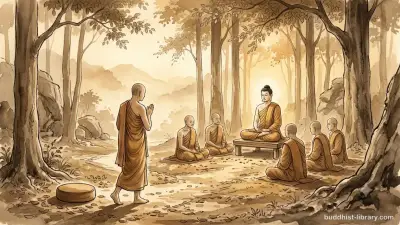
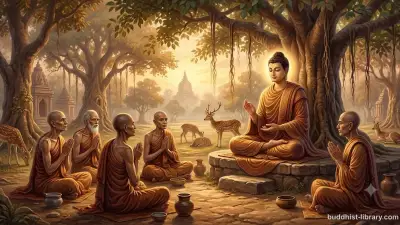
The context matters. The Buddha delivered this teaching to two young brahmins — Vāseṭṭha and Bhāradvāja — who had been expelled from their community for associating with Buddhist monks. Their former teachers had claimed that brahmins were the highest caste, born from Brahmā’s mouth, while other castes were inferior. The Buddha’s response? A counter-myth that traces all humans to the same source, showing class divisions as pragmatic adaptations rather than metaphysical truths.
The sutta operates on two levels: it’s both a cosmological narrative about how the world periodically dissolves and re-forms, and a social critique demonstrating that moral conduct — not birth — determines one’s true standing.
How Does the Buddha Describe the Beginning of the World?
The Aggañña Sutta begins not with creation ex nihilo, but with cosmic recycling.
Buddhist cosmology envisions endless cycles of expansion and contraction. When a world-system collapses, beings who have cultivated meditative absorption (jhāna) are reborn in the Ābhassara Brahma realm — a heaven of radiant light. When conditions ripen for a new world, these brahma beings gradually descend. At first, they’re entirely luminous, feeding on joy, flying through space.
The early earth is covered with a sweet, creamy substance. One curious being tastes it — and craving begins.
This is the Buddha’s version of the “fall”: not disobedience to a deity, but the arising of taṇhā (craving). As beings consume the earth’s essence, their bodies become solid and opaque. Gender differentiation emerges. Light fades, replaced by sun and moon. The more they indulge, the coarser they become.
This devolutionary process continues through stages:
- Sweet earth-essence → sweet creepers → rice that grows without cultivation
With each stage, beings grow more material, more dependent, less radiant. It’s a myth of decline driven by desire — a narrative that frames human existence not as the pinnacle of creation, but as a fall from grace into embodiment and differentiation.
How Do Social Classes Emerge in the Sutta?
Here’s where the teaching becomes politically charged.
The sutta doesn’t say brahmins, warriors, merchants, and workers were created separately by divine decree. Instead, it shows them evolving from common ancestors based on function:
-
Farmers (later gahapatis/householders): When rice no longer grows spontaneously and stealing begins, people divide land and establish agriculture. Property and labor stratification arise from practical necessity.
-
Warriors (khattiya): Some people, disgusted by wrongdoing, renounce theft and violence to meditate in the forest. But others, unable to sustain meditation, return to society and become rulers and military protectors. The khattiya class emerges to enforce order.
-
Brahmins: Not from Brahmā’s mouth — they’re simply those who continued forest meditation and later compiled texts and rituals. Their prestige comes from social role, not cosmic origin.
-
Merchants (vessa): Those who take up trade and commerce.
-
Workers (sudda): Those who take up manual labor.
The Buddha’s point is devastating to caste ideology: all classes came from the same beings, differentiated by choices and circumstances. Birth determines nothing. A brahmin is just someone whose ancestors chose ritual specialization.
This isn’t egalitarianism in the modern sense — the text still uses the language of “high” and “low” — but it’s a profound relativization. And that’s exactly what makes it powerful. If class is conventional, it has no absolute moral weight. What matters is sīla (virtue), not genealogy.
What Does the Buddha Mean by Using a Creation Myth?
Scholars have long debated whether the Buddha intended this narrative literally or allegorically. Several clues suggest skillful means rather than cosmological dogma:
- Satirical tone: The text parodies Brahmanical creation myths, particularly the Purusha Sukta, which claims castes emerged from different body parts of the cosmic being Brahmā.
- Pragmatic purpose: The teaching arises in response to a specific social conflict (caste prejudice), not as speculative philosophy.
- Silence elsewhere: In other suttas (like the Cūḷamāluṅkya Sutta), the Buddha explicitly refuses to answer metaphysical questions about origins, calling them “unconducive to liberation.”
The most coherent reading: the Buddha is meeting people where they are. If brahmins use creation myths to justify hierarchy, he’ll use a counter-myth to expose its arbitrariness. The method is narrative; the message is ethical.
What remains non-negotiable across interpretations: social stratification is saṅkhata (conditioned/constructed), not dhamma (natural law). Therefore, it can be questioned, resisted, and reimagined.
Why Does the Buddha Critique the Caste System?
The Aggañña Sutta doesn’t just deconstruct caste’s origin story — it attacks the very logic of hereditary status:
“If a khattiya breaks the precepts, he’s reborn in hell; if he keeps them, he’s reborn in heaven. The same is true for brahmins, vessas, and suddas. One’s rebirth depends on kamma, not caste.”
This is radical egalitarianism at the level of moral causality. The Brahmanical system claimed that caste determined karma; the Buddha inverts this, saying karma (intentional action) determines destiny, regardless of birth.
He also points out observable reality: members of every caste can be found exhibiting virtue or vice, wisdom or delusion. If caste were cosmically grounded, this variability wouldn’t exist.
The teaching doesn’t call for social revolution — the Buddha rarely prescribed political action — but it delegitimizes the ideological foundation of oppression. Once you see that “brahmin” is just a job title from ancient role specialization, the claim to inherent superiority collapses.
What Are the Key Cosmological Stages in the Sutta?
For those interested in the cosmological framework itself, the Aggañña Sutta outlines a devolutionary process:
- Ābhassara Brahma beings: Radiant, non-gendered, feeding on meditative joy.
- Consumption of earth-essence: Craving arises; bodies solidify; beauty variations emerge.
- Gender differentiation: Attachment to appearance leads to desire; male and female forms appear.
- Loss of spontaneous rice: Hoarding and theft necessitate agriculture and property.
- Emergence of kingship: A “Great Elect” (Mahāsammata) is chosen to enforce justice.
- Class specialization: Roles harden into hereditary castes.
Each stage represents increasing saṅkhāra (conditioning) and decreasing freedom. The myth functions as a paṭiccasamuppāda (dependent origination) story writ large: craving → grasping → becoming → suffering.
The world doesn’t fall because of sin; it falls because of tanhā. And it can rise again through virāga (dispassion) and nirodha (cessation).
How Is the Aggañña Sutta Relevant Today?
While the caste context is specific to ancient India, the sutta’s core insight — that social hierarchies are constructed, not natural — remains powerfully relevant:
-
Against essentialism: Any ideology claiming that gender, race, class, or nationality reflects inherent superiority can be examined through the Aggañña lens: Is this distinction dhamma (intrinsic to reality) or sammuti (conventional)?
-
For ethical accountability: If status is conventional, then each person is responsible for their conduct, not their birth. The sutta shifts focus from who you are to what you do.
-
Caution on speculation: The Buddha’s use of myth reminds practitioners not to confuse cosmological narratives with the path to liberation. Origin stories can be tools, but they aren’t the point.
The teaching also serves as a check on Buddhist triumphalism: if the Buddha used a creation myth pragmatically to critique oppression, later Buddhists should avoid turning their cosmological views into new fundamentalisms.
Key Points
- The Aggañña Sutta uses a devolutionary cosmological myth to critique the caste system’s claim to divine origin
- All human classes arose from common brahma-being ancestors, differentiated by choices and roles, not cosmic decree
- The text shows craving (taṇhā) as the engine of devolution — from radiant beings to material, stratified society
- Social hierarchy is saṅkhata (conditioned/constructed), not dhamma (intrinsic moral law)
- The Buddha’s likely purpose: skillful means to delegitimize Brahmanical ideology, not literal cosmological instruction
- Moral conduct (kamma), not birth, determines one’s spiritual worth and future rebirth
- The sutta remains relevant as a critique of all essentialist justifications for social hierarchy
Frequently Asked Questions
Is the Aggañña Sutta literal history or allegory?
The text doesn’t declare itself one way or the other. Given the Buddha’s general refusal to engage in speculative cosmology (as in the Cūḷamāluṅkya Sutta) and the sutta’s satirical tone, many scholars read it as upāya (skillful means) — a counter-narrative deployed to dismantle caste ideology. Whether the stages happened literally or not, the ethical point stands: social hierarchy is conventional.
How does this sutta relate to dependent origination?
The Aggañña Sutta can be read as a macro-level application of paṭiccasamuppāda. Craving arises → grasping for sensory pleasures → material embodiment → property → theft → laws → kingship → class stratification. Each stage conditions the next. The cosmic fall mirrors the personal process of becoming trapped in saṃsāra.
Did the Buddha oppose the caste system outright?
The Buddha didn’t advocate political overthrow of caste, but he undermined its ideological foundation by:
- Accepting people from all castes into the Saṅgha (monastic community)
- Teaching that kamma, not birth, determines rebirth
- Refusing to grant brahmins automatic spiritual authority
The Aggañña Sutta is one of his most direct challenges to caste as a metaphysical reality.
What is the ‘Great Elect’ (Mahāsammata)?
In the sutta, when theft and violence spread, people agree to elect a leader to maintain order — the first king, called Mahāsammata (“Great Elect”). This is a social-contract theory of government, not divine-right kingship. Even monarchy, in the Buddha’s telling, is a conventional solution to a practical problem, not cosmic destiny.
Are there parallels to this text in other traditions?
The Chinese Āgamas and Tibetan Kangyur contain versions of this teaching, showing it was part of early Buddhism across regions. However, it’s primarily studied in Theravada contexts today. Some scholars also see structural parallels to Jain and Vedic cosmologies, though the ethical conclusions differ sharply.
Read more:
- The Dīgha Nikāya: The Buddha’s Long Discourses Explained — Explore the full collection of long teachings, including the Aggañña Sutta’s context within early Buddhist literature.
- What Is Dependent Origination (Paṭiccasamuppāda)? — Understand the core Buddhist teaching on causality that underlies the Aggañña Sutta’s devolutionary narrative.
- Karma and Rebirth in Buddhism: How They Actually Work — Learn why the Buddha taught that intentional action, not caste or birth, determines one’s destiny across lifetimes.
📖 Source / license: Dīgha Nikāya 27 (DN 27), translated by Maurice Walshe in *The Long Discourses of the Buddha* (Wisdom Publications) and available on SuttaCentral and Access to Insight.
Frequently asked questions
What is the Aggañña Sutta about?
The Aggañña Sutta (DN 27) is the Buddha's discourse on cosmic devolution and the emergence of human society. It presents a mythological account of how the world and social hierarchy arose, ultimately arguing that class distinctions are conventional rather than inherent — a radical challenge to the Brahmanical caste system.
Did the Buddha believe this creation story literally?
Scholars debate this. The text itself has a satirical tone, suggesting the Buddha used the creation myth as a skillful means to critique caste ideology. Whether metaphor or cosmology, the ethical point remains clear: moral conduct, not birth, determines worth.
How does the Aggañña Sutta relate to caste?
The sutta dismantles the Brahmanical claim that the four castes originated from different parts of Brahmā's body. Instead, it shows all classes emerging from the same devolved beings based on occupation and behavior — making caste a social convention, not divine law.
What does 'Aggañña' mean?
Aggañña (Pali) means 'knowledge of beginnings' or 'primordial knowledge.' The title signals that this discourse addresses ultimate origins — though the Buddha's purpose is ethical instruction, not speculative cosmology.
Is the Aggañña Sutta found in all Buddhist traditions?
The Aggañña Sutta appears in the Pali Canon's Dīgha Nikāya and has parallels in Chinese and Tibetan canons, showing its early importance. However, it's primarily studied in Theravada contexts today.