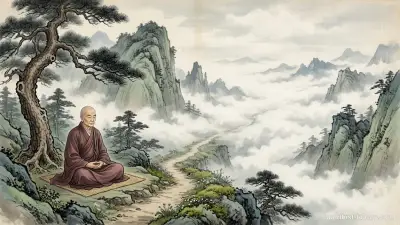
Buddhist Approach to Materialism and Consumer Culture: Finding Contentment Beyond Possessions
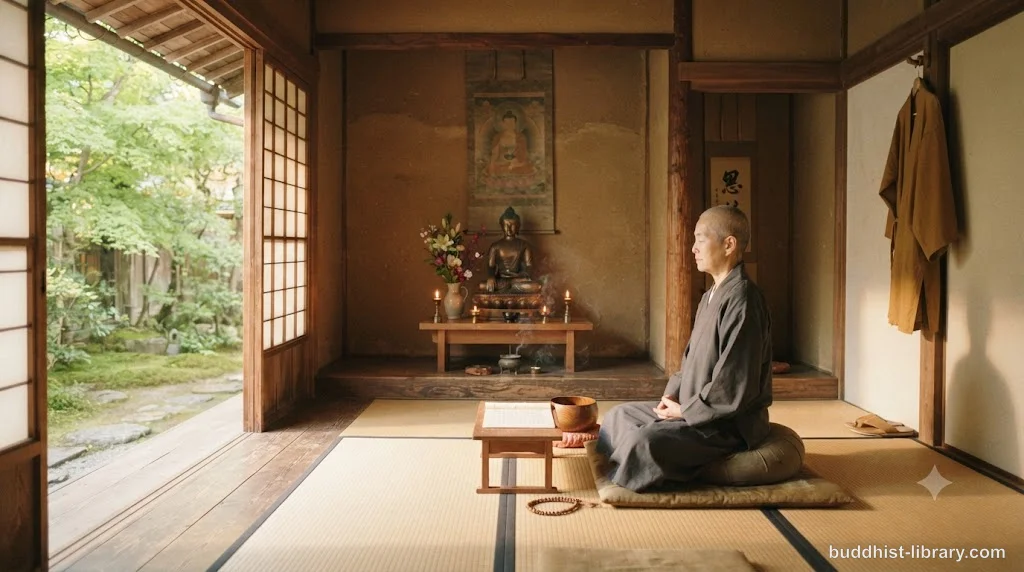
Buddhist teachings offer a radical alternative to consumer culture: genuine contentment comes not from acquiring more, but from understanding the nature of desire itself. The Buddha’s path shows how to find lasting satisfaction beyond the endless cycle of wanting, buying, and temporary pleasure—a freedom more valuable than any possession.
What Did the Buddha Actually Say About Material Things?
The Buddha’s approach to material possessions was surprisingly nuanced. He didn’t condemn ownership outright but examined the psychological relationship we have with things.
In the Dhammapada, the Buddha states: “Contentment is the greatest wealth” (Dhp 204). This isn’t mere platitude—it’s a direct challenge to the assumption that more possessions equal more happiness. The Buddha observed that the wealthy often worry constantly about protecting and increasing their property, while those with less can experience genuine peace.
The Pabbajjā Sutta (AN 5.75) identifies five drawbacks of possessions: they must be guarded with effort, they attract thieves and rivals, they decay and are lost, they create disputes among heirs, and they distract from spiritual development. Yet the Buddha didn’t tell all his followers to renounce everything. He recognized different paths for monastics who relinquish possessions entirely and laypeople who maintain households while practicing non-attachment.
The key teaching is that suffering arises not from owning things, but from clinging to them—the desperate need for permanence in an impermanent world. A person can own little and suffer greatly from attachment, while another can manage considerable wealth with wisdom and generosity.
How Does Consumer Culture Exploit Buddhist Insights About Desire?
Modern marketing operates on principles the Buddha would recognize immediately: the manufacture of dissatisfaction.
Consumer culture deliberately creates dukkha—that feeling something is lacking, that you’re incomplete without this product, that happiness is always one purchase away. Advertisers understand taṇhā (craving) better than most meditators. They know that satisfying one desire simply redirects it to the next object.
The Buddha called this the “thirst” that can never be quenched by drinking saltwater.
The mechanism works like this:
Identity construction through consumption: “You are what you buy.” This directly contradicts the Buddha’s teaching of anattā (non-self). When self-worth depends on possessions, you create a fragile identity that must constantly be maintained through purchasing. A house of cards.
Artificial obsolescence: Products are designed to break or become “outdated,” ensuring the cycle continues. This mirrors saṃsāra—the perpetual round of becoming and dissolving that the Buddha identified as inherently unsatisfying.
Comparison and competition: Social media amplifies upward comparison. You always see someone with more. The Buddha warned in the Bhaya-bherava Sutta (MN 4) that comparing ourselves to others—whether feeling superior or inferior—is a source of suffering.
Convenience as virtue: Every inconvenience becomes a “problem” requiring a purchased solution. This undermines self-reliance and resourcefulness—qualities the Buddha praised as spiritual strengths.
The Buddhist perspective reveals consumer culture as a system that promises liberation (through convenience, status, pleasure) while actually creating bondage to an endless cycle of wanting.
What Is Santuṭṭhi—The Buddhist Practice of Contentment?
Santuṭṭhi (contentment) appears throughout the early texts as a foundation of genuine happiness. It’s not passive resignation or settling for deprivation—it’s an active, joyful appreciation of what you have while understanding that external conditions cannot provide lasting fulfillment.
The Buddha taught contentment through several practices:
Appreciative awareness: Regularly reflecting on what you have rather than what you lack. This isn’t positive thinking—it’s clear seeing. When you genuinely examine your possessions, you often discover you have far more than you use or need.
Moderation in requisites: The monastic code lists four requisites—food, clothing, shelter, and medicine. For laypeople, this translates to distinguishing genuine needs from manufactured wants. Before buying, ask: “Do I need this, or have I been convinced I need it?”
Reflecting on impermanence: Understanding that all possessions decay, break, and will eventually be lost helps loosen the grip of attachment. This isn’t depressing—it’s liberating. When you don’t cling, you can enjoy things while they last without anxiety about their inevitable passing.
Gratitude practice: The Maṅgala Sutta lists “gratitude” (kataññutā) among life’s highest blessings. Simple daily reflection on what sustains you—food, shelter, the labor of others—counteracts the consumer mindset that always focuses on lack.
Santuṭṭhi doesn’t mean never acquiring anything new. It means approaching each purchase mindfully—from genuine need rather than compulsive craving. Finding satisfaction in sufficiency rather than always reaching for more.
How Can You Practice Non-Attachment While Owning Things?
The Buddha’s teaching on non-attachment (virāga) is often misunderstood. It doesn’t require physical renunciation from laypeople, but mental freedom from compulsive grasping.
You can own possessions while practicing non-attachment through these approaches:
Use without ownership mentality: View things as on loan, temporary tools for living. This doesn’t mean carelessness—the Buddha praised proper maintenance—but holding lightly. When something breaks or is lost, you can let it go without identifying it as “mine.”
Regular decluttering: Periodically releasing unused possessions serves dual purposes—practical simplification and psychological training in letting go. Notice the resistance that arises when considering giving away something you haven’t used in years. That resistance reveals attachment.
Mindful consumption: Before acquiring anything, pause and investigate the desire. What am I really seeking? Will this object provide it? Often we want connection, status, or distraction—things no product can truly deliver.
Generosity practice (dāna): Regularly giving possessions away—not just discarding broken items but sharing things of value—directly counteracts the accumulation tendency and trains in non-clinging.
Awareness of advertising: Recognize marketing messages for what they are—deliberate attempts to create craving. When you see an ad, mentally note “propaganda for dissatisfaction.” This simple recognition can defuse its power.
The Cūḷadukkhakkhandha Sutta (MN 14) describes how attachment to possessions leads to anxiety, conflict, and suffering. But the sutta emphasizes that the problem isn’t the objects themselves—it’s our relationship to them. Freedom comes through understanding this relationship rather than through forced asceticism.
What Does Right Livelihood Mean in a Materialistic Society?
Right Livelihood (sammā-ājīva), the fifth factor of the Noble Eightfold Path, addresses how we earn and spend in ways that don’t compromise ethical principles.
The Buddha specified five businesses to avoid: trading in weapons, living beings (slavery/trafficking), meat, intoxicants, and poisons (AN 5.177). But the deeper principle extends further: avoiding work that exploits others, deceives customers, or harms the environment.
In modern consumer culture, Right Livelihood includes:
Ethical earning: Choose work that doesn’t depend on creating dissatisfaction or exploiting others’ suffering. This may mean accepting lower income to maintain integrity—a choice the Buddha would recognize as wise.
Mindful spending: Where you spend is a moral choice. Supporting businesses with ethical practices, avoiding those built on exploitation, and recognizing that every purchase is a vote for a particular economic system.
Simplicity in lifestyle: The Buddha praised the “few wishes” (appiccha) of monastics, but laypeople can adopt similar principles—earning enough for genuine needs plus generous giving, rather than maximizing income to fund ever-expanding consumption.
Generosity: The Sigālovāda Sutta (DN 31) advises dividing income into four parts: one for living expenses, two for business/work, and one for savings. It also emphasizes giving to those in need and supporting spiritual teachers—a vision of wealth that flows rather than stagnates.
Work-life balance: Consumer culture demands overwork to fund overconsumption. The Buddha warned against both poverty and excessive wealth-seeking. Right Livelihood includes earning mindfully without becoming enslaved to work.
You cannot completely opt out of a materialistic economy, but you can participate with awareness, bringing Buddhist ethics to daily economic choices.
What Are the Practical Steps to Break Free from Consumer Culture?
Buddhist practice offers concrete methods to cultivate freedom from materialistic conditioning:
Establish a daily practice: Regular meditation reveals how desire operates in your mind. Sitting still with no entertainment exposes the constant craving for stimulation that shopping temporarily satisfies. Even ten minutes daily builds this awareness.
Media fasting: Limit exposure to advertising. Use ad blockers, avoid commercial television, question influencer content that’s essentially product placement. Notice how much lighter you feel with less bombardment.
Gratitude inventory: Each evening, mentally review what you’re grateful for—focusing on non-material blessings like health, relationships, simple pleasures. This rewires attention away from lack.
One-in-one-out rule: When acquiring something new, release something similar. This maintains equilibrium and makes each acquisition more intentional.
Waiting period: Before non-essential purchases, wait 30 days. Most desires fade when not immediately satisfied. The things you still want after a month are more likely to be genuine needs.
Experience over things: Research confirms what the Buddha taught—experiences bring more lasting satisfaction than possessions. Invest in learning, nature, relationships, and meaningful activities rather than accumulating objects.
Contemplation of death (maraṇasati): Regularly reflect that you will die and can take nothing with you. This isn’t morbid—it clarifies priorities. What truly matters in a life that will certainly end?
Community: Find others practicing similarly. The Saṅgha provides support, perspective, and alternatives to consumer culture’s values. Whether a meditation group or friends committed to simple living, shared practice sustains individual effort.
The path isn’t perfection but direction—gradually reducing compulsive consumption while increasing contentment, awareness, and freedom.
How Do Buddhist Teachers Today Address Consumer Culture?
Contemporary Buddhist teachers across traditions recognize materialism as a central challenge for modern practitioners.
Thanissaro Bhikkhu emphasizes the Buddha’s economic teachings, noting that the Pāli Canon contains extensive practical advice on earning, saving, and spending ethically—guidance often overlooked in modern Buddhism’s focus on meditation alone. He warns against “McMindfulness”—meditation stripped of ethical context and sold as stress-reduction for more productive consumption.
Ajahn Chah taught: “If you let go a little, you will have a little peace. If you let go a lot, you will have a lot of peace.” This applies directly to possessions. His forest tradition practices extreme simplicity, offering a living example that genuine happiness requires remarkably little.
Pema Chödrön addresses the Western tendency to consume even spirituality—buying books, retreats, and techniques while avoiding the difficult inner work. She teaches that discomfort with what we already have drives acquisition, and that meditation trains us to sit with discomfort rather than shop it away.
Bhikkhu Bodhi’s writings on Buddhist economics emphasize that the Buddha’s vision includes social dimensions—Right Livelihood isn’t just personal ethics but implies economic systems that don’t depend on exploitation and endless growth.
These teachers converge on a theme: authentic Buddhist practice inevitably conflicts with consumer culture’s values.
You cannot fully embrace both. Practice requires choosing contentment over acquisition, being over having, inner development over external accumulation.
Conclusion: The Wealth That Cannot Be Taken Away
The Buddha once said: “There is no fire like passion, no loss like anger, no pain like the aggregates, no ease other than peace” (Dhp 202). Consumer culture stokes the fire of passion, promising that the next purchase will finally bring satisfaction. Buddhism offers something far more radical—the peace that comes from understanding desire itself.
This isn’t poverty as an ideal. It’s recognizing that the wealth of contentment, the riches of generosity, and the treasure of a mind not enslaved to craving are more valuable than any material fortune. These cannot be stolen, do not decay, and accompany you beyond death.
In a culture built on manufactured dissatisfaction, the Buddha’s teaching is genuinely revolutionary: you already have enough to be happy. The work isn’t acquiring more—it’s seeing clearly what you have, understanding the nature of desire, and cultivating the contentment that no purchase can provide.
The path forward isn’t withdrawal from economic life but bringing wisdom to it—consuming mindfully, earning ethically, giving generously, and finding the satisfaction that lies not in having everything, but in wanting appropriately and appreciating deeply.
Read more:
- Right Livelihood (Sammā Ājīva): Buddhist Ethics in Work and Profession — explores the ethical earning principles that support non-materialistic living.
- Santuṭṭhi: The Buddhist Practice of Contentment and Simplicity — detailed guide to cultivating the contentment that frees you from consumer culture’s grip.
- Dāna: The Practice and Power of Generosity in Buddhism — how giving counteracts accumulation and creates genuine wealth of heart.
📖 Source / license: Access to Insight, SuttaCentral (Dhammapada, Pabbajjā Sutta AN 5.75, Bhaya-bherava Sutta MN 4)
Frequently asked questions
Does Buddhism require giving up all possessions?
No. The Buddha taught the Middle Way—avoiding both indulgence and extreme asceticism. Laypeople can own possessions while practicing non-attachment and contentment. The issue isn't owning things, but clinging to them.
How can I practice Right Livelihood in a consumer-driven economy?
Right Livelihood means earning through ethical means—avoiding harm to others and honest work. You can participate in the economy while maintaining awareness of your consumption patterns, buying mindfully, and not basing self-worth on possessions or income.
What's the difference between wanting and craving in Buddhism?
Wanting is natural—we need food, shelter, and basic goods. Craving (taṇhā) is the compulsive, never-satisfied grasping that drives suffering. The Buddha didn't condemn reasonable needs, but the endless cycle of desire that consumer culture exploits.
Can material success and Buddhist practice coexist?
Yes. The Buddha taught many wealthy laypeople who maintained their prosperity while practicing the Dhamma. The key is holding wealth lightly, using it wisely, practicing generosity, and not letting possessions define your identity or happiness.