The Cūḷadukkhakkhandha Sutta: Understanding the Mass of Suffering
The Cūḷadukkhakkhandha Sutta teaches that freedom comes not from denying pleasure’s appeal but from understanding its full cost. The Buddha reveals that sensual pleasures, the body, and feelings each offer real gratification — otherwise we wouldn’t pursue them — but carry dangers that outweigh their rewards, and that liberation requires seeing this truth clearly enough to let go.
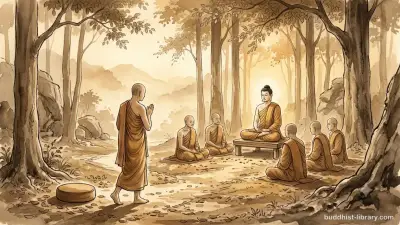
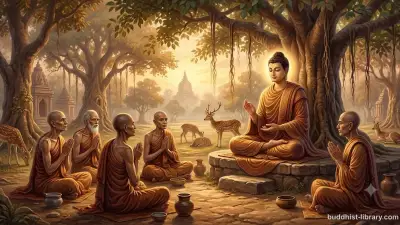
This discourse appears in the Majjhima Nikāya as the fourteenth sutta, delivered to a group of Sakyan princes — the Buddha’s own kinsmen. What sets it apart is its unflinching honesty. The Buddha doesn’t moralize. He doesn’t command. He analyzes, showing precisely why we’re drawn to sense pleasures, what’s wrong with that attraction, and how to find a way out.
What Is the Cūḷadukkhakkhandha Sutta About?
The Cūḷadukkhakkhandha Sutta — “The Lesser Discourse on the Mass of Suffering” — examines three domains of human experience through a consistent threefold lens. For each domain, the Buddha asks: What is its gratification? What is its danger? What is the escape?
The three domains are:
- Sensual pleasures (kāma) — sights, sounds, smells, tastes, and tactile sensations that are agreeable and pleasurable
- Form (rūpa) — the physical body
- Feelings (vedanā) — pleasant, painful, and neutral sensations
The discourse follows a teaching conversation between the Buddha and Mahānāma, a Sakyan prince. Mahānāma asks how the Buddha teaches his disciples, and the response is this systematic analysis that cuts through both ascetic denial and hedonistic indulgence.
Why Did the Buddha Teach This Discourse?
The historical context matters. The Sakyans were the Buddha’s own clan — wealthy, powerful, accustomed to comfort. Many had gone forth as monks but still carried habits of mind shaped by privilege and pleasure. They needed a teaching that neither condemned their past nor validated clinging to it.
This sutta addresses a perennial spiritual confusion: the belief that liberation means either complete rejection of pleasure or permission to indulge freely. The Buddha’s analysis cuts through both extremes. He acknowledges that pleasures are genuinely gratifying — denying this would be dishonest and ineffective — but reveals that their danger exceeds their reward, and that a deeper satisfaction comes from non-clinging.
The discourse also establishes a methodology. Rather than asserting “desire is bad” or “the body is impure,” the Buddha invites investigation. Look closely at experience. See the gratification. See the danger. See the escape. This empirical approach makes the teaching accessible to anyone willing to examine their own life.
What Is Gratification in Sensual Pleasures?
The Buddha begins with sensual pleasures and asks: what is their gratification? His answer is direct: “The pleasure and joy that arise dependent on these five strands of sensual pleasure — that is the gratification.”
These five strands are:
- Forms cognizable by the eye that are desirable, lovely, agreeable, pleasing
- Sounds cognizable by the ear…
- Odors cognizable by the nose…
- Flavors cognizable by the tongue…
- Tangibles cognizable by the body that are desirable, lovely, agreeable, pleasing
The gratification is the pleasant feeling that arises when we encounter these objects. A beautiful sunset. A favorite meal. Music that moves us. Physical comfort. The Buddha doesn’t dismiss these as illusions — they’re real pleasures, genuinely satisfying in the moment.
Why acknowledge this? Because denying what we actually experience would wreck the teaching’s credibility. The Buddha earned trust by naming what everyone already knows: sense pleasures do feel good. That’s why we pursue them.
What Is the Danger in Sensual Pleasures?
Having established the gratification, the Buddha turns to danger. Here the teaching becomes more confronting:
“That sensual pleasures are impermanent, suffering, and subject to change — that is the danger in sensual pleasures.”
He unpacks this with vivid examples. Consider a man who pursues wealth — one of the most common sensual goals. He works hard, endures heat and cold, mosquitoes and flies, hunger and thirst. If he fails to gain wealth, he grieves. If he succeeds, he worries about protecting it — from kings, thieves, fire, flood, or hostile heirs.
The danger isn’t merely that pleasures end (though they do). The danger is structural:
- We organize our lives around pursuing and maintaining them
- We suffer when we fail to obtain them
- We suffer when we lose them
- Even when we have them, we fear their loss
- We harm ourselves and others in the pursuit
The Buddha also points to a deeper danger: sensual pleasures condition the mind toward craving (taṇhā), which perpetuates the cycle of suffering. Each pleasure reinforces the pattern of seeking satisfaction outside ourselves, building a habit of dependence that becomes harder to break.
This is the “mass of suffering” — not individual pain but the accumulated weight of a life structured around chasing fleeting satisfactions.
What Is the Escape from Sensual Pleasures?
The escape is neither suppression nor indulgence. It’s clear seeing:
“The removal of desire and lust for sensual pleasures, the abandoning of desire and lust for them — that is the escape from sensual pleasures.”
Notice what this means. The escape isn’t removing the pleasures from life — it’s removing desire and lust for them. This distinction matters. A practitioner can experience pleasant sights, sounds, tastes without clinging, without building identity around them, without needing them to be other than they are.
The Buddha describes how those who have achieved this escape — the arahats and advanced practitioners — have “removed desire and lust, abandoned it, made an end of it.” They live in the world but aren’t enslaved by its offerings. They can enjoy a good meal or a beautiful view without the craving that turns pleasure into suffering.
This escape is realized through practice, particularly through insight meditation (vipassanā) that sees the impermanent, unsatisfying, and not-self nature of phenomena. When the mind sees clearly enough, desire naturally releases.
What About Form and Feelings?
The Buddha applies the same analysis to form (the body) and to feelings (pleasant, painful, neutral sensations). For each:
Gratification in form: “The pleasure and joy that arise in dependence on form — that is the gratification.” We enjoy health, strength, attractive appearance.
Danger in form: “That form is impermanent, suffering, and subject to change — that is the danger in form.” The body ages, sickens, breaks down. Attachment to it brings continuous anxiety and eventual loss.
Escape from form: “The removal of desire and lust for form, the abandoning of desire and lust for it — that is the escape from form.”
Gratification in feeling: “The pleasure and joy that arise in dependence on feeling — that is the gratification.”
Danger in feeling: “That feeling is impermanent, suffering, and subject to change — that is the danger in feeling.”
Escape from feeling: “The removal of desire and lust for feeling, the abandoning of desire and lust for it — that is the escape from feeling.”
The repetition is intentional. The Buddha is establishing a template for investigation that applies across all conditioned phenomena. Whatever we encounter — objects, our body, sensations — can be examined through these three aspects. This becomes a tool for insight in daily life.
Key Points from the Sutta
- Gratification is real — The Buddha acknowledges that sense pleasures, the body, and feelings genuinely provide satisfaction. Denying this would be dishonest.
- Danger outweighs gratification — While pleasures feel good, their impermanence and the suffering involved in pursuing and maintaining them create more suffering than joy.
- Escape comes through letting go — Freedom isn’t found by rejecting experience but by removing desire and lust for it. We can experience without clinging.
- The threefold analysis is a practice tool — Gratification, danger, escape isn’t just theory. It’s an investigative framework you can apply to anything you’re attached to.
- Clear seeing leads to release — When we fully understand all three aspects, desire naturally weakens. We don’t have to force ourselves to let go; insight does the work.
- The teaching validates neither hedonism nor asceticism — The Buddha walks the middle way, acknowledging pleasure without endorsing indulgence, recognizing danger without demanding harsh denial.
How Does This Teaching Apply to Modern Life?
Every scroll through social media. Every shopping trip. Every pursuit of comfort or status. These are encounters with the exact dynamics this sutta describes. We’re drawn to pleasurable experiences (gratification), we suffer when they end or fail to satisfy (danger), and we have the option to relate differently (escape).
Consider a concrete example: acquiring a new phone. The gratification is real — it works smoothly, looks appealing, provides entertainment and connection. The danger is also real — we paid money (which required work and sacrifice), we’ll worry about damaging it, it will become obsolete and need replacing, and while using it we might neglect more meaningful activities. The escape is to use the phone without identifying with it, without needing it to be other than it is, without building our happiness on its possession.
This applies to:
- Relationships — We can love without clinging, enjoy companionship without dependence, allow people to be themselves
- Work achievement — We can pursue excellence without tying our worth to outcomes
- Food and drink — We can enjoy flavors without compulsive eating or rigid restriction
- Entertainment — We can appreciate art, music, stories without needing constant stimulation
The practice is to investigate your own experience. When you pursue something, ask: What’s the gratification I’m seeking? What dangers am I overlooking? Is there a way to engage without clinging?
How Does This Sutta Relate to Other Teachings?
The Cūḷadukkhakkhandha Sutta doesn’t stand alone. It echoes and reinforces core Buddhist principles:
- The First Noble Truth — The mass of suffering described here is dukkha in action. The sutta shows concretely how suffering accumulates through our relationship with sense pleasures.
- The Second Noble Truth — The danger section reveals how craving (taṇhā) perpetuates suffering. We’re not just passive victims; our desire drives the cycle.
- The Third Noble Truth — The escape section points to nibbāna — the cessation of craving and the end of suffering.
- Dependent Origination — The discourse traces how contact with pleasant objects gives rise to feeling, which gives rise to craving, which gives rise to clinging, which gives rise to suffering.
- The Middle Way — By acknowledging both gratification and danger, the Buddha validates neither extreme asceticism nor hedonism.
This teaching also complements practical instructions like the Satipaṭṭhāna Sutta, which provides the meditation methods for investigating these phenomena directly. Understanding the threefold analysis gives context for why we cultivate mindfulness of the body, feelings, and mind.
What Is the Practical Application?
The Cūḷadukkhakkhandha Sutta isn’t meant to be merely studied — it’s a practice manual. Here’s how to work with it:
-
Choose a domain — Pick something you’re attached to: a relationship, a possession, a habit, an ambition.
-
Investigate gratification — Honestly acknowledge what you get from it. What pleasure, satisfaction, or security does it provide? Don’t skip this step or minimize it.
-
Investigate danger — What does this attachment cost? Time? Money? Energy? Peace of mind? What happens when you don’t get it, or when you lose it? What suffering does it cause for you or others?
-
Investigate escape — What would it be like to engage with this without clinging? Can you enjoy it without needing it? Can you lose it without being destroyed?
-
Reflect on the balance — When you see gratification, danger, and escape clearly, does the balance shift? Do you still want to organize your life around this, or does wisdom suggest a different relationship?
This investigation can be done formally in meditation or informally as you go through the day. The point is to see clearly, not to force yourself into detachment. When the seeing is complete, letting go happens naturally.
What Did the Buddha Say About Those Who Understand This?
The Buddha concludes the sutta with a powerful statement. He contrasts two types of people:
Those who don’t understand: “Those who have not directly known the gratification as gratification, the danger as danger, and the escape as escape — it is impossible that they could abandon sensual pleasures or that they could dwell having removed the underlying tendency to lust for sensual pleasures.”
Without understanding, we can’t let go. We might suppress desire temporarily, but the underlying tendency remains. We haven’t seen deeply enough.
Those who understand: “Those who have directly known the gratification as gratification, the danger as danger, and the escape as escape — it is possible that they could abandon sensual pleasures and that they could dwell having removed the underlying tendency to lust for sensual pleasures.”
The key word is “directly known.” This isn’t intellectual understanding. It’s the kind of knowing that comes from sustained investigation — seeing for yourself, in your own experience, how these three aspects play out. When that seeing is clear and complete, attachment loses its power.
This is encouraging. The Buddha isn’t describing a supernatural attainment or something only available to monastics. He’s describing a process of clear seeing available to anyone willing to investigate honestly. The path is open.
Read more:
- Working with Sense Desire (Kāmarāga) in Buddhist Practice — Practical methods for working with sensual desire, the very craving this sutta analyzes.
- What Is Taṇhā? Understanding Craving in Buddhism — A deeper look at craving, the force that drives us toward gratification despite knowing the danger.
- The Five Aggregates (Khandhas): What We Mistake for ‘Self’ — Understanding how form and feeling fit into the larger framework of the aggregates.
📖 Source / license: Majjhima Nikāya 14, translated by Bhikkhu Bodhi (Wisdom Publications) and Ṭhānissaro Bhikkhu (dhammatalks.org)
Frequently asked questions
What does Cūḷadukkhakkhandha mean?
Cūḷadukkhakkhandha means 'the lesser mass of suffering.' The term refers to the aggregation or heap (khandha) of suffering (dukkha) that arises from our relationship with sensual pleasures, form, and feelings. It's called 'lesser' to distinguish it from the Mahādukkhakkhandha Sutta (MN 13), though both cover similar ground.
What are the three aspects the Buddha examines in this sutta?
The Buddha examines three aspects for each phenomenon (sense pleasures, form, and feelings): gratification (assāda) — what's enjoyable about it; danger (ādīnava) — its drawbacks and risks; and escape (nissaraṇa) — the way to freedom from it. This threefold analysis reveals why we're drawn to things, why they harm us, and how to find liberation.
How does this sutta relate to everyday life?
This sutta speaks directly to modern experience. Every time we pursue pleasure — through food, entertainment, relationships, or material goods — we're encountering the dynamics this discourse describes. Understanding gratification helps us see why desire is so compelling; understanding danger helps us recognize the cost; understanding escape shows us a wiser way to relate to experience.
What's the difference between gratification and clinging?
Gratification is the genuine pleasure or satisfaction we experience — it's real, not imagined. The Buddha doesn't deny that sensual pleasures feel good. The problem isn't the pleasure itself but our relationship to it: we cling, we depend on it for happiness, we ignore its impermanent nature. The practice is to see gratification clearly without building our life around chasing it.