The Dhajagga Sutta: The Buddha's Teaching on Overcoming Fear with Mindfulness
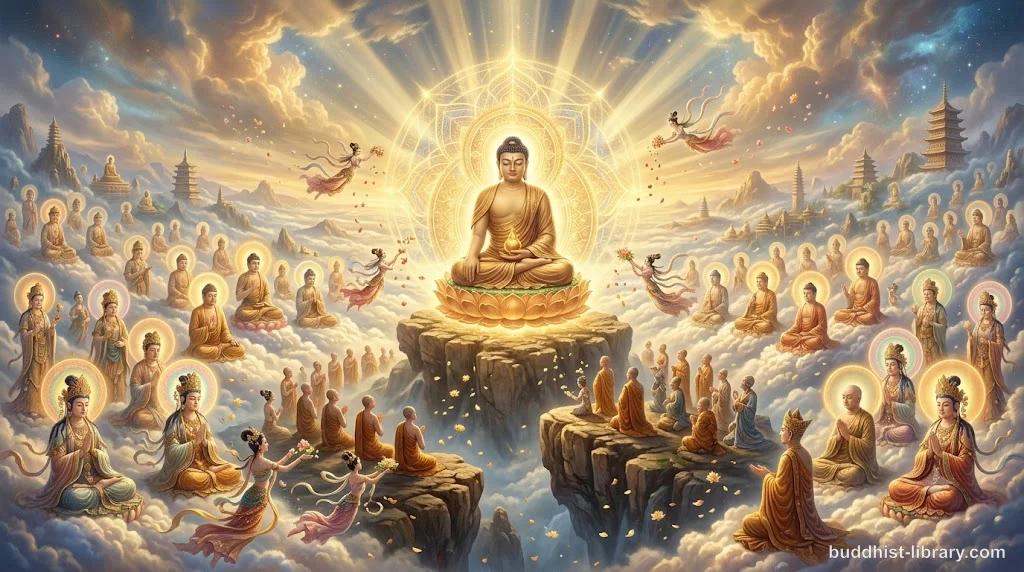
The Dhajagga Sutta offers one of the Buddha’s most practical and immediate methods for working with fear: when terror or dread arises, recollect the Buddha, the Dhamma, or the Sangha, and fear will be calmed or diminished. This simple mindfulness practice transforms panic into presence by anchoring awareness in the Triple Gem.
Fear is universal. The sudden jolt when you hear a crash. The slow creep of uncertainty. The low-grade anxiety that colors an entire week. The Buddha didn’t tell his followers to just be brave. In the Dhajagga Sutta (SN 11.3), he offered something you can actually use: a repeatable practice for meeting fear with mindfulness.
What Is the Dhajagga Sutta?
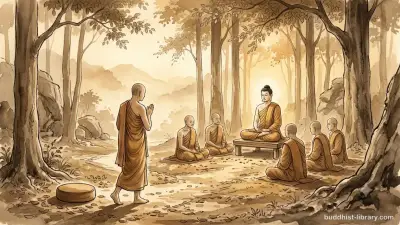
The Dhajagga Sutta — literally “The Discourse on the Crest of the Banner” — appears in the Saṃyutta Nikāya’s Sakka Saṃyutta (the collection of discourses connected to Sakka, the king of the devas). The Buddha tells his monks about an ancient battlefield custom: when soldiers felt fear or dread, they would look up at the top of their army’s banner, and that sight would restore their courage.
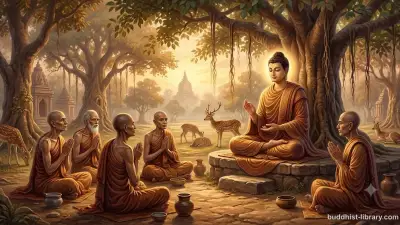
The Buddha then offers a spiritual parallel. When fear, terror, or dread (bhaya, chambhitatta, lomahaṃsa) arises in disciples — whether monastics or laypeople — they should recollect one of the Three Jewels:
- The Buddha — the Tathāgata, the Worthy One, the Perfectly Enlightened One
- The Dhamma — the teaching well-proclaimed, visible here and now, leading to Nibbāna
- The Saṅgha — the noble disciples who have practiced well and realized the fruits of the path
The sutta promises that through this recollection, “whatever fear, trepidation, or terror there is will be abandoned or diminished.”
Not magical thinking. A deliberate shift of attention — from the object of fear to the qualities of awakening.
Why Does Recollecting the Triple Gem Work?
Fear narrows awareness. When we’re afraid, the mind contracts around the threat, real or imagined. Thoughts spiral, the body tenses, and we lose perspective. The Dhajagga Sutta method works because it interrupts this loop.
Recollecting the Buddha means remembering that someone faced birth, aging, death, and uncertainty — and found a way through. He wasn’t born enlightened. He practiced. He investigated. He awakened. That fact changes things. The path is real. Fear isn’t the final word.
Recollecting the Dhamma shifts focus from “what if” to “what is.” The Dhamma is immediate (sandiṭṭhika), visible in this very life. When we recall the truth of impermanence, non-self, and the Four Noble Truths, fear loses its absolute grip. We see that the feared object is also conditioned, impermanent, and ultimately not-self. The teaching itself becomes a refuge.
Recollecting the Saṅgha reminds us we’re not alone. Countless practitioners have walked this path, faced their fears, and realized freedom. The noble disciples (those who have attained stream-entry, once-returning, non-returning, or arahatship) are living proof that the practice works. Their example steadies the mind.
In each case, the mind moves from helplessness to agency, from isolation to connection, from panic to presence.
How to Practice the Dhajagga Sutta Method
This practice is remarkably simple:
-
Notice the fear. Whether it’s a sudden fright, chronic anxiety, or subtle unease, recognize that fear (or dread, or panic) has arisen.
-
Recollect one of the Three Jewels. Choose whichever feels most accessible in the moment:
- “The Buddha is enlightened, freed from all defilements, the teacher of gods and humans.”
- “The Dhamma is well-taught, immediate, leading onward, to be realized by the wise.”
- “The Saṅgha has practiced well, the noble disciples who are worthy of gifts and respect.”
-
Let the recollection settle. You’re not forcing the fear away. You’re changing what the mind is attending to. As awareness fills with the qualities of the Triple Gem, fear naturally loses its intensity.
The sutta doesn’t promise that fear will vanish instantly every time. It says fear “will be abandoned or diminished” (pahīyissati vā … cittaṃ vā pakkhandissati). Even a reduction is progress. Over time, the practice builds confidence and resilience.
Dhajagga Sutta in Daily Life
This isn’t just a meditation technique. The Dhajagga Sutta applies to any moment fear arises:
- In meditation: When restlessness, doubt, or aversion intensifies, recollect the Triple Gem.
- In daily stress: Anxiety about work, relationships, or health can be met with mindful refuge.
- In physical danger: Even when real threats are present, grounding in the Triple Gem prevents panic from escalating into frozen terror.
- In existential dread: Fear of death, meaninglessness, or loss — all can be softened by remembering the path and those who’ve walked it.
The practice doesn’t pretend fear is unreal. It gives you a place to stand while fear moves through.
What the Dhajagga Sutta Teaches About Fear
The sutta reveals something profound about the Buddha’s approach to difficult emotions: we don’t have to fight fear or shame ourselves for feeling it. Fear is a natural response to perceived threat. What matters is what we do when fear is present.
The Dhajagga Sutta offers an alternative to suppression or indulgence. We acknowledge the fear, then consciously direct attention toward refuge. This is mindfulness in action — not forcing calm, but creating the conditions for calm to arise.
The sutta also shows that taking refuge is not passive. It’s an active, repeated choice to align the mind with what is wholesome, true, and liberating. Each time we recollect the Buddha, Dhamma, or Sangha in the face of fear, we train the mind to seek refuge in wisdom rather than in craving, aversion, or delusion.
Key Points
- The Dhajagga Sutta (SN 11.3) teaches a practical method for overcoming fear through recollection of the Triple Gem
- When fear, terror, or dread arises, consciously recall the Buddha, the Dhamma, or the Saṅgha
- This practice interrupts the fear-contraction loop and shifts attention from threat to refuge
- The method works because it grounds awareness in the reality of awakening, truth, and the noble community
- Fear is not denied or suppressed — it’s met with mindfulness and wise attention
- This practice applies to meditation, daily life, physical danger, and existential dread
- Regular recollection builds resilience and trains the mind to seek refuge in wisdom
- The sutta demonstrates that taking refuge is an active, trainable skill, not passive wishing
Conclusion
The Dhajagga Sutta doesn’t promise a life without fear. It offers something you can actually do when fear shows up.
The next time panic hits — or dread settles in for days — try this. Pause. Recall the Buddha, the Dhamma, or the Saṅgha. Fear might not vanish. But it loses its absolute grip. And in that space, something else becomes possible.
Read more:
- The Three Refuges (Tisaraṇa): Taking Refuge in Buddha, Dhamma, Sangha — Explore the foundational practice of taking refuge and how it provides stability in every aspect of Buddhist life.
- What Is Mindfulness (Sati) in Buddhism? — Understand the core quality that makes the Dhajagga Sutta method effective: present-moment awareness applied to any experience, including fear.
- Buddhist Approach to Anxiety and Worry: Working with Mental Restlessness — Learn additional Buddhist methods for working with chronic anxiety, restlessness, and the worried mind.
📖 Source / license: Samyutta Nikaya 11.3 (Dhajagga Sutta), translated by Bhikkhu Bodhi in 'The Connected Discourses of the Buddha'
Frequently asked questions
What is the Dhajagga Sutta about?
The Dhajagga Sutta (SN 11.3) is a discourse where the Buddha teaches a practical method for overcoming fear and terror by recollecting the Buddha, Dhamma, or Sangha — the Triple Gem.
How does the Dhajagga Sutta help with fear?
The sutta offers a mindfulness practice: when fear arises, recall the Buddha's enlightenment, the truth of the Dhamma, or the noble Sangha. This shifts attention from fear to the qualities of awakening, calming the mind.
What does 'dhajagga' mean?
Dhajagga means 'top of the banner' or 'crest of the standard.' The sutta uses the metaphor of ancient warriors looking to their army's banner for courage in battle.
Can laypeople practice the Dhajagga Sutta method?
Yes, this practice is accessible to everyone. Whenever fear, anxiety, or dread arises — whether in meditation, daily life, or difficult moments — recollecting the Triple Gem provides immediate refuge and calm.