The Gārava Sutta: The Buddha's Teaching on Respect and Reverence
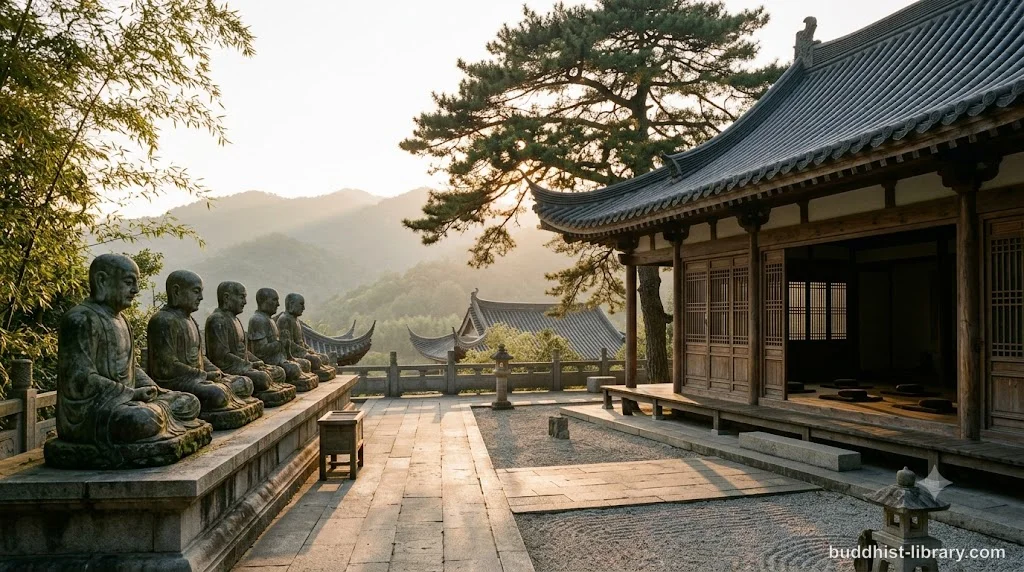
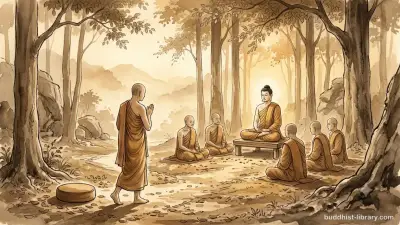
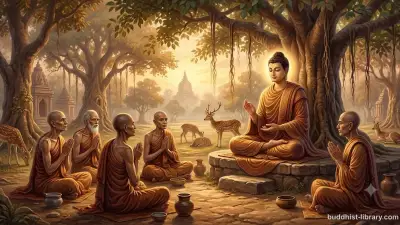
Shortly after his enlightenment, the Buddha sat alone beneath the Goatherd’s Banyan Tree and reflected that living without reverence is difficult and uncomfortable. When Brahmā Sahampati appeared and asked whom the Buddha would honor, he replied: “I will honor the Dhamma itself — the truth by which I became enlightened.” This brief sutta reveals something unexpected: even full awakening doesn’t eliminate the need for reverence — it clarifies what truly deserves it.
What Is the Gārava Sutta?
The Gārava Sutta (SN 6.2) — the Discourse on Respect — is one of the shortest yet most psychologically revealing texts in the Pali Canon.
It belongs to the Saṃyutta Nikāya’s Brahmā Saṃyutta, the collection of discourses involving Brahmā deities. The sutta takes place in the weeks immediately following the Buddha’s awakening at Bodhgaya, during the period when he was still deciding whether to teach. He sat beneath the Goatherd’s Banyan Tree near Uruvelā, reflecting on his enlightenment and what would come next.
The Setting and Circumstances
According to the traditional account, the Buddha had just attained full enlightenment under the Bodhi tree. He had discovered the Four Noble Truths, understood dependent origination, and completely uprooted the taints (āsava). He was a Sammā-Sambuddha — a Perfectly Enlightened One.
Yet even in this exalted state, something felt incomplete. The text records his reflection: living without respect, without deference, is difficult and uncomfortable (dukkhaṃ agāravo viharati appatisso).
This is a striking admission.
The Buddha had reached the end of suffering (dukkha-nirodha), achieved unshakeable liberation, and become worthy of the world’s highest veneration. What could he possibly need from reverence?
Why Does Even the Buddha Need Reverence?
The answer the Buddha gives cuts against our modern assumptions about enlightenment and autonomy.
Reverence as a Structural Support
The Buddha’s reflection wasn’t about insecurity or incompleteness in his realization. It was about how human beings — even fully awakened ones — are structured psychologically and socially.
Reverence provides:
- Orientation — a north star for conduct and values
- Humility — a guard against complacency or arrogance
- Connection — relationship to something greater than isolated self
- Motivation — an uplifting quality that supports sustained effort
Without something worthy of respect to orient around, life becomes directionless, even for an arahat. The Buddha describes this condition as “difficult” (dukkha) — not dukkha in the sense of existential suffering (which he had ended), but dukkha as uncomfortable, unstable, not conducive to dwelling at ease.
The Buddha’s Search for What to Honor
The Buddha then considered: “What ascetic or brahmin should I honor and respect, and under whom should I dwell?”
He looked for a teacher more accomplished than himself in moral discipline (sīla) — but found none. More accomplished in concentration (samādhi) — none. In wisdom (paññā), liberation (vimutti), or knowledge and vision of liberation (vimuttiñāṇadassana) — again, no one.
This wasn’t arrogance. The Buddha had verified through direct knowledge that his realization was complete and unsurpassed. There was no teacher left to study under, no peer to learn from, no human being whose attainment exceeded his own.
So what could the Buddha honor?
The Buddha’s Answer: Honor the Dhamma
At this point, Brahmā Sahampati — a divine being who had previously urged the Buddha to teach — appeared and confirmed the Buddha’s insight with a verse:
“All the Buddhas of the past,
And those yet to come,
And the one who exists at present —
All honor the true Dhamma.This is the natural law (dhammatā) of Buddhas:
They revere the sublime Dhamma.
Therefore you too, desiring your own good,
Should revere the sublime Dhamma.”
The Buddha then declared: “I will honor this very Dhamma, having become fully enlightened by this Dhamma. I will respect it and dwell in dependence on it.”
What Does “Honoring the Dhamma” Mean?
The Dhamma the Buddha speaks of here operates on multiple levels:
-
The truth he discovered — the Four Noble Truths, dependent origination, the three characteristics, the natural law (dhammatā) of how things actually are
-
The principles that lead to awakening — the Noble Eightfold Path, the factors of enlightenment, the gradual training
-
The teaching he would share — the articulated doctrine that others could use to reach the same realization
By honoring the Dhamma, the Buddha:
- Lives in alignment with truth rather than whim or preference
- Models the path for others (showing that reverence for Dhamma never becomes obsolete)
- Remains connected to what is genuinely worthy of respect (not power, comfort, or praise)
- Structures his daily life around what truly matters
What This Sutta Teaches Us About Reverence
Reverence Isn’t Subservience
In contemporary Western culture, reverence often gets confused with blind obedience, loss of autonomy, or cultish devotion. The Gārava Sutta clarifies something different.
The Buddha’s reverence for Dhamma is completely compatible with:
- Complete personal freedom (he had ended all bondage)
- Perfect wisdom (he saw things as they truly are)
- Independent verification (he honored what he had directly realized)
- Authority to teach (he would soon become the teacher of gods and humans)
Reverence here means recognizing what is worthy and aligning yourself with it, not diminishing yourself before another being.
Even the Highest Attainment Needs an Object of Respect
This teaching implies something about the human condition at every stage:
- Beginners need reverence for teachers, the Triple Gem, and what they aspire to become
- Advanced practitioners need reverence for the practice, the precepts, and the path
- Arahats need reverence for the Dhamma itself — the truth that liberated them
The difference across stages is what you revere and why, not whether you revere at all.
Reverence for Dhamma Protects Against Decline
The Buddha’s choice to honor the Dhamma serves a protective function. By continually orienting toward truth rather than comfort, preference, or expedience, even a fully enlightened being remains aligned with what conduces to welfare.
For those of us still training, this protection is even more critical. Reverence for:
- The precepts guards against ethical drift
- The teacher guards against self-deception
- The Sangha guards against isolation and wrong views
- The practice guards against complacency
What Is Not Worthy of Reverence
The sutta also clarifies what the Buddha refused to honor:
- Attainments he hadn’t personally verified
- Teachers who couldn’t show him anything beyond what he’d realized
- Conventions, traditions, or authority figures based on status rather than wisdom
This sets a boundary: reverence is owed to what is actually true and good, not to what merely claims to be.
How to Practice Reverence for the Dhamma
For contemporary practitioners, honoring the Dhamma might mean:
In formal practice:
- Treating meditation as sacred time, not just a self-improvement technique
- Approaching suttas and teachings with care and attention
- Bowing or reciting verses of respect before practice (if that resonates)
- Setting up a meditation space that reflects the value you place on the practice
In daily life:
- Keeping the precepts even when inconvenient
- Choosing truth over comfort in difficult conversations
- Prioritizing actions that align with the path over those that merely feel good
- Recognizing teachers, texts, and fellow practitioners who embody the Dhamma
In attitude:
- Approaching the teachings with humility — willing to be corrected, to see your blind spots
- Valuing what is worthy (wisdom, compassion, clarity) over what is merely impressive (powers, status, attainments)
- Maintaining gratitude for the Buddha’s discovery and the lineage that preserved it
Key Lessons from the Gārava Sutta
Reverence is a support, not a weakness. The Buddha’s need for something to honor reveals that reverence isn’t spiritual immaturity — it’s a condition for living well at any stage.
What you revere shapes who you become. By choosing to honor the Dhamma above all else, the Buddha oriented his entire post-enlightenment life around truth and liberation rather than comfort or power.
Even Buddhas live in relationship. The enlightened life isn’t isolated self-sufficiency. It’s deep alignment with what is true, connected through reverence to the Dhamma that liberates.
Reverence protects the path. For those of us still training, honoring the Dhamma, the teacher, and the Sangha guards against arrogance, wrong views, and ethical compromise.
True reverence is discerning. The Buddha’s example shows that genuine respect isn’t given automatically to tradition or authority — it’s given to what proves itself worthy through direct understanding.
Living With Reverence Today
In a culture that often mistakes reverence for superstition and autonomy for wisdom, the Gārava Sutta offers a corrective.
Honoring what is truly worthy elevates us. Living without reverence leaves us unmoored. And the highest spiritual attainment doesn’t eliminate the need for respect — it clarifies what deserves it.
For practitioners navigating the path today, this sutta is an invitation: find what is genuinely worthy of reverence in your life. Not what you’re told to respect, but what you’ve verified through your own practice. Not status or personality, but truth itself.
Then honor it. Structure your life around it. Let it guide your choices, shape your values, and protect you from the drift toward comfort and complacency.
That’s the Buddha’s example. Even after complete enlightenment, he chose to live in reverence — not from need, but from wisdom.
Frequently Asked Questions
What is the Gārava Sutta about?
The Gārava Sutta (SN 6.2) records the Buddha’s conversation with Brahmā Sahampati shortly after his enlightenment, explaining why even a fully awakened being needs something to honor and respect — the Dhamma itself.
Why did the Buddha need reverence after enlightenment?
The Buddha explained that living without reverence or deference is difficult and uncomfortable. Though he found no teacher or equal to revere, he chose to honor the Dhamma by which he became enlightened — the very truth he discovered.
What does this sutta teach about spiritual life?
The sutta reveals that reverence for truth, for teachings, and for what is worthy of respect isn’t a sign of spiritual immaturity — it’s a support for living well, even at the highest levels of attainment.
How do other Buddhas relate to the Dhamma?
According to Brahmā Sahampati’s verse, all Buddhas — past, present, and future — honor the Dhamma. It is the natural law (dhammatā) of enlightened beings to revere the sublime truth by which they awakened.
Does reverence for the Dhamma mean I can’t question the teachings?
No. The Buddha’s reverence was for truth verified through direct knowledge, not blind faith. The Kālāma Sutta explicitly encourages testing teachings through personal experience. True reverence is compatible with — even requires — discernment.
What’s the difference between honoring a teacher and honoring the Dhamma?
A teacher is honored when they embody and transmit the Dhamma. But the ultimate reverence is for the truth itself, not the person. If a teacher contradicts the Dhamma, the Dhamma takes precedence.
Conclusion: The Reverence That Liberates
The Gārava Sutta offers a profound teaching in just a few lines: even the Buddha needed something to honor.
Not from weakness. Not from incomplete realization. But because living without reverence leaves anyone — even the fully enlightened — without a stable foundation.
By choosing to honor the Dhamma, the Buddha modeled a life oriented around truth rather than preference, liberation rather than comfort, what is worthy rather than what is merely pleasant. For those of us walking the path today, that example remains luminous.
We don’t need to revere blindly. We don’t need to honor what hasn’t proven itself worthy. But we do need to find what genuinely deserves our respect — and then structure our lives around it.
That choice — to honor what is true — is the beginning of transformation and the protection of practice.
Read more:
- The Kālāma Sutta: The Buddha on Independent Inquiry — explores how the Buddha encouraged questioning and verification, showing that true reverence includes discernment rather than blind faith.
- What Is Dhamma? The Buddha’s Teaching and Universal Truth — examines the multiple meanings of Dhamma that the Buddha honored: the truth he discovered, the path he taught, and the natural law underlying reality.
- The Three Refuges (Tisaraṇa): Taking Refuge in Buddha, Dhamma, Sangha — explains the traditional practice of going for refuge, including reverence for the Dhamma as one of the Three Jewels of Buddhism.
📖 Source / license: Gārava Sutta (SN 6.2), translated by Bhikkhu Bodhi in The Connected Discourses of the Buddha. Also available at Access to Insight and SuttaCentral.
Frequently asked questions
What is the Gārava Sutta about?
The Gārava Sutta (SN 6.2) records the Buddha's conversation with Brahmā Sahampati shortly after his enlightenment, explaining why even a fully awakened being needs something to honor and respect — the Dhamma itself.
Why did the Buddha need reverence after enlightenment?
The Buddha explained that living without reverence or deference is difficult and uncomfortable. Though he found no teacher or equal to revere, he chose to honor the Dhamma by which he became enlightened — the very truth he discovered.
What does this sutta teach about spiritual life?
The sutta reveals that reverence for truth, for teachings, and for what is worthy of respect isn't a sign of spiritual immaturity — it's a support for living well, even at the highest levels of attainment.