The Mahāsaccaka Sutta: The Buddha's Account of His Own Awakening
The Mahāsaccaka Sutta (MN 36) contains the Buddha’s own vivid account of his path to enlightenment—including his failed experiments with extreme self-mortification, his rejection of both sensual indulgence and ascetic torture, and his breakthrough under the Bodhi tree. This sutta is one of the most detailed autobiographical narratives in the Pali Canon, offering practitioners direct insight into how awakening actually happened.
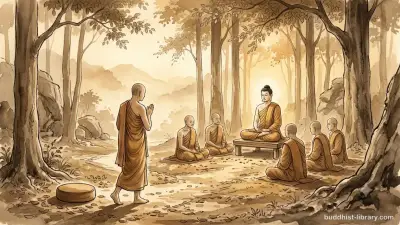
The discourse takes place when a wanderer named Saccaka challenges the Buddha to a debate. In response, the Buddha doesn’t argue philosophy—he tells his story.
What Makes the Mahāsaccaka Sutta Unique?
Unlike most Buddhist texts that present doctrine or meditation instructions, this sutta is a firsthand narrative. The Buddha speaks in the first person. He describes his struggles, his failures, his breakthrough. This personal quality makes it one of the most compelling texts in early Buddhism.
The sutta appears in the Majjhima Nikāya (Middle Length Discourses) as the 36th discourse. It shares content with the related Mahāsīhanāda Sutta (MN 12) but goes further, providing more detail about the actual moment of awakening.
Key themes:
- The Buddha’s pre-awakening life as Prince Siddhattha
- His experiments with extreme ascetic practices
- Why self-torture doesn’t lead to liberation
- The actual meditation method that worked
- The three knowledges gained on the night of awakening
Why Did Prince Siddhattha Leave the Palace?
The Buddha begins his account by explaining what motivated him to renounce the luxurious life of a prince. Young, healthy, enjoying every comfort—none of it mattered. He couldn’t ignore three undeniable realities.
“Though I was liable to aging, decay, sickness, death, sorrow, and defilement, I sought what was also liable to these things. Then the thought occurred to me: ‘Why do I seek what is also subject to aging, decay, sickness, and death?’”
This recognition sparked his spiritual quest. Seeking lasting satisfaction in what is inherently impermanent leads only to suffering. He wasn’t running away from life but rather toward understanding the fundamental problem of existence.
The sutta emphasizes that this wasn’t depression or world-weariness. It was clear-eyed recognition of a problem worth solving. For more on this foundational insight, see Impermanence (Anicca): Why Everything Changes.
What Ascetic Practices Did the Buddha Try?
After leaving home and ordaining, the future Buddha studied with two meditation teachers—Āḷāra Kālāma and Uddaka Rāmaputta. He mastered their methods quickly. But he found that these meditative attainments, while profound, didn’t eliminate suffering at its root.
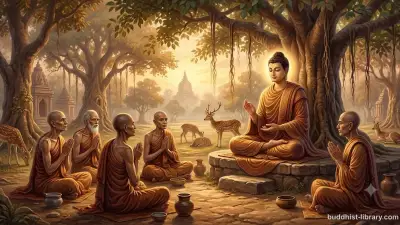
He then turned to extreme asceticism, joining five other monks in a forest. The practices he describes are shockingly severe:
Breath suppression meditation: He held his breath for extended periods until the pressure in his head became excruciating—“as if a strong man were splitting my skull with a sharp sword.” He experienced violent pains in his belly and burning throughout his body.
Extreme fasting: He reduced his food intake to almost nothing—one sesame seed, one rice grain, one jujube per day. His description of the physical deterioration is graphic: his limbs became like withered reeds, his ribs like a run-down shed, his spine visible through his belly, his scalp shriveled.
The critical moment: When he touched his belly, he would grasp his spine. When he touched his spine, he would grasp his belly. His hair fell out in clumps when he touched it.
People thought he was dead or dying. Some ascetics declared him an arahant because of his extreme practice.
Why Did the Buddha Reject Self-Mortification?
After pushing himself to the brink of death, the Buddha had a crucial realization:
“By this racking practice of austerities I have not attained any superhuman states, any distinction in knowledge and vision worthy of the noble ones. Could there be another path to awakening?”
This is one of the most important moments in Buddhist history.
The Buddha recognized that torturing the body doesn’t purify the mind. In fact, a body weakened by starvation and pain cannot support the deep concentration necessary for liberating insight. Simple. Obvious in hindsight. Revolutionary at the time.
He remembered a childhood experience—sitting under a rose-apple tree during a plowing festival, he had spontaneously entered the first jhāna (meditative absorption). That state was characterized by joy and ease, not suffering. Yet it had been profoundly clear and focused.
The breakthrough insight: “That is the path to awakening.”
But to develop that concentrated state, he would need a healthy body. So he began eating again. The five ascetics who had been his companions, believing he had given up the quest, left in disgust.
This is the origin of the Middle Way—not a compromise, but a recognition that the path to freedom requires a body and mind in balance, neither indulged nor tortured. Learn more about this principle in The Middle Way in Buddhism: Walking Between Extremes.
How Did the Buddha Actually Achieve Awakening?
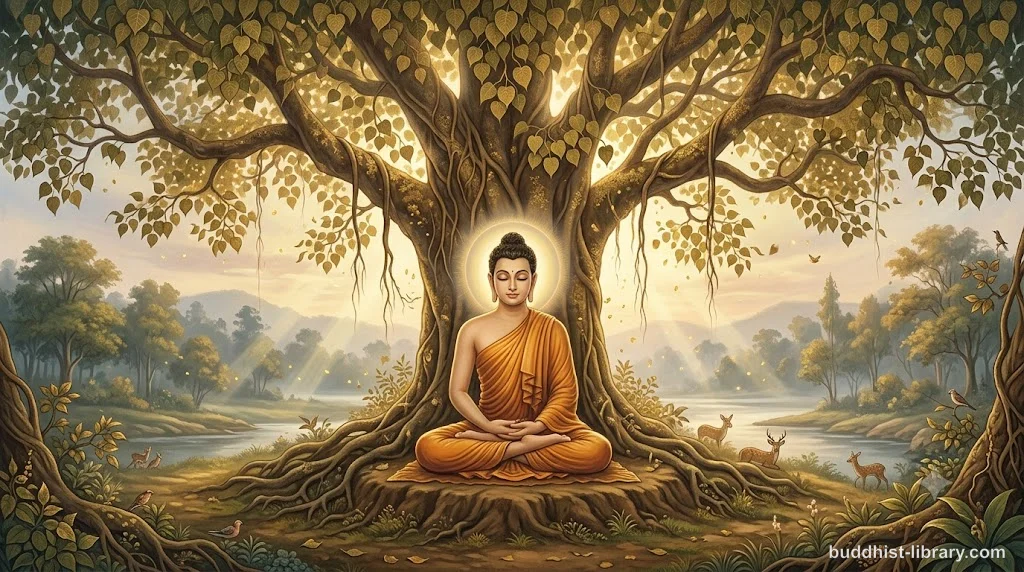
Now properly nourished, the Buddha sat under what would become known as the Bodhi tree and began systematic meditation. The sutta describes the progression in clear stages:
The Four Jhānas
He entered the four jhānas—states of deepening concentration:
- First jhāna: Withdrawn from sensual pleasures, with thought and examination, filled with joy and ease.
- Second jhāna: Beyond thought, with inner tranquility, filled with joy and ease born of concentration.
- Third jhāna: Beyond rapture, with equanimity, mindful and clearly aware, experiencing ease in the body.
- Fourth jhāna: Beyond pleasure and pain, with pure equanimity and mindfulness.
Importantly, these states were not the goal—they were the foundation. With a concentrated, pliable, and purified mind, he could now turn toward insight.
The Three True Knowledges
During the three watches of the night, the Buddha directed his concentrated mind toward three specific areas of knowledge:
First watch—Knowledge of past lives: He recollected his previous existences, seeing the details of countless past lives, their circumstances, names, clans, and how they ended.
Second watch—Knowledge of death and rebirth: He developed the “divine eye” (clairvoyance) and saw beings passing away and being reborn according to their karma—those of good conduct going to good destinations, those of harmful conduct going to suffering realms.
Third watch—Knowledge of the destruction of the taints: He understood the Four Noble Truths directly: the reality of suffering, its origin in craving, its cessation, and the path leading to that cessation. With this understanding, the taints (āsava) of sensual desire, becoming, and ignorance were destroyed.
The sutta records his words at this moment:
“When I knew and saw thus, my mind was liberated from the taint of sensual desire, from the taint of being, from the taint of ignorance. When it was liberated, there came the knowledge: ‘It is liberated.’ I understood: ‘Birth is destroyed, the holy life has been lived, what had to be done has been done, there is no more coming to any state of being.’”
This is the attainment of arahatship—full awakening. For a deeper exploration of this attainment, see What Is an Arahat? Understanding Full Enlightenment in Early Buddhism.
What Can We Learn from This Sutta Today?
The Mahāsaccaka Sutta offers several practical lessons for modern practitioners:
Balance is essential. The Buddha’s rejection of both indulgence and self-torture shows that sustainable practice requires taking care of the body. Meditation isn’t about punishing yourself or forcing experiences.
Concentration is the foundation. The jhānas weren’t the goal, but they were necessary. Without developing strong concentration, the mind cannot penetrate deep truths. This isn’t optional for serious practice.
Awakening follows a process. The Buddha didn’t spontaneously become enlightened. He went through systematic training, developed specific abilities, and applied concentrated attention to liberating insights. There’s a learnable method here.
Pain isn’t the path. Some practitioners believe that more difficulty equals more spiritual progress. This sutta directly contradicts that idea. The Buddha’s breakthrough came when he abandoned extreme austerity and found a sustainable, balanced approach.
Persistence matters. The Buddha tried and failed at multiple approaches before finding what worked. He studied with teachers, practiced to the point of near-death, and kept refining his method. Awakening required determination, not just talent.
Key Points: The Buddha’s Path to Awakening
- The future Buddha left palace life after recognizing that seeking happiness in impermanent things leads to suffering
- He studied with meditation masters but found their attainments didn’t eliminate suffering at its root
- He practiced extreme asceticism for six years, nearly dying from self-starvation
- He realized that torturing the body doesn’t liberate the mind and began eating again
- He developed the four jhānas—states of deep meditative concentration
- With a concentrated mind, he gained three knowledges: past lives, death and rebirth of beings, and destruction of the taints
- His awakening consisted of direct understanding of the Four Noble Truths, ending all defilements
Frequently Asked Questions
What is the Mahāsaccaka Sutta?
The Mahāsaccaka Sutta (MN 36) is a discourse in the Majjhima Nikāya where the Buddha recounts his own path to awakening, including his experiments with extreme asceticism and his eventual discovery of the Middle Way.
Why did the Buddha reject extreme asceticism?
After nearly dying from self-mortification practices, the Buddha realized that torturing the body doesn’t liberate the mind. He discovered that a healthy, nourished body is actually necessary for deep meditation and insight.
What are the jhānas mentioned in this sutta?
The jhānas are states of deep meditative absorption. In this sutta, the Buddha describes achieving the four jhānas and then using that concentrated mind to penetrate the three true knowledges that led to his full awakening.
How long did the Buddha practice asceticism before his awakening?
According to various accounts, including this sutta, the Buddha practiced extreme asceticism for approximately six years before recognizing it as a dead end and adopting the Middle Way approach.
Is extreme fasting necessary for enlightenment?
No. The entire point of this sutta is that extreme fasting nearly killed the Buddha and prevented—rather than promoted—his awakening. He only made progress when he abandoned this practice and nourished his body properly.
What are the three true knowledges?
The three knowledges (tevijjā) are: (1) recollection of past lives, (2) knowledge of how beings die and are reborn according to their karma, and (3) knowledge of the destruction of the taints—the insight that brings final liberation.
Conclusion: The Sutta’s Living Relevance
The Mahāsaccaka Sutta isn’t just ancient history—it’s a practical guide to avoiding the same mistakes the Buddha made. You don’t need to starve yourself, push your body to collapse, or seek out suffering to make spiritual progress.
What you do need is balance, systematic training in concentration, and the wisdom to recognize when your approach isn’t working. The Buddha’s honesty about his own failed methods is a gift to practitioners: learn from his experiments rather than repeating them.
The path to awakening is learnable, repeatable, and doesn’t require superhuman effort. It requires intelligent effort, sustained over time, with a mind and body kept in healthy balance. That’s the real teaching of the Mahāsaccaka Sutta.
Read more:
- The Four Noble Truths: The Heart of the Buddha’s Teaching—The foundational insight the Buddha gained on the night of his awakening.
- What Are the Jhānas? Understanding Meditative Absorption in Buddhism—A detailed exploration of the concentration states the Buddha developed before his breakthrough.
- The Life of the Buddha: From Prince Siddhārtha to Awakening—The broader context of the Buddha’s journey, from birth to final nibbāna.
📖 Source / license: Mahāsaccaka Sutta (MN 36), translated by Bhikkhu Bodhi in 'The Middle Length Discourses of the Buddha'; also available at SuttaCentral (mn36)
Frequently asked questions
What is the Mahāsaccaka Sutta?
The Mahāsaccaka Sutta (MN 36) is a discourse in the Majjhima Nikāya where the Buddha recounts his own path to awakening, including his experiments with extreme asceticism and his eventual discovery of the Middle Way.
Why did the Buddha reject extreme asceticism?
After nearly dying from self-mortification practices, the Buddha realized that torturing the body doesn't liberate the mind. He discovered that a healthy, nourished body is actually necessary for deep meditation and insight.
What are the jhānas mentioned in this sutta?
The jhānas are states of deep meditative absorption. In this sutta, the Buddha describes achieving the four jhānas and then using that concentrated mind to penetrate the three true knowledges that led to his full awakening.