The Saṃyutta Nikāya: Connected Discourses of the Buddha Explained
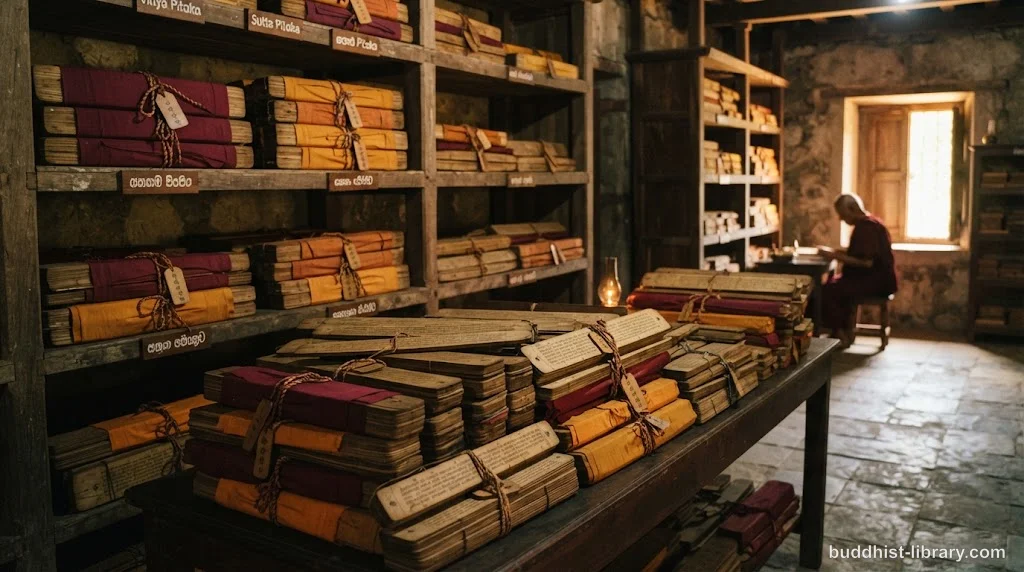
The Saṃyutta Nikāya is the third major collection of the Pali Canon, containing over 2,800 discourses organized thematically into 56 “connected” groups—covering everything from the Four Noble Truths and dependent origination to practical meditation instructions, making it an essential systematic guide to the Buddha’s core teachings.
If you’ve read the Dhammapada and wondered where to find the full context behind those pithy verses, or studied the Four Noble Truths and wanted deeper exploration, the Saṃyutta Nikāya is where you turn. It’s structured not by discourse length but by topic—so when you want to understand anicca (impermanence), you read an entire saṃyutta (chapter) devoted to it, with teachings progressing from simple to profound.
What does “Saṃyutta Nikāya” mean, and how is it organized?
Saṃyutta means “connected” or “grouped together”—the organizing principle here is thematic connection, not chronology or length. Nikāya means “collection” or “body of texts.” So the Saṃyutta Nikāya gathers related discourses into 56 saṃyuttas, each dedicated to a specific theme, deity, practitioner, or teaching.
The collection is divided into five major divisions (vaggas):
- Sagāthāvagga (With Verses) — discourses with deities, spirits, and celestial beings, often in verse form
- Nidānavagga (Book of Causation) — focuses on dependent origination (paṭiccasamuppāda) and the links of conditioned existence
- Khandhavagga (Book of the Aggregates) — explores the five aggregates (khandhas), sense bases, and elements that constitute experience
- Saḷāyatanavagga (Book of the Six Sense Bases) — examines the eye, ear, nose, tongue, body, and mind, and how they condition suffering and liberation
- Mahāvagga (Great Book) — covers the Noble Eightfold Path, the factors of awakening, and the Four Noble Truths in depth
Each saṃyutta within these divisions contains anywhere from a few to over 100 individual suttas—some just a paragraph, others several pages. This structure makes the Saṃyutta Nikāya an encyclopedia of the Dhamma, organized for study rather than storytelling.
Why is the Saṃyutta Nikāya important for Buddhist study?
It’s systematic. That’s the short answer.
The Majjhima Nikāya gives you complete, standalone teachings. The Dīgha Nikāya provides grand narrative contexts. The Saṃyutta gives you something different: repetition with variation. The Buddha returns to the same core themes again and again—from different angles, in different settings, for different audiences.
This repetition isn’t redundancy. It’s pedagogy. The Buddha taught the same truth in multiple ways so students could find the angle that clicked. Simple versions first, complex later—building understanding progressively within each saṃyutta. Practical application woven through doctrinal exposition.
For modern practitioners, the Saṃyutta Nikāya is invaluable when you’re stuck. Pick a topic you’re struggling with—say, the five hindrances—and you can read a dozen different teachings on it, each highlighting a different aspect or method. Same truth, multiple entry points.
What are the key teachings found in the Saṃyutta Nikāya?
The Four Noble Truths (Saccasaṃyutta)
The Saccasaṃyutta (SN 56) contains the Dhammacakkappavattana Sutta—the Buddha’s first sermon setting the wheel of Dhamma in motion. It also includes variations on each of the Four Noble Truths, explaining dukkha, samudaya, nirodha, and magga from multiple perspectives.
Dependent Origination (Nidānasaṃyutta)
The Nidānasaṃyutta (SN 12) is the go-to source for understanding dependent origination (paṭiccasamuppāda)—the twelve-link chain explaining how ignorance conditions rebirth and suffering. It presents the formula forwards and backwards, with and without detailed explanation, making it accessible to beginners and scholars alike.
The Five Aggregates (Khandhasaṃyutta)
The Khandhasaṃyutta (SN 22) explores the five aggregates (rūpa, vedanā, saññā, saṅkhāra, viññāṇa) that we mistakenly take as “self.” It includes the Anattalakkhaṇa Sutta, the second sermon, where the Buddha declares all five aggregates as anattā (not-self).
The Six Sense Bases (Saḷāyatanasaṃyutta)
The Saḷāyatanasaṃyutta (SN 35) is the largest single saṃyutta, with over 200 suttas examining how contact through the six sense bases leads to feeling, craving, and suffering—and how mindful restraint leads to liberation.
The Path (Maggasaṃyutta and Bojjhaṅgasaṃyutta)
The Maggasaṃyutta (SN 45) details the Noble Eightfold Path, while the Bojjhaṅgasaṃyutta (SN 46) covers the seven factors of enlightenment. These saṃyuttas are practical guides—not abstract philosophy but step-by-step instructions for cultivation.
Key points about the Saṃyutta Nikāya
- Thematic organization: 56 saṃyuttas group over 2,800 suttas by subject, not length or chronology
- Repetition with variation: The same teaching appears multiple times from different angles—a pedagogical strength
- Foundation for doctrine: Canonical source for dependent origination, the aggregates, sense bases, and the path
- Includes the First and Second Sermons: The Dhammacakkappavattana and Anattalakkhaṇa suttas that launched the Buddha’s teaching career
- Bridge between theory and practice: Each saṃyutta combines doctrinal explanation with meditation instructions
- Accessible entry points: Shorter suttas make it easier to study specific topics than tackling the longer Majjhima discourses
- Bhikkhu Bodhi’s translation: The standard English edition is The Connected Discourses of the Buddha (2000), with extensive notes
How should I approach reading the Saṃyutta Nikāya?
Don’t read it cover to cover like a novel—it’s a reference work. Instead:
- Pick a theme you’re working with—say, mindfulness (sati) or the hindrances
- Find the relevant saṃyutta using the table of contents or an index
- Read the entire saṃyutta sequentially—the progression from simple to complex is intentional
- Note the variations—when the Buddha repeats a teaching with slight changes, those changes matter
- Apply one teaching at a time—don’t just accumulate knowledge; test each sutta in meditation and daily life
For beginners, start with the Khandhasaṃyutta (aggregates) or the Saccasaṃyutta (Four Noble Truths)—both are foundational and relatively approachable. For meditators, the Saḷāyatanasaṃyutta (sense bases) offers direct instructions on restraint and insight.
What translations and resources are available?
The authoritative English translation is Bhikkhu Bodhi’s The Connected Discourses of the Buddha (Wisdom Publications, 2000)—a two-volume set with over 2,000 pages of translation and commentary. Bodhi’s notes explain Pali terms, cross-reference other suttas, and clarify doctrinal points, making it indispensable for serious study.
For free online access, SuttaCentral.net hosts the full Saṃyutta Nikāya in multiple translations, with Pali and English side by side. You can read Bhikkhu Bodhi’s translation there alongside Bhikkhu Sujato’s more recent rendering.
Access to Insight offers selected suttas from the Saṃyutta with introductions—ideal for browsing before committing to the full text.
Frequently Asked Questions
What does Saṃyutta Nikāya mean?
Saṃyutta Nikāya means “Connected Discourses” or “Grouped Collection”—it organizes the Buddha’s teachings by subject matter, grouping related discourses together for systematic study.
How is the Saṃyutta Nikāya different from other Nikāyas?
Unlike the Dīgha (long) and Majjhima (middle) Nikāyas organized by length, the Saṃyutta arranges thousands of shorter discourses thematically—making it easier to study specific topics like the aggregates or dependent origination in depth.
What are the most important suttas in the Saṃyutta Nikāya?
Key suttas include the Dhammacakkappavattana Sutta (First Sermon on the Four Noble Truths), the Anattalakkhaṇa Sutta (on non-self), and numerous discourses on dependent origination, sense bases, and the path—all foundational to Buddhist practice.
Can I read the Saṃyutta Nikāya as a beginner?
Yes, but selectively. Start with individual saṃyuttas that address your current questions—like the Saccasaṃyutta for the Four Noble Truths or the Khandhasaṃyutta for the aggregates. The shorter suttas within each chapter are often quite accessible, even if the technical commentary requires more background.
How long would it take to read the entire Saṃyutta Nikāya?
Bhikkhu Bodhi’s translation runs over 2,000 pages—reading at a moderate pace with reflection, you’re looking at several months of dedicated study. Most practitioners read it topically over years rather than sequentially in one sitting.
Conclusion: A systematic guide to the Dhamma
The Saṃyutta Nikāya is the Pali Canon’s encyclopedia. Comprehensive, organized, endlessly reusable.
Wrestling with dependent origination? There’s a saṃyutta for that. Trying to understand the aggregates? There’s a saṃyutta for that too. Seeking meditation guidance on the sense bases? You know where to look.
The genius lies in repetition—not boring redundancy, but the Buddha’s pedagogical skill in circling back to the same truths from new angles until they click. Each reading reveals what you missed before. Each saṃyutta deepens your grasp of the whole.
Pick a theme. Dive into its saṃyutta. Let the Buddha teach you systematically. The Dhamma is there—connected, coherent, waiting.
Read more:
- The Pali Canon (Tipiṭaka): Structure and Contents of Early Buddhist Scriptures — understand where the Saṃyutta Nikāya fits within the broader Tipiṭaka and how the three “baskets” relate to each other.
- The Dhammacakkappavattana Sutta: The Buddha’s First Sermon Explained — read the most famous sutta in the Saccasaṃyutta, where the Buddha first taught the Four Noble Truths and set the wheel of Dhamma in motion.
- The Anattalakkhaṇa Sutta: The Buddha’s Second Sermon on Non-Self — explore the second discourse in the Khandhasaṃyutta, where the Buddha declares all five aggregates as anattā and his first five disciples attain enlightenment.
📖 Source / license: Saṃyutta Nikāya, translated by Bhikkhu Bodhi (The Connected Discourses of the Buddha, 2000); SuttaCentral.net; Access to Insight
Frequently asked questions
What does Saṃyutta Nikāya mean?
Saṃyutta Nikāya means 'Connected Discourses' or 'Grouped Collection'—it organizes the Buddha's teachings by subject matter, grouping related discourses together for systematic study.
How is the Saṃyutta Nikāya different from other Nikāyas?
Unlike the Dīgha (long) and Majjhima (middle) Nikāyas organized by length, the Saṃyutta arranges thousands of shorter discourses thematically—making it easier to study specific topics like the aggregates or dependent origination in depth.
What are the most important suttas in the Saṃyutta Nikāya?
Key suttas include the Dhammacakkappavattana Sutta (First Sermon on the Four Noble Truths), the Anattalakkhaṇa Sutta (on non-self), and numerous discourses on dependent origination, sense bases, and the path—all foundational to Buddhist practice.