The Soṇadaṇḍa Sutta: What Makes a True Brahmin?
The Soṇadaṇḍa Sutta reveals a revolutionary teaching: true spiritual nobility isn’t determined by birth, lineage, or social class, but by ethical conduct and wisdom. When the Buddha met the wealthy brahmin Soṇadaṇḍa, their dialogue progressively dismantled the notion that ancestry makes someone spiritually superior—showing instead that virtue and understanding are what truly matter.
This discourse appears as the fourth sutta in the Dīgha Nikāya (Long Discourses). It’s one of the Buddha’s clearest statements on meritocracy versus heredity in spiritual life—and it remains uncomfortable reading for anyone who values credentials over character.
What Is the Historical Context of the Soṇadaṇḍa Sutta?
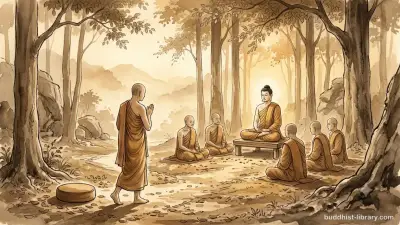
The sutta takes place during the Buddha’s travels in the Aṅga kingdom, near the town of Campā. Soṇadaṇḍa was a prominent brahmin—wealthy, learned, respected. He managed a royal land grant from King Bimbisāra of Magadha. When he heard the Buddha was nearby, he gathered five hundred other brahmins and went to meet him.
Think about that. At the time, brahmins held tremendous social and religious authority in India, claiming spiritual superiority through their birth lineage alone. For a senior brahmin to publicly seek out the Buddha (a kṣatriya by birth, not a brahmin) was itself noteworthy. What followed would challenge the very foundations of brahminical claims to spiritual nobility.
What Are the Five Characteristics of a Brahmin?
Soṇadaṇḍa opens the dialogue by asking what qualities make someone a “true brahmin.” He initially lists five characteristics that brahmins of his time considered essential:
- Well-born on both sides — Born into a pure brahmin lineage for seven generations back, with no non-brahmin ancestors
- Learned in sacred knowledge — Mastery of the Vedas, mantras, and ritual procedures
- Handsome in appearance — Physical beauty and presence
- Virtuous in conduct — Ethical behavior and moral discipline (sīla)
- Wise and intelligent — Deep understanding and discernment (paññā)
The Buddha accepts this list—then systematically dismantles it.
How Does the Buddha Reduce the Five to Two?
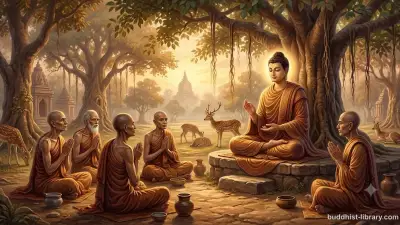
The Buddha employs a gentle but devastating method: he asks Soṇadaṇḍa whether each quality is truly necessary.
Could someone lacking good looks still be a true brahmin?
Soṇadaṇḍa admits yes—handsome appearance isn’t essential.
What about Vedic learning?
Again, yes. Someone could be virtuous and wise without mastering all the mantras.
What about noble birth?
This is the crucial question. After hesitation (knowing his brahmin audience is listening), Soṇadaṇḍa concedes that even birth doesn’t determine spiritual worth.
What remains? Only virtue and wisdom.
The Buddha says:
“If one has virtue and wisdom, whether one is well-born or not, learned or not, handsome or not—that person is a true brahmin.”
This is radical. The Buddha collapses the brahmin identity—which in that society was entirely based on heredity and ritual knowledge—into two qualities anyone can cultivate, regardless of birth.
Why Does Birth Not Determine Spiritual Nobility?
The Buddha’s teaching here rests on a simple empirical observation: you cannot inherit virtue or wisdom.
You can inherit wealth, social status, even education. But you cannot inherit ethical conduct or genuine understanding. Those must be developed through your own effort.
A child born into a brahmin family might learn the Vedas, but that doesn’t make them virtuous. Conversely, someone born into a family of sweepers or merchants can cultivate moral discipline and develop profound wisdom.
Birth is an accident. What you do with your life is what matters.
This teaching extends the spiritual path to everyone—making Buddhism a universal practice, not a hereditary privilege. The Noble Eightfold Path is open to anyone willing to walk it, regardless of caste, class, or ancestry.
What Is Virtue (Sīla) in This Context?
When the Buddha speaks of virtue as one of the two essential qualities, he means sīla—ethical conduct that restrains harmful actions and cultivates wholesome ones.
This includes:
- The Five Precepts — Refraining from killing, stealing, sexual misconduct, false speech, and intoxicants (see The Five Precepts for a full guide)
- Right Speech — Truthful, kind, useful, and timely communication
- Right Action — Conduct that respects the wellbeing of all living beings
- Right Livelihood — Earning a living without causing harm
Virtue isn’t about performing rituals correctly or reciting sacred texts. It’s about how you treat others, how you speak, what you do when no one is watching. And that can be practiced by anyone.
What Is Wisdom (Paññā) in This Context?
The second essential quality is wisdom—paññā—which means seeing things as they truly are.
This includes:
- Understanding impermanence — Seeing that all conditioned phenomena arise and pass away (Impermanence (Anicca))
- Understanding non-self — Recognizing that there is no permanent, independent “I” in the aggregates
- Understanding suffering and its cessation — Seeing how craving leads to dukkha, and how letting go brings peace
- Right View — Comprehending the Four Noble Truths and the law of karma
Wisdom isn’t academic knowledge. It’s direct insight into the nature of reality—developed through meditation, mindfulness, and careful observation of your own experience. Like virtue, it’s cultivated, not inherited.
How Did Soṇadaṇḍa Respond to This Teaching?
Soṇadaṇḍa was deeply moved. He declared himself a lay disciple of the Buddha and invited him for a meal. But here’s the telling detail: when the other brahmins criticized him for conceding that birth doesn’t matter, Soṇadaṇḍa defended the Buddha’s teaching—showing that he genuinely understood it, even though it undermined the very foundation of his social identity.
The sutta records that Soṇadaṇḍa later became a stream-enterer (sotāpanna)—the first stage of awakening—confirming that his understanding wasn’t merely intellectual but transformative.
What Are the Key Lessons from the Soṇadaṇḍa Sutta?
Spiritual worth is earned, not inherited. Your family, class, race, or credentials don’t determine your spiritual value. What you cultivate through practice does.
Virtue and wisdom are the only essentials. Everything else—ritual knowledge, appearance, social status—is secondary or irrelevant.
The path is universal. Because virtue and wisdom can be developed by anyone, the spiritual life is open to all, not reserved for a privileged class.
Reduce the irrelevant. The Buddha’s method of progressively eliminating non-essentials is a model for spiritual discernment—strip away what doesn’t matter so you can focus on what does.
How Does This Teaching Apply to Modern Practice?
In contemporary Buddhist practice, the Soṇadaṇḍa Sutta remains powerfully relevant.
We might not have hereditary brahmins today, but we still encounter people who claim spiritual authority based on credentials, lineage, titles, or social position. The sutta reminds us to ask: Do they have virtue? Do they have wisdom? Everything else is decoration.
It also challenges practitioners to focus on what actually transforms the mind:
- Develop ethical conduct — Live in a way that reduces harm and increases wellbeing
- Cultivate wisdom — Practice meditation and mindfulness to see things as they are
- Let go of spiritual status-seeking — Don’t mistake external markers (robes, titles, followers) for genuine spiritual development
The Buddha didn’t care whether you could recite the Vedas or trace your lineage back seven generations. He cared whether you were genuinely becoming less greedy, less angry, and more wise. That’s still the measure.
Read more:
- Right View (Sammā Diṭṭhi): The Foundation of the Buddhist Path — Understanding right view, the foundation that supports both virtue and wisdom, as the first factor of the Eightfold Path.
- Sīla: Understanding Moral Discipline in Buddhist Practice — A comprehensive guide to ethical conduct, one of the two essential qualities the Buddha identified in this sutta.
- What Is Paññā? Understanding Wisdom in Buddhism — Exploring the nature of wisdom, the second essential quality that defines a true spiritual person regardless of birth or status.
📖 Source / license: DN 4, Soṇadaṇḍa Sutta, translated by Maurice Walshe (The Long Discourses of the Buddha) and available at SuttaCentral (https://suttacentral.net/dn4/en/sujato)
Frequently asked questions
What is the Soṇadaṇḍa Sutta about?
The Soṇadaṇḍa Sutta (DN 4) is the Buddha's discourse with a wealthy brahmin about what truly makes someone a brahmin—revealing that ethical conduct and wisdom matter more than birth or lineage.
What are the five characteristics of a true brahmin according to the Soṇadaṇḍa Sutta?
The five characteristics are: well-born on both mother's and father's sides for seven generations, learned in sacred texts and mantras, handsome appearance, virtuous conduct, and wise understanding. The Buddha progressively reduces these to show that only virtue and wisdom are truly essential.
Why did the Buddha teach that birth doesn't determine spiritual nobility?
The Buddha taught that spiritual nobility comes from what you do and understand, not from what family you're born into. Virtue and wisdom can be cultivated by anyone, regardless of social class or ancestry—making the spiritual path genuinely universal.
How does the Soṇadaṇḍa Sutta relate to modern practice?
The sutta's core teaching—that ethical conduct and wisdom matter more than credentials, lineage, or external status—remains profoundly relevant. It reminds modern practitioners that spiritual development is measured by how you live and what you understand, not by titles or social position.