The Ādittapariyāya Sutta: Why Everything Is Burning
The Ādittapariyāya Sutta—the Fire Sermon—is one of the Buddha’s most striking early teachings. Delivered to a thousand fire-worshipping ascetics, it declares that all experience burns with the fires of greed, hatred, and delusion. Liberation comes not by performing rituals but by seeing this burning clearly and becoming disenchanted with it.
The teaching was so powerful that all thousand ascetics attained arahatship on the spot.
What Is the Fire Sermon?
The Ādittapariyāya Sutta (SN 35.28, also found in the Vinaya Piṭaka) is one of the Buddha’s earliest recorded discourses, delivered shortly after his enlightenment during his journey through Gayā.
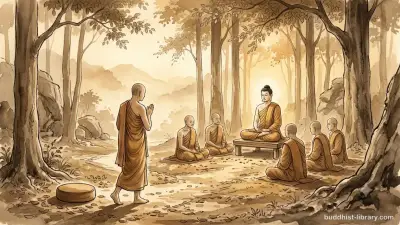
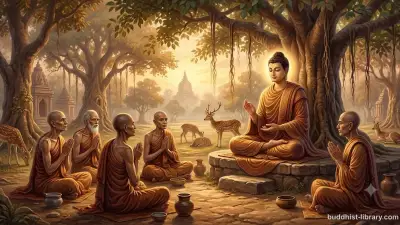
The audience was unusual: a thousand Jaṭila ascetics—fire-worshippers led by the three Kassapa brothers (Uruvela-Kassapa, Nadī-Kassapa, and Gayā-Kassapa)—whom the Buddha had already impressed with psychic powers and reasoned teaching. They had renounced their fire rituals and become Buddhist monks, but they still needed final instruction.
The Buddha chose a metaphor they would understand intimately: fire.
Why Is Everything Burning?
The sermon begins with a stark declaration:
“Bhikkhus, all is burning. And what is the all that is burning?”
The “all” refers to the six sense bases: eye, ear, nose, tongue, body, and mind—along with their corresponding objects (sights, sounds, smells, tastes, touches, and mental phenomena) and the consciousness that arises when sense organ meets object.
The Buddha explains that each of these is burning with three fires:
- The fire of greed (rāga)—grasping, clinging, wanting more
- The fire of hatred (dosa)—aversion, anger, pushing away
- The fire of delusion (moha)—ignorance, confusion, not seeing things as they are
These three fires are also described as burning with:
- Birth, aging, and death
- Sorrow, lamentation, pain, grief, and despair
In other words, every moment of sense experience—seeing, hearing, tasting, touching, thinking—is aflame with craving and aversion, driven by ignorance, and perpetuates suffering.
The Structure of Burning
The Buddha breaks down the burning systematically:
- The eye is burning. Forms are burning. Eye-consciousness is burning. Eye-contact is burning. Whatever feeling arises from eye-contact—pleasant, painful, or neutral—that too is burning.
- The same pattern repeats for ear, nose, tongue, body, and mind.
This isn’t poetic exaggeration. The Buddha is pointing to lived reality: our senses aren’t neutral windows onto the world. They’re sites of reactivity, attachment, suffering.
See something beautiful? Immediately want it. Hear criticism? Bristle with anger. Think about the past? Consumed by regret. The process runs constantly, automatically—exhausting as a fire that never goes out.
How the Fire Goes Out
The path to liberation, according to the Fire Sermon, is disenchantment (nibbidā).
When a noble disciple—someone practicing the Buddha’s path—sees clearly that the senses, their objects, and consciousness are all burning with defilements, they become disenchanted with them.
Through disenchantment comes dispassion (virāga).
Through dispassion comes liberation (vimutti).
And in liberation, one knows directly:
“Birth is ended, the holy life has been lived, what had to be done has been done. There is no more coming to any state of being.”
This is arahatship—full awakening.
Notice what the Buddha is not saying:
- He’s not saying you should hate your senses or mutilate them.
- He’s not saying sensory experience is evil.
- He’s not demanding ascetic extremes.
He’s saying: See clearly how the process works, and the enchantment will fall away by itself.
When you see that what you’ve been chasing (or running from) is just fuel for a fire that causes suffering, the craving stops. The fire starves. Nibbāna—literally “extinguishing”—is what remains.
Why Fire?
The choice of metaphor was brilliant pedagogy.
The Kassapa brothers were fire-worshippers. They had spent their lives tending sacred fires, performing elaborate rituals, believing fire to be the medium of spiritual transformation.
The Buddha met them where they were: yes, everything is about fire—but not the fire you’ve been worshipping. The real fire is internal. It’s the burning of craving, aversion, and ignorance. And unlike your ritual fires, this one doesn’t purify—it destroys.
The teaching worked. According to the text, all thousand monks attained arahatship immediately upon hearing it.
Key Points
- The Ādittapariyāya Sutta (Fire Sermon) is one of the Buddha’s earliest and most famous discourses.
- It teaches that all experience—the six senses, their objects, and consciousness—is burning with greed, hatred, and delusion.
- This burning is the source of suffering and the mechanism that binds beings to saṃsāra.
- Liberation comes through seeing the burning clearly, becoming disenchanted, developing dispassion, and thus extinguishing the fires.
- The metaphor was chosen specifically for an audience of fire-worshipping ascetics, meeting them in their own conceptual language.
- The teaching emphasizes direct insight rather than ritual or metaphysical speculation.
Frequently Asked Questions
What is the Ādittapariyāya Sutta?
The Ādittapariyāya Sutta, or Fire Sermon, is one of the Buddha’s most famous early discourses. Delivered to a thousand fire-worshipping ascetics shortly after his enlightenment, it uses the metaphor of fire to show how all experience burns with greed, hatred, and delusion—and how liberation comes through seeing this truth directly.
What does “everything is burning” mean in Buddhism?
When the Buddha says everything is burning, he means that the six sense bases—eye, ear, nose, tongue, body, and mind—along with their objects and the consciousness that arises from contact, are all aflame with the fires of greed, hatred, and delusion. This burning is the source of suffering and keeps us bound to saṃsāra.
Who was the audience for the Fire Sermon?
The Buddha delivered the Fire Sermon to a thousand ascetics led by the three Kassapa brothers, who had previously been fire-worshipping practitioners (Jaṭilas). The Buddha used the fire metaphor—familiar to their spiritual practice—to communicate the Dhamma in terms they could immediately understand.
How does one stop burning according to the Fire Sermon?
According to the sutta, one stops burning through disenchantment (nibbidā). When a noble disciple sees clearly how the senses, their objects, and consciousness are all burning with defilements, they become disenchanted with them. Through disenchantment comes dispassion, through dispassion comes liberation, and one knows directly: “Birth is ended, the holy life has been lived, what had to be done has been done.”
Is the Fire Sermon still relevant today?
Absolutely. While we may not be fire-worshippers, we are still burning—scrolling endlessly, chasing pleasure, avoiding discomfort, lost in mental reactivity. The teaching points to the same process now as then: see the burning, become disenchanted, let it go.
What is the relationship between the Fire Sermon and nibbāna?
Nibbāna literally means “extinguishing” or “blowing out”—like a flame going out. The Fire Sermon makes this connection explicit: what is extinguished in nibbāna is precisely the fires of greed, hatred, and delusion. When the fuel of craving is gone, the fires cannot continue.
The Sermon in Practice
The Fire Sermon isn’t just philosophy—it’s meditation instruction.
Sit. Observe your senses at work. Watch how contact leads to feeling, feeling to craving or aversion, the whole process perpetuating itself automatically.
See something online? Feel the pull to click. Hear a sound? Tense with irritation. Memory arises? Lost in mental narrative.
That’s the burning.
The practice: see it happening without adding fuel. Don’t grasp the pleasant. Don’t push away the unpleasant. See the fire for what it is.
Over time, seeing itself liberates. The enchantment fades. The fires burn lower.
This is the direct path the Buddha pointed to—not through belief, not through ritual, but through clear seeing.
Conclusion
The Ādittapariyāya Sutta is skillful teaching at its finest. The Buddha took a metaphor his audience understood—fire—and pointed straight to the deepest truths: craving is the fuel, liberation is the extinguishing, and the path runs through clear seeing rather than religious performance.
For us today, the teaching hits just as hard. We may not worship fire in temples, but we worship status, comfort, validation, control. All of it burns.
The same path that worked for those thousand ascetics works now. See the burning. Become disenchanted. Let it go.
Read more:
- What Is Dukkha? Understanding Suffering in Buddhism—explore the nature of suffering that the Fire Sermon addresses, and why the Buddha placed it at the center of his teaching.
- The Six Sense Bases (Saḷāyatana): Understanding Perception in Buddhism—learn more about the six senses and how they function as the sites of both suffering and liberation.
- What Is Nirvana (Nibbāna)? Meaning and Misconceptions—discover what it means for the fires to be extinguished and what remains when craving ends.
📖 Source / license: Ādittapariyāya Sutta (SN 35.28), translated by Bhikkhu Bodhi in The Connected Discourses of the Buddha (Wisdom Publications, 2000)
Frequently asked questions
What is the Ādittapariyāya Sutta?
The Ādittapariyāya Sutta, or Fire Sermon, is one of the Buddha's most famous early discourses. Delivered to a thousand fire-worshipping ascetics shortly after his enlightenment, it uses the metaphor of fire to show how all experience burns with greed, hatred, and delusion—and how liberation comes through seeing this truth directly.
What does 'everything is burning' mean in Buddhism?
When the Buddha says everything is burning, he means that the six sense bases—eye, ear, nose, tongue, body, and mind—along with their objects and the consciousness that arises from contact, are all aflame with the fires of greed, hatred, and delusion. This burning is the source of suffering and keeps us bound to saṃsāra.
Who was the audience for the Fire Sermon?
The Buddha delivered the Fire Sermon to a thousand ascetics led by the three Kassapa brothers, who had previously been fire-worshipping practitioners (Jaṭilas). The Buddha used the fire metaphor—familiar to their spiritual practice—to communicate the Dhamma in terms they could immediately understand.
How does one stop burning according to the Fire Sermon?
According to the sutta, one stops burning through disenchantment (nibbidā). When a noble disciple sees clearly how the senses, their objects, and consciousness are all burning with defilements, they become disenchanted with them. Through disenchantment comes dispassion, through dispassion comes liberation, and one knows directly: 'Birth is ended, the holy life has been lived, what had to be done has been done.'