The Cūḷasuññata Sutta: The Shorter Discourse on Emptiness
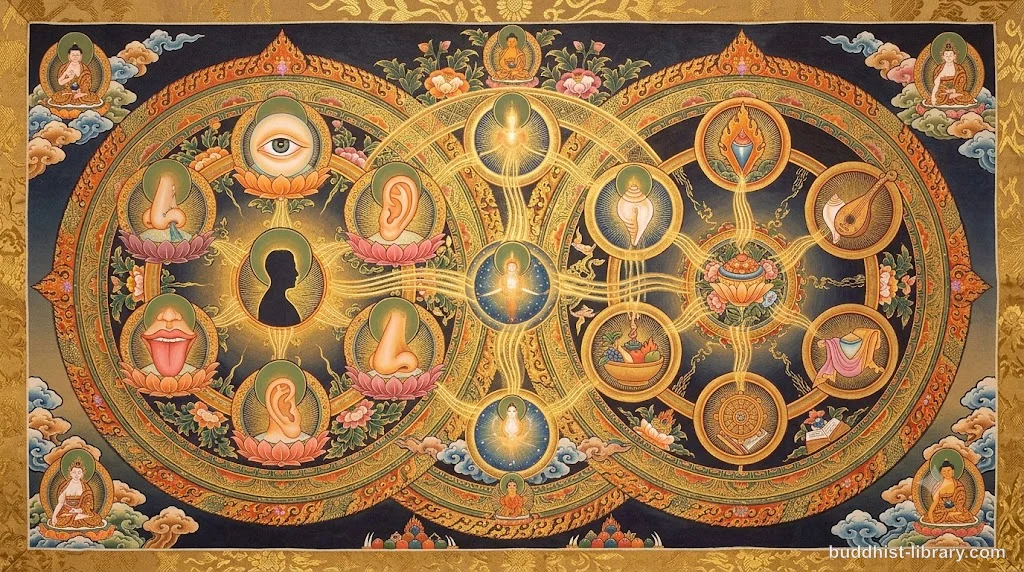
The Cūḷasuññata Sutta teaches a progressive meditation on emptiness — dwelling sequentially in finer perceptions by recognizing what is absent rather than clinging to what remains. The Buddha shows Ānanda how to find true seclusion not by running from the world, but by releasing attention from every level of mental construction until only the signless concentration of mind remains.
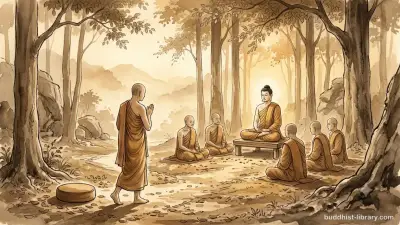
The discourse unfolds at Sāvatthī when Ānanda notices the Buddha dwelling alone and asks about it. What follows is arguably the most practical meditation manual in the entire Pali Canon.
Step-by-step instructions for deepening concentration. A method for systematically emptying awareness of coarser perceptions.
No philosophy — just practice.
What Is the Context of This Sutta?
The Cūḷasuññata Sutta (MN 121) belongs to the Majjhima Nikāya, the collection of middle-length discourses. The Buddha delivers it to Ānanda, his attendant and cousin — the one who would later become renowned for his perfect memory of every teaching he heard.
Ānanda observes that the Buddha often dwells in emptiness (suññatāvihāra). Instead of a philosophical treatise, the Buddha hands him a meditation manual. Instructions he can practice that afternoon.
The teaching appears alongside its companion, the Mahāsuññata Sutta (MN 122), which addresses emptiness from a different angle. Together they form the early Buddhist understanding of suññatā, distinct from later Mahāyāna developments.
Equally profound. But grounded in immediate practice rather than metaphysical analysis.
How Does the Progressive Emptiness Work?
The Buddha describes a sequence of meditative dwellings, each one “empty” of what came before:
First dwelling — the forest:
A meditator enters the forest, empty of the perceptions of village life. The mind is not occupied with thoughts of houses, people, or commerce. There remains only the perception “forest.”
But even this single perception involves disturbance — the subtle activity of attending to “forest-ness.”
Second dwelling — earth:
Release attention from “forest.” Now dwell in the perception of earth — the stable, elemental quality beneath all particular landscapes. Empty of forest, village, mountain.
Only earth-perception remains.
Third dwelling — the base of infinite space:
Even earth involves boundaries and form. Release it. Enter the formless meditation on boundless space — the first immaterial attainment (jhāna). Empty of earth-perception and all materiality.
Fourth dwelling — the base of infinite consciousness:
Space itself is a perception to be transcended. Dwell in boundless consciousness aware of itself. Empty of space-perception.
Fifth dwelling — the base of nothingness:
Even consciousness as object involves subtle construction. Dwell in the perception that “there is nothing” — the third immaterial attainment. Empty of consciousness-perception.
Sixth dwelling — neither-perception-nor-non-perception:
The subtlest perceiving, so refined it can barely be called perception. Empty of the coarser nothingness base.
Seventh dwelling — signless concentration of mind:
Here all constructed perceptions cease. Only the concentrated mind remains, without taking any sign or object. This is the goal — complete emptiness of fabrication while maintaining clear awareness.
At each stage, the Buddha emphasizes two things:
- Recognize what is not there (the coarser perception you released)
- Recognize what remains (the finer perception you now dwell in)
The disturbance in each state comes only from the perception still present. When you reach the signless, there is no more disturbance — only the peaceful abiding of mind free from all mental construction.
Why Does the Buddha Call This “Emptiness”?
The Pali word suññatā means “emptiness” or “voidness.” But empty of what?
The Buddha explains: empty of self and what belongs to self. Empty of anything you might cling to as “me” or “mine.”
Each perception — village, forest, earth, space, consciousness — is a mental construction. When you dwell in one, you’re not grasping it as self (that would be gross delusion), but you’re still fabricating experience through that particular lens.
True emptiness, the Buddha teaches, is dwelling in awareness that doesn’t fabricate, doesn’t construct, doesn’t cling to any perception whatsoever. This is the cessation the third noble truth points toward.
And before anyone worries: this is not nihilism.
The meditator doesn’t disappear. Awareness remains, sharp and clear.
What vanishes is the compulsive need to grasp experience through conceptual overlays.
What Are the Key Points to Understand?
Emptiness is a method, not a metaphysics:
The Buddha isn’t making claims about ultimate reality. He’s giving Ānanda a practical technique — how to progressively refine concentration by releasing attachment to perceptions.
Each stage is genuinely empty of the previous:
When you dwell in earth-perception, there truly is no forest-perception present. This isn’t pretending — it’s the actual shift in meditative object.
Disturbance comes from what remains:
The Buddha repeatedly says the only disturbance at each level is the perception still functioning. This is why we keep going — each layer of peace reveals a subtler layer of fabrication.
The signless is the destination:
Unlike the formless attainments which still involve subtle perception, the signless concentration (animitta cetosamādhi) represents complete freedom from mental construction. Some teachers identify this with the attainment of nibbāna itself.
This complements insight practice:
While this sutta emphasizes concentration (samatha), it works in tandem with insight into the three characteristics — impermanence, suffering, and non-self. The deepened concentration makes insight penetrating and unshakeable.
How Does This Relate to Non-Self?
The connection to anattā runs throughout the teaching.
Every perception the Buddha asks us to release is something we habitually identify with. “I am here in the forest.” “I am aware of space.” “I experience consciousness.” Each statement subtly asserts a self encountering an object.
By progressively emptying awareness of these constructed perceptions, we directly see their insubstantial nature. There’s no solid “experiencer” behind experience — only the ever-shifting process of perception arising and passing.
The signless concentration is empty precisely because no self can be found in it. No subject grasping object. No experiencer separate from experience. Just the luminous knowing, utterly simple, utterly free.
This is why the Buddha teaches both emptiness and non-self — they’re two ways of pointing to the same liberating truth.
What Practice Can We Take from This Sutta?
The full sequence requires developed concentration. You can’t jump to the signless without stable samatha practice. But the method itself is applicable at any level:
Start where you are:
Notice the perceptions filling your awareness right now. The sounds, the sense of body, the thought-stream. Recognize them as perceptions, not as self.
Choose a coarser perception to release:
Pick something you’re habitually caught in — perhaps worry about the future, or replaying conversations. Let it go by withdrawing attention from it.
Dwell in what’s simpler:
When you release the mental chatter, you might dwell in the simple perception of breath. Or body. Or silence. Stay there.
Notice the emptiness:
Your awareness is now empty of that worry-stream. You’re not pushing it away or denying it existed. It’s simply not present anymore. This absence is the emptiness.
Recognize the remaining disturbance:
Even dwelling peacefully with breath, there’s subtle fabrication happening. The mind is still constructing “breath-perception.” This recognition prepares you for the next release.
With patient practice, the sequence deepens naturally. The concentration grows more refined, the perceptions more subtle, until you approach the threshold of the unconditioned.
Frequently Asked Questions
What makes the Cūḷasuññata Sutta different from other emptiness teachings?
It presents emptiness as a practical meditation method — a progressive dwelling where you sequentially let go of perceptions, not as abstract philosophy. The Buddha gives step-by-step instructions Ānanda can follow immediately.
Is this sutta about the Mahāyāna concept of emptiness?
No. This is an early discourse from the Pali Canon, predating Mahāyāna by centuries. The emptiness here (suññatā) means “empty of self and what belongs to self” — freedom from clinging to perceptions and mental constructions. While Mahāyāna developed the concept further, this teaching stands complete in itself.
Can I practice this meditation without a teacher?
The sutta itself is the Buddha teaching Ānanda directly. Read it carefully, understand the progression, and practice gradually. However, concentration practice (samatha) is helpful as a foundation, and guidance from an experienced teacher is always beneficial, especially when approaching the formless attainments.
How long does it take to progress through these stages?
There’s no fixed timeline. Some meditators spend years developing stable access to the first jhāna. Others move through the formless attainments relatively quickly once the mind is trained. What matters is patient, consistent practice — not rushing toward “attainment.”
Is the signless concentration the same as nibbāna?
This is debated among scholars and practitioners. Some teachers identify the signless concentration with the experience of cessation (nirodha), which is indeed nibbāna. Others see it as a very refined meditative state that supports but isn’t identical to full awakening. The Buddha’s emphasis is practical — this dwelling leads to the deathless.
Conclusion: The Path to True Seclusion
The Cūḷasuññata Sutta reveals that genuine solitude isn’t found by fleeing to empty places — it’s discovered by emptying the mind of its compulsive fabrications.
The Buddha shows Ānanda, and us, that peace deepens as we release each layer of mental construction. From village to forest to elemental earth to formless space to boundless consciousness to nothingness to the barely-there neither-perception-nor-non-perception, and finally to the signless — awareness resting in its own nature, empty of all that isn’t there.
This is the dwelling in emptiness the Buddha practiced himself. Not a philosophical position to defend, but a direct path to the end of suffering.
The teaching remains as practical today as when Ānanda first heard it. We still grasp at perceptions. We still construct identity around mental states.
And we still have the opportunity to release them, one layer at a time, until only freedom remains.
Read more:
- Anattā (Non-Self): What the Buddha Really Meant — The foundational insight that complements this emptiness practice, showing why there’s no permanent self to be found.
- What Is Dependent Origination (Paṭiccasamuppāda)? — Understanding how all phenomena arise through conditions helps explain why each perception in this sequence is ultimately empty.
- The Heart Sutra Explained: Emptiness and the Prajñāpāramitā — A later Mahāyāna text on emptiness that developed from early teachings like this sutta, showing how the concept evolved across Buddhist traditions.
📖 Source / license: MN 121, trans. Bhikkhu Bodhi (Middle Length Discourses of the Buddha, Wisdom Publications)
Frequently asked questions
What makes the Cūḷasuññata Sutta different from other emptiness teachings?
It presents emptiness as a practical meditation method — a progressive dwelling where you sequentially let go of perceptions, not as abstract philosophy. The Buddha gives step-by-step instructions Ānanda can follow immediately.
Is this sutta about the Mahāyāna concept of emptiness?
No. This is an early discourse from the Pali Canon, predating Mahāyāna by centuries. The emptiness here (suññatā) means 'empty of self and what belongs to self' — freedom from clinging to perceptions and mental constructions.
Can I practice this meditation without a teacher?
The sutta itself is the Buddha teaching Ānanda directly. Read it carefully, understand the progression, and practice gradually. However, concentration practice (samatha) is helpful as a foundation, and guidance from an experienced teacher is always beneficial.