The Mahāsāropama Sutta: The Buddha's Simile of the Heartwood

The Mahāsāropama Sutta teaches that liberation—the destruction of greed, hatred, and delusion—is the irreducible goal of Buddhist practice. Everything else, however refined or exalted, is a stepping stone, not a resting place. Material gains, moral purity, meditative absorption, and visionary insight are all worthy, but none of them is the heartwood.
What Is the Mahāsāropama Sutta About?
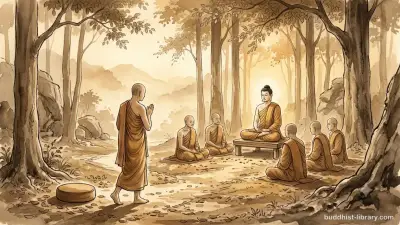
The Mahāsāropama Sutta (MN 29), often translated as “The Greater Discourse on the Simile of the Heartwood,” is one of the Buddha’s most compelling teachings on spiritual priorities. Delivered to a brahmin named Piṅgalakoccha, the discourse uses the extended metaphor of someone seeking the heartwood of a great tree—the dense, valuable core—but stopping instead at the branches, bark, or sapwood, thinking they have found what they came for.
The Buddha maps this botanical hierarchy onto the spiritual path. A person might leave home seeking liberation but become satisfied with:
- Roots, trunk, branches, and foliage: Material gains, honor, and fame
- Bark: Moral virtue and ethical conduct (sīla)
- Softwood: Concentration and the meditative absorptions (jhānas)
- Sapwood: Knowledge and vision, including insight into the mind’s workings
Each of these is progressively more refined and valuable. Each plays a necessary role. But none is the heartwood—the unshakable liberation (cetovimutti paññāvimutti) achieved through the complete ending of the mental taints (āsavakkhaya).
Why Does the Buddha Warn Against Stopping Short?
Human nature gravitates toward comfort, accomplishment, and the appearance of completion. We mistake progress for arrival all the time.
Consider the meditator who develops deep concentration and experiences the bliss of the fourth jhāna. The mind is luminous, still, powerful. This feels like awakening. But if the underlying tendencies toward greed, aversion, and delusion remain intact, the meditator is holding sapwood and calling it heartwood. The concentration will fade. Suffering returns.
Or take the person known for impeccable ethics, revered as a saint. Their virtue is real. But if they cling to that reputation—if they have not actually penetrated impermanence, non-self, and dependent origination—they remain caught in identity-view and conceit, however refined.
The Buddha explicitly praises these attainments. The sutta is not dismissive. The warning is against stopping—the spiritual complacency that mistakes a stage for the destination.
The Hierarchy of Attainments in the Simile
Let’s walk through the Buddha’s taxonomy, from outermost to core:
1. Material Gains, Honor, and Reputation (Branches and Leaves)
Some renunciants achieve fame, offerings, followers. The original purpose—liberation—gets forgotten in the comfort of being esteemed and supported. This is the coarsest deviation. It is also the most common. Success is seductive.
2. Ethical Virtue (Sīla) — The Bark
A practitioner perfects their conduct—harmless in body, speech, livelihood. Essential work. Ethical purity steadies the mind and creates the conditions for deeper investigation. But virtue alone does not end craving or ignorance. It is the foundation, not the summit.
3. Concentration and Jhānas (Samādhi) — The Softwood
Through sustained practice, the meditator develops profound states of absorption—calm, unified, blissful. These states are precious. They purify the mind, reveal its capacities, and prepare it for insight. But jhāna is a tool. If mistaken for liberation itself, the practitioner may spend years refining meditative skill while the deeper work of wisdom remains undone.
4. Knowledge and Vision (Ñāṇadassana) — The Sapwood
Here the meditator gains direct insight into mental phenomena: the arising and passing of thoughts, the constructed nature of perception, perhaps experiences of light, visions, or psychic abilities. These attainments can be compelling and are closer to the goal. But they are still instruments. Wisdom that does not lead to dispassion and release is incomplete.
5. The Heartwood: Liberation (Cetovimutti Paññāvimutti)
At the core is the destruction of the taints—sensual craving, craving for existence, ignorance. This is not a state that comes and goes; it is an irreversible insight that restructures perception. The liberated mind no longer identifies with the aggregates, no longer constructs a self to defend or promote. This is the heartwood. This is why the Buddha renounced his palace.
What Does This Mean for Your Practice?
The Mahāsāropama Sutta offers a diagnostic tool. Ask yourself:
- Am I practicing for the right reason? Have you forgotten why you started? Has the path become a career, a source of status, a way to be seen as spiritual?
- Have I mistaken comfort for freedom? Does your practice deliver pleasant states—calm, clarity, temporary relief—without actually weakening the grip of craving and aversion?
- Do I know the difference between skillful means and the final goal? Can you hold ethical discipline, concentration, and insight with gratitude and seriousness, while recognizing they are supports, not substitutes, for awakening?
This teaching clarifies; it does not discourage. If you know you are gathering softwood—developing concentration, for instance—that is honest work. The danger is self-deception: calling it heartwood and stopping there.
Key Points
- The heartwood represents complete liberation—the destruction of greed, hatred, and delusion through insight and the ending of the taints (āsavakkhaya).
- Lesser attainments—material success, moral purity, meditative absorption, visionary knowledge—are all valuable and necessary, but none should be confused with the final goal.
- The simile warns against spiritual complacency: stopping short, mistaking a stage of the path for its completion, or resting content with partial freedom.
- Each layer of the tree is progressively closer to the core, yet only the heartwood delivers the unshakable peace and liberation the Buddha taught.
- The discourse encourages practitioners to remain honest about where they are, to appreciate the stages without clinging to them, and to keep moving toward the irreducible aim of practice.
How Does This Sutta Relate to the Rest of the Teachings?
The Mahāsāropama Sutta echoes themes found throughout the Pāli Canon:
- The Noble Eightfold Path is a comprehensive training, but its purpose is singular—leading to the cessation of suffering, not the accumulation of spiritual accomplishments.
- In the Kakacūpama Sutta (The Simile of the Saw), the Buddha emphasizes that patience and loving-kindness must go all the way to the root; surface-level equanimity under pressure is not enough if underlying aversion persists.
- The Ānāpānasati Sutta describes sixteen stages of breath meditation, culminating not merely in concentration but in the direct seeing of impermanence and the release from clinging.
The consistent message: do not settle. Respect each stage of development, but do not crown it prematurely.
Frequently Asked Questions
What is the heartwood in the Buddha’s simile?
The heartwood represents the ultimate goal of Buddhist practice—complete liberation through the destruction of the taints (āsavas). Just as heartwood is the strongest, most valuable part of a tree, liberation is the only aim worthy of the holy life.
What does the sutta warn against mistaking for the goal?
The sutta lists material gains and honor, ethical conduct, concentration and meditative states (jhānas), knowledge and vision, and even temporary liberations as worthy but incomplete attainments that should never be confused with the final goal of unshakable freedom.
Why does the Buddha use a tree simile?
The tree simile—with its roots, trunk, branches, leaves, bark, softwood, and heartwood—creates a vivid hierarchy of value. Most people stop at the outer layers (gains, reputation), some reach the sapwood (meditative skill), but only those seeking the core attain liberation.
Is concentration or jhāna practice condemned in this sutta?
Not at all. The Buddha affirms that jhānas, ethical conduct, and knowledge are valuable and necessary parts of the path. The warning is against stopping there—mistaking a means for the end, or resting content with partial attainment when full freedom is possible.
Conclusion: Keep Your Eyes on the Core
The Mahāsāropama Sutta warns and invites. It warns against settling for respectability, pleasant states, or impressive insights when liberation is within reach. It invites ruthless honesty about your aim.
Material success feels good. Ethical purity is admirable. Concentration brings bliss. Knowledge opens the mind. But if these do not lead to the uprooting of greed, hatred, and delusion—if they become ends in themselves—you are carrying away branches while the heartwood remains in the forest.
You do not have to guess. The Buddha named the heartwood: the ending of the taints, the destruction of ignorance, the unshakable liberation of heart and mind. Everything else is preliminary.
Know what you are reaching for. Do not stop until you hold the core.
Read more:
- The Noble Eightfold Path: A Complete Guide to Buddhist Practice — The systematic training that leads from ethical conduct through concentration to the wisdom that liberates.
- What Are the Jhānas? Understanding Meditative Absorption in Buddhism — A deep dive into the stages of concentration the Mahāsāropama Sutta calls valuable but incomplete without wisdom.
- What Is an Arahat? Understanding Full Enlightenment in Early Buddhism — The description of the one who has reached the heartwood and ended the journey of becoming.
📖 Source / license: Majjhima Nikāya 29, translated by Bhikkhu Bodhi (The Middle Length Discourses of the Buddha) and available at SuttaCentral
Frequently asked questions
What is the heartwood in the Buddha's simile?
The heartwood represents the ultimate goal of Buddhist practice—complete liberation through the destruction of the taints (āsavas). Just as heartwood is the strongest, most valuable part of a tree, liberation is the only aim worthy of the holy life.
What does the sutta warn against mistaking for the goal?
The sutta lists material gains and honor, ethical conduct, concentration and meditative states (jhānas), knowledge and vision, and even temporary liberations as worthy but incomplete attainments that should never be confused with the final goal of unshakable freedom.
Why does the Buddha use a tree simile?
The tree simile—with its roots, trunk, branches, leaves, bark, softwood, and heartwood—creates a vivid hierarchy of value. Most people stop at the outer layers (gains, reputation), some reach the sapwood (meditative skill), but only those seeking the core attain liberation.
Is concentration or jhāna practice condemned in this sutta?
Not at all. The Buddha affirms that jhānas, ethical conduct, and knowledge are valuable and necessary parts of the path. The warning is against stopping there—mistaking a means for the end, or resting content with partial attainment when full freedom is possible.