The Tevijja Sutta: The Three Knowledges and the Path to Brahmā
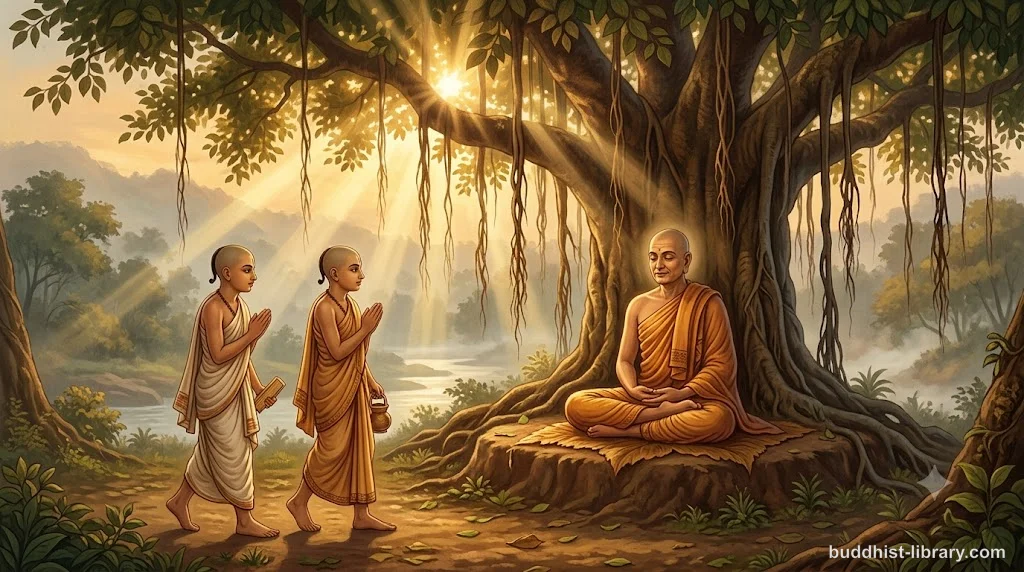
The Tevijja Sutta (DN 13) records the Buddha’s encounter with two brahmin students arguing over which ritual path actually leads to union with Brahmā. Instead of picking sides, the Buddha dismantles the premise: union with Brahmā doesn’t come from Vedic hymns or sacrificial rites, but from cultivating boundless loving-kindness, compassion, joy, and equanimity. No ritual lineage required.
“Tevijja” means “threefold knowledge”—for brahmins, mastery of the three Vedas. The Buddha takes the term and rewires it completely. His three knowledges are meditative insights you gain firsthand, not texts you memorize.
What Is the Tevijja Sutta?
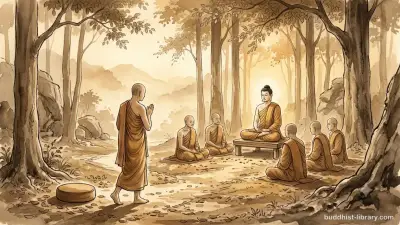
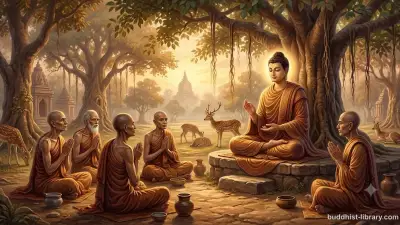
The Tevijja Sutta is the 13th discourse in the Dīgha Nikāya (Long Discourses), set in the brahmin village of Manasākaṭa. Two young brahmin students—Vāseṭṭha and Bhāradvāja—approach the Buddha with a question born of genuine confusion: their teachers claim different ritual paths to Brahmā, and both can’t be right. Which brahmin tradition actually delivers what it promises?
The Buddha’s response upends the premise. Union with Brahmā is not gained through any ritual lineage at all.
The Brahmin Dispute: Which Path to Brahmā?
Vāseṭṭha’s teacher, Pokkharasāti, taught one set of Vedic rituals as the path to Brahmā. Bhāradvāja’s teacher, Tārukkha, taught a different set. Both claimed theirs was the only way.
The students were sincere seekers, not dogmatists. They wanted an answer—but not from another brahmin peddling another exclusive method. They went to the wandering ascetic Gotama, who had no sectarian agenda.
Their question was simple: “Which brahmin speaks truth?”
The Buddha’s reply cuts straight through. He asks: “Vāseṭṭha, is there even one brahmin who claims ‘I know Brahmā, I’ve seen Brahmā, this is the path because I walked it myself’?”
Vāseṭṭha has to admit it. No. None of them.
The Buddha doesn’t stop there. Not even their teachers’ teachers, going back seven generations, claimed direct knowledge. They’re all transmitting a tradition nobody verified. It’s like a line of blind men, the Buddha says—each one grasping the shoulder of the one in front, none of them able to see.
This isn’t polite interfaith dialogue. It’s a direct challenge to faith-based religious authority.
The Buddha’s Path: Not Ritual, But the Brahmavihāras
So what does lead to union with Brahmā?
The Buddha lays out a graduated path, beginning with moral conduct (sīla):
- Abandoning harm: The practitioner gives up killing, stealing, sexual misconduct, lying, divisive speech, harsh speech, and idle chatter.
- Livelihood and sense restraint: They earn their living ethically and guard the sense doors—seeing a form without grasping at it, hearing a sound without craving it.
- Mindfulness and contentment: They become mindful in all activities, content with simple requisites.
With this ethical foundation stable, the practitioner cultivates the four Brahmavihāras (divine abodes):
1. Mettā (Loving-Kindness)
“They pervade one direction with a mind imbued with loving-kindness; likewise the second, the third, and the fourth direction. So above, below, around, and everywhere—to all as to themselves—they pervade the entire world with a mind imbued with loving-kindness, abundant, exalted, immeasurable, without hostility, without ill will.”
This isn’t a visualization exercise or warm fuzzy feeling. It’s systematic mental radiation of goodwill—east, west, north, south, up, down—until the line between self and other blurs into shared benevolence.
2. Karuṇā (Compassion)
The same structure applies to compassion: pervading all directions with a mind that wishes freedom from suffering for every being, boundless and without exception.
3. Muditā (Appreciative Joy)
Extending joy at others’ good fortune in all directions—a mind that celebrates others’ happiness as if it were one’s own.
4. Upekkhā (Equanimity)
Finally, pervading all directions with equanimity—balanced, non-reactive, neither pulled by preference nor pushed by aversion.
Then the Buddha makes his move: this is the actual path to companionship with Brahmā. Why? Because Brahmā dwells in loving-kindness, compassion, joy, and equanimity. Cultivate those same qualities and your mind aligns with Brahmā’s nature. Like attracts like.
This isn’t metaphor. It’s psychological causality. A heart free from ill will can’t be separated from a state defined by the absence of ill will.
The Three Knowledges Reframed
The term “tevijja” (three knowledges) appears again later in the canon, but now with Buddhist content:
- Recollection of past lives (pubbenivāsānussati): Direct memory of one’s own previous existences—not speculation, but recalled experience.
- Knowledge of the passing away and rebirth of beings (cutūpapāta-ñāṇa): Seeing how beings die and are reborn according to their karma.
- Knowledge of the destruction of the taints (āsavakkhaya-ñāṇa): The direct realization that ends craving, ignorance, and clinging—full liberation.
These aren’t book knowledge. They arise in deep meditation—direct experience, not inherited doctrine. The Buddha’s three knowledges versus the brahmins’ three Vedas: firsthand insight versus secondhand transmission.
Is the Tevijja Sutta Pluralistic?
A common misreading: the Buddha says all paths work, just pick one. That flattens the teaching.
The Buddha rejects ritual-based paths outright. He doesn’t say brahmin rites are equally valid. He says they’re ineffective because the teachers have never been where they claim to lead. The sutta is open to anyone—brahmin or not—who’s willing to practice virtue and mental cultivation.
But it’s not pluralistic. There’s a right path (ethics + Brahmavihāras) and wrong paths (ritual without transformation). Inclusive in access, exclusive in method.
Why Brahmā? Wasn’t the Buddha Teaching Nibbāna?
Brahmā was the highest ideal in the brahmin worldview—eternal, divine, beyond suffering. So the Buddha meets them where they are. If their goal is Brahmā, he’ll show them the actual path. But this is pedagogical skill, not the final destination.
Later discourses make it clear: Brahmā realms are impermanent. However exalted, beings there still die and are reborn. The ultimate goal is Nibbāna—which transcends all conditioned states, Brahmā realms included.
The Buddha isn’t endorsing Brahmā-worship. He’s redirecting brahmin students toward ethical transformation and mental cultivation, knowing that sustained practice will eventually reveal what lies beyond even Brahmā.
The sutta is a bridge teaching. It uses familiar cosmology to introduce inner work that opens the door to something the brahmins never imagined.
How the Brahmavihāras Work
Why does cultivating loving-kindness lead to union with Brahmā (or to higher states of mind)?
The principle is resonance. A mind saturated in ill will cannot rest in peace. A mind that delights in others’ suffering cannot experience unshakable joy. But a mind repeatedly inclined toward the welfare of all beings gradually sheds the contaminants that keep it small, reactive, and selfish.
This is not belief-dependent. It is observable. Anyone who sincerely practices mettā meditation for sustained periods reports a shift: less irritation, more spontaneous kindness, greater ease in the presence of difficulty. Scale that practice to every direction and every being, and the transformation is profound.
The technical mechanism: the Brahmavihāras are incompatible with the hindrances. Ill will (vyāpāda) cannot coexist with loving-kindness. Restlessness (uddhacca) softens in the presence of equanimity. The meditative absorptions (jhānas) become accessible when the mind is freed from hostility and grasping—and those jhānas were, in the cosmology of the time, literal rebirth-states in the Brahmā realms.
So the path to Brahmā is not mysterious. It is causal: purify the mind of animosity, cultivate boundless goodwill, and the mind naturally inclines upward.
The Sutta’s Radical Claim: Brahmins Without Brahmā-Knowledge
The Tevijja Sutta’s most uncomfortable moment is the Buddha’s diagnosis of brahmin authority:
“Suppose a man were to say, ‘I am going to seek out and love the most beautiful girl in the land.’ They ask him, ‘Do you know whether this most beautiful girl is tall or short, dark or fair, from the east or west?’ He replies, ‘No.’ They ask, ‘Then do you even know if she exists?’ He says, ‘No.’”
This is the position of the brahmins claiming their path leads to Brahmā: teaching a destination they have never verified, to reach a being they have never met.
The critique stings because it is not aimed at sincerity—Vāseṭṭha and Bhāradvāja are sincere. It is aimed at unexamined transmission of religious claims. The Buddha is not anti-tradition; he is anti-blind-tradition. Authority must rest on direct knowledge (ñāṇa), not lineage prestige.
This principle applies beyond brahmins. Any teaching—Buddhist or otherwise—claiming to lead somewhere must be verified by those who teach it. Otherwise it is “a line of blind men.”
Key Distinctions: Tevijja Across Traditions
The Tevijja Sutta is a Theravāda text from the Pali Canon. Mahāyāna and Vajrayāna schools do not include it in their core scriptural collections, though the Brahmavihāras appear across all traditions.
That said, the sutta’s core teaching—ethics and mental cultivation over ritual formalism—is consonant with Mahāyāna critiques of empty ritual. The emphasis on boundless compassion echoes the bodhisattva ideal. The method differs, but the diagnosis of sectarian dogmatism is shared.
Practical Takeaway: How to Practice This Teaching
If you want to follow the Tevijja Sutta’s path:
- Establish sīla: Keep the five precepts as a baseline—no killing, stealing, sexual harm, lying, or intoxication. Honest livelihood matters.
- Practice sense restraint: Notice when the eyes see, the ears hear, the mind reacts—and don’t automatically grab or push away. Just perceive without craving.
- Cultivate mettā daily: Sit, bring to mind a neutral person, and silently wish them well—“May you be happy, may you be safe, may you be at ease.” Expand that to all directions. Do this for 10–20 minutes daily.
- Extend to karuṇā, muditā, upekkhā: Once mettā is stable, rotate through compassion (wishing freedom from suffering), appreciative joy (delighting in others’ success), and equanimity (balanced mind). Each session, pick one and radiate it.
- Reflect on direct vs. inherited knowledge: When you encounter a teaching (Buddhist or otherwise), ask: “Has the teacher verified this? Or are they repeating what someone else said?” Favor teachers with direct insight.
This is a lifetime practice, not a weekend retreat. The sutta’s promise is that this path genuinely leads somewhere—not to an external heaven, but to a purified, liberated mind.
Common Misconceptions About the Tevijja Sutta
”All religions teach the same thing.”
The sutta does not claim this. The Buddha distinguishes effective from ineffective paths. Rituals divorced from ethical transformation are ineffective. Loving-kindness practice is effective. The teaching is that results depend on causes—not that all causes produce the same result.
”The Buddha was teaching Hinduism here.”
No. Brahmā is a figure in brahminical cosmology, but the Buddha rejects the Vedic path to Brahmā (ritual sacrifice and recitation). He teaches a meditative, ethical path that brahmins did not recognize. The later Vedānta equation of Brahman with ultimate reality is not present in this sutta.
”You don’t need ethics, just meditate.”
The sutta makes sīla the foundation. Loving-kindness meditation without restraint from harm is incomplete. The progression is always: virtue → concentration → wisdom.
Why This Sutta Matters Now
We’re drowning in spiritual consumerism—thousands of competing methods, teachers with credentials but no realization, students shopping for whatever feels right. The Tevijja Sutta cuts through it:
Does your teacher embody what they teach? Have they walked the path themselves, or are they just repeating someone else’s map?
The Buddha’s standard is direct knowledge. Not degrees. Not lineage. Not follower count. If someone claims they can guide you to liberation, they should have tasted it themselves—even partially.
Second lesson: transformation requires practice, not labels. Calling yourself a Buddhist changes nothing. Actually cultivating boundless goodwill changes everything.
The sutta shifts authority from external ritual to internal work, from inherited doctrine to verified insight. That shift made it radical in 500 BCE. Still does.
Read more:
- The Four Brahmavihāras: Cultivating the Divine Abodes — a detailed guide to practicing loving-kindness, compassion, appreciative joy, and equanimity, the very meditations taught in the Tevijja Sutta.
- The Dīgha Nikāya: The Buddha’s Long Discourses Explained — explore the collection that contains the Tevijja Sutta, including its structure, themes, and other essential early teachings.
- What Is Kalyāṇamitta? Understanding Spiritual Friendship in Buddhism — the Buddha’s teaching on choosing teachers and companions with direct knowledge, closely tied to the Tevijja Sutta’s critique of blind lineage transmission.
📖 Source / license: Tevijja Sutta (DN 13); translated by Maurice Walshe, 'The Long Discourses of the Buddha' (Wisdom Publications, 1995); Bhikkhu Bodhi commentary in 'The Connected Discourses of the Buddha'; SuttaCentral DN 13 (suttacentral.net)
Frequently asked questions
What is the Tevijja Sutta about?
The Tevijja Sutta (DN 13) records the Buddha's teaching to two brahmin students, Vāseṭṭha and Bhāradvāja, who ask which ritual path leads to union with Brahmā. The Buddha responds that union with Brahmā comes not through Vedic knowledge but through cultivating loving-kindness, compassion, appreciative joy, and equanimity—the four divine abodes.
What are the 'three knowledges' (tevijja) in this sutta?
In the brahmin context, tevijja refers to mastery of the three Vedas (Rig, Sama, and Yajur). The Buddha reframes this term to mean the three higher knowledges gained in deep meditation: recollection of past lives, knowledge of the passing away and rebirth of beings, and knowledge of the destruction of mental defilements.
How does one cultivate the Brahmavihāras according to this sutta?
The Buddha teaches a progressive practice: first establish virtue (sīla) and sense restraint, then develop loving-kindness by pervading all directions—east, west, north, south, above, below—with a boundless mind free from hostility. The same method applies to compassion, appreciative joy, and equanimity.
Does this sutta say all paths lead to the same goal?
No. The Buddha clearly states that brahmin teachers who claim their ritual path leads to Brahmā have never seen Brahmā themselves and are 'like a line of blind men.' He distinguishes the effective path (moral conduct + meditation on the Brahmavihāras) from ineffective ritual recitation.