What Is Bhāvanā? Understanding Mental Development in Buddhism
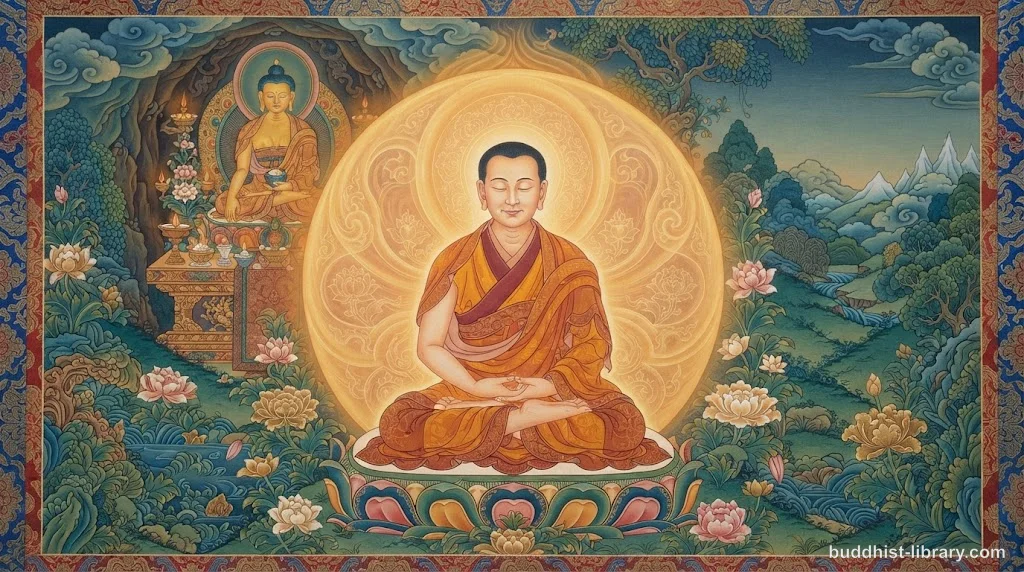
Bhāvanā is mental cultivation—the systematic training of your mind through meditation, ethics, and reflection to develop clarity, balance, and freedom from suffering. The Pali word means “bringing into being,” and it covers everything from learning to sit still for five minutes to the deep transformations that lead to awakening.
What Does Bhāvanā Mean?
The Pali word bhāvanā derives from the root bhū (“to be” or “to become”) and carries the sense of “causing to be” or “developing.” In Buddhist contexts, it refers specifically to mental development—the intentional cultivation of wholesome mental states and the gradual elimination of unwholesome ones.
Unlike casual thinking or daydreaming, bhāvanā is deliberate. It’s the difference between letting your garden grow wild versus actually weeding, watering, and tending what you want to flourish.
The Buddha emphasized bhāvanā throughout his teaching. In the Anguttara Nikaya, he states: “Monks, I do not see any other single thing that, when developed and cultivated, leads to such great benefit as the mind. The mind, when developed and cultivated, leads to great benefit” (AN 1.21).
How Is Bhāvanā Different from Ordinary Thinking?
Ordinary thinking runs on autopilot. You cycle through worries, fantasies, judgments, and memories without choosing where your attention goes. This scattered mental activity usually reinforces the patterns that cause suffering rather than loosening them.
Bhāvanā works differently. It’s intentional—you choose what to pay attention to and which qualities to develop. It’s sustained, continuing with patience over weeks and months rather than sporadic bursts. It follows a direction toward liberation, not just random self-improvement. And it deliberately nurtures wholesome states—kindness, clarity, understanding—while letting go of greed, hatred, and confusion.
The Buddha compared untrained thought to a wild bull roaming destructively through a field, while bhāvanā is like training that bull to plow straight furrows (MN 19).
What Are the Main Types of Bhāvanā?
Buddhist mental development encompasses two complementary approaches that work together:
Samatha-Bhāvanā (Cultivation of Calm)
This involves developing concentration and mental stability through sustained attention to a single object—the breath, a phrase, a visual image, or a quality like loving-kindness. Samatha practice leads to the jhānas (states of deep meditative absorption) and produces:
- Mental tranquility and peace
- Freedom from the five hindrances
- Strong concentration power
- Pleasant abiding in the present
Vipassanā-Bhāvanā (Cultivation of Insight)
This involves investigating the nature of experience directly to understand impermanence (anicca), unsatisfactoriness (dukkha), and non-self (anattā). Vipassanā practice leads to:
- Clear seeing of how things actually are
- Wisdom that cuts through delusion
- Progressive stages of awakening
- Ultimate liberation from suffering
The Buddha taught both approaches as mutually supportive. Calm provides the stability and clarity needed for penetrating insight; insight ensures that calm doesn’t become mere pleasant absorption but leads toward freedom.
How Do You Practice Bhāvanā?
The Buddha outlined a gradual training that integrates ethical conduct, mental cultivation, and wisdom:
1. Establish Ethical Foundations (Sīla)
Mental development rests on moral discipline. The five precepts—abstaining from killing, stealing, sexual misconduct, false speech, and intoxicants—create the stable ground from which meditation can grow. A mind burdened by remorse or agitation from unethical behavior cannot settle into deep concentration.
2. Develop Concentration (Samādhi)
Choose a meditation object and return attention to it again and again. The breath is most common, but the Buddha taught forty different objects suitable for different temperaments. With consistent practice:
- Scattered attention gradually becomes collected
- The mind learns to stay with one thing
- Mental fabrication quiets down
- Peace and clarity emerge naturally
3. Cultivate Insight (Paññā)
Once the mind has some stability, investigate how all phenomena arise and pass away. Observe sensations, feelings, thoughts, and mental states without identifying with them. Notice:
- Nothing lasts—everything is impermanent
- Clinging to changing things creates suffering
- There is no fixed “self” behind experience
This direct seeing transforms understanding from intellectual concept to lived realization.
4. Practice Continuously
Bhāvanā isn’t limited to formal sitting. The Buddha encouraged:
- Mindfulness in daily activities (eating, walking, working)
- Wise reflection on experience
- Cultivation of wholesome mental states throughout the day
- Regular review of one’s progress and difficulties
What Are the Key Benefits of Bhāvanā?
The Pāli texts describe fruits that show up both quickly and over time. In the near term, practitioners notice reduced stress and agitation, better concentration, emotional resilience, improved relationships, and the simple pleasure of a calm mind. These aren’t mystical attainments—they’re natural results of training attention and cultivating kindness.
The deeper transformations take longer. Destructive patterns that have run for years don’t dissolve overnight. But with sustained practice, wisdom develops, discernment sharpens, and the mind moves through progressive stages of awakening toward the ultimate goal: complete liberation (nibbāna).
The Buddha emphasized that benefits accrue gradually through sustained practice. In the Kakacūpama Sutta, he compared mental development to the gradual wearing away of a carpenter’s adze through repeated use—slow, steady transformation through consistent effort (MN 21).
What Obstacles Arise in Bhāvanā Practice?
The Buddha identified common hindrances that obstruct mental development:
- Sensory desire — Craving for pleasant experiences pulls attention away
- Ill will — Aversion and resentment create agitation
- Sloth and torpor — Mental dullness and physical heaviness
- Restlessness and worry — Scattered energy and anxious thinking
- Doubt — Uncertainty about the practice, the teaching, or one’s ability
Recognizing these hindrances when they arise is itself a form of bhāvanā. The mind learns to see obstacles clearly rather than being overwhelmed by them. Each hindrance has specific antidotes—for example, cultivating loving-kindness counters ill will, while investigation and effort counter dullness.
How Does Bhāvanā Lead to Liberation?
Mental development works by gradually transforming the deep patterns (saṅkhāras) that perpetuate suffering. Through sustained practice:
- Recognition — You begin to see how craving and clinging operate
- Non-identification — You stop taking mental states as “me” or “mine”
- Letting go — Attachment to views, preferences, and identity loosens
- Wisdom — Direct insight into the three characteristics arises
- Freedom — Liberation from the cycle of reactivity and suffering
This isn’t a linear process but a spiral of deepening understanding. Each cycle of practice brings greater clarity, which enables deeper letting go, which reveals subtler attachments to release.
The Satipaṭṭhāna Sutta describes this progressive refinement: practicing mindfulness of body leads to mindfulness of feelings, which leads to mindfulness of mind, which culminates in mindfulness of mental objects and the direct seeing of the Four Noble Truths (MN 10).
Key Points About Bhāvanā
- Bhāvanā is systematic mental cultivation, not casual thinking or philosophical speculation
- It integrates ethical conduct, concentration, and wisdom into a unified path
- Both calm (samatha) and insight (vipassanā) are essential and mutually supportive
- Practice requires patience, consistency, and proper guidance
- Results accumulate gradually through sustained effort over time
- Hindrances are natural and become opportunities for deeper understanding
- The ultimate fruit is liberation from suffering and full awakening
Frequently Asked Questions
What is the difference between bhāvanā and meditation?
Bhāvanā is the broader term encompassing all forms of mental cultivation, including meditation (jhāna practice), ethical training, and wisdom development. Meditation is one method within the larger framework of bhāvanā.
Do I need a teacher to practice bhāvanā?
While the Buddha encouraged self-reliance, having a qualified teacher (kalyāṇamitta) is highly beneficial. A teacher can guide you through difficulties, correct misunderstandings, and help you navigate the subtleties of mental development.
How long does it take to see results from bhāvanā practice?
Results vary widely depending on individual factors—effort, consistency, prior conditioning, and natural aptitude. Some practitioners notice increased calm and clarity within weeks, while deeper transformations may take months or years of sustained practice.
Can bhāvanā be practiced outside of formal meditation sessions?
Absolutely. Bhāvanā includes mindfulness in daily activities, ethical conduct in relationships and work, and wise reflection throughout the day. Formal meditation supports and deepens this continuous cultivation.
Conclusion
Bhāvanā is what makes Buddhism a practice rather than a philosophy. You can read about the Dhamma all day, but understanding only comes through direct cultivation—training your own mind, seeing your own patterns, working with your own reactivity.
The path doesn’t ask you to believe anything. It asks you to develop your capacity to see clearly and respond wisely. That capacity grows through patient, sustained effort. Not dramatic breakthroughs every week, but the slow accumulation of small shifts that eventually transform how you relate to experience.
As the Buddha taught in the Dhammapada: “Irrigators guide water, fletchers shape arrows, carpenters shape wood—the wise shape their minds” (Dhp 80). That’s what bhāvanā is. Not waiting for enlightenment to arrive, but doing the daily work of cultivation that makes freedom possible.
Read more:
- What Is Samādhi? Understanding Concentration in Buddhist Meditation — explores the concentration aspect of bhāvanā in depth, including how to develop and deepen meditative absorption.
- Vipassanā: Insight Meditation Practice in Buddhism — examines the insight dimension of mental development and how it leads to liberation.
- The Satipaṭṭhāna Sutta: Foundations of Mindfulness Explained — details the Buddha’s comprehensive framework for mental cultivation through the four foundations of mindfulness.
📖 Source / license: Anguttara Nikaya (AN 3.101, AN 4.41), Majjhima Nikaya (MN 2, MN 10) — translations by Bhikkhu Bodhi and Ṭhānissaro Bhikkhu, available at SuttaCentral and Access to Insight
Frequently asked questions
What is the difference between bhāvanā and meditation?
Bhāvanā is the broader term encompassing all forms of mental cultivation, including meditation (jhāna practice), ethical training, and wisdom development. Meditation is one method within the larger framework of bhāvanā.
Do I need a teacher to practice bhāvanā?
While the Buddha encouraged self-reliance, having a qualified teacher (kalyāṇamitta) is highly beneficial. A teacher can guide you through difficulties, correct misunderstandings, and help you navigate the subtleties of mental development.
How long does it take to see results from bhāvanā practice?
Results vary widely depending on individual factors—effort, consistency, prior conditioning, and natural aptitude. Some practitioners notice increased calm and clarity within weeks, while deeper transformations may take months or years of sustained practice.
Can bhāvanā be practiced outside of formal meditation sessions?
Absolutely. Bhāvanā includes mindfulness in daily activities, ethical conduct in relationships and work, and wise reflection throughout the day. Formal meditation supports and deepens this continuous cultivation.