What Is Phassa? Understanding Contact in Buddhist Psychology
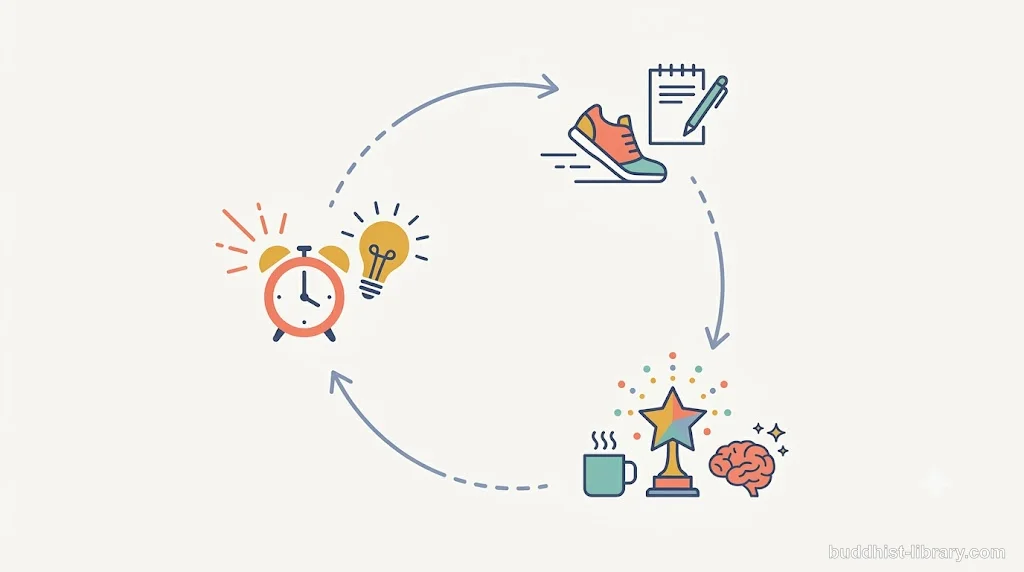
Phassa (contact) is the spark that ignites experience. In Buddhist psychology it’s defined as the meeting of three elements—sense organ, sense object, and consciousness—in a single moment. When your eye meets a color, your ear meets a sound, or your mind meets a memory, that convergence is phassa. It’s brief, automatic, and the gateway through which all feelings, desires, and suffering enter. Understanding contact means seeing where reactivity begins—and where freedom becomes possible.
What Does Phassa Mean in the Pali Texts?
The Pali word phassa (Sanskrit: sparśa) translates as “contact” or “impression.” It appears throughout early Buddhist texts as a fundamental mental factor—one of the universal cetasikas present in every moment of consciousness.
The classical definition comes from the Abhidhamma: contact is “the meeting of three”—the sense faculty (indriya), the sense object (ārammaṇa), and consciousness (viññāṇa). Without any one of these, contact cannot occur. An eye alone doesn’t produce visual contact; you also need light, form, and eye-consciousness arising together.
The Buddha emphasized phassa as the hinge point in Dependent Origination. As he taught in the Saḷāyatana Saṃyutta (SN 35.93):
“With the eye as condition, and with forms, eye-consciousness arises. The meeting of the three is contact (phassa). With contact as condition, feeling (vedanā) arises.”
This sequence—sense base → consciousness → contact → feeling—runs continuously while you’re awake. Touch a hot stove: the body sense base meets heat; body-consciousness arises; contact occurs. Instantly, painful feeling follows. Then craving to escape the pain. Then action. The whole cascade starts at contact.
How Does Contact Differ from Consciousness?
This confuses many students. If consciousness is already there, what exactly is contact adding?
Consciousness (viññāṇa) is awareness of an object. Eye-consciousness knows visible form; ear-consciousness knows sound—the bare fact of cognizing.
Contact is the conjunction of consciousness, sense base, and object into one unified event. Consciousness alone is potential. Contact actualizes it. Think of an electrical circuit: the wire (sense base), the power source (consciousness), and the appliance (object) must all connect before current flows. Contact is when the circuit closes.
Without contact, consciousness would be inert—unable to trigger feeling, unable to set the chain of craving and clinging in motion. Contact is what makes experience felt rather than merely registered.
The Abhidhamma defines contact’s function (kicca) as “striking” or “impingement”—the sense object strikes the consciousness supported by the sense base. That impact is what we call contact. It’s not passive reception; it’s an active meeting.
The Six Types of Contact in Buddhism
The Buddha analyzed contact according to the six sense bases (saḷāyatana):
- Eye-contact (cakkhu-samphassa) — visual forms meet eye-consciousness
- Ear-contact (sota-samphassa) — sounds meet ear-consciousness
- Nose-contact (ghāna-samphassa) — odors meet nose-consciousness
- Tongue-contact (jivhā-samphassa) — flavors meet tongue-consciousness
- Body-contact (kāya-samphassa) — tactile sensations meet body-consciousness
- Mind-contact (mano-samphassa) — thoughts, memories, mental images meet mind-consciousness
Notice the sixth. In Buddhism, the mind is a sense base just like the eye or ear. When you recall yesterday’s conversation or imagine tomorrow’s meeting, mind-consciousness is contacting a mental object. That’s mind-contact. Dreams, daydreams, abstract reasoning—all involve mano-samphassa.
This is why the Buddha said that craving and clinging don’t just come through the five physical senses. Most of our reactivity—worry, fantasy, planning, regret—arises through mind-contact with mental formations.
Where Does Phassa Fit in the Twelve Links?
Dependent Origination (Paṭiccasamuppāda) is the Buddha’s map of how suffering arises and ceases. Contact is the sixth link:
- Ignorance (avijjā)
- Volitional formations (saṅkhārā)
- Consciousness (viññāṇa)
- Name-and-form (nāmarūpa)
- Six sense bases (saḷāyatana)
- Contact (phassa)
- Feeling (vedanā)
- Craving (taṇhā)
- Clinging (upādāna)
- Becoming (bhava)
- Birth (jāti)
- Aging, death, sorrow, suffering (jarā-maraṇa)
The sequence shows how contact depends on the six sense bases being intact and functioning. When your eye meets light in the presence of consciousness, contact arises. From contact, feeling arises—pleasant, unpleasant, or neutral. From feeling arises craving—to prolong the pleasant, escape the unpleasant, ignore the neutral.
Contact is the pivot. Before it, the links are structural—how the body-mind system is conditioned. After it, the links become psychological—how we react to experience. The Buddha’s insight was that you can’t stop contact (the senses function as long as you’re alive), but you can stop the chain at feeling or craving through mindfulness and wisdom.
As the Nidāna Saṃyutta (SN 12.43) states:
“If, monks, one does not attend with desire, lust, and delight to contact, craving does not arise.”
The practice isn’t to blind yourself or numb the senses. It’s to meet contact without clinging.
Why Understanding Phassa Matters for Practice
Most meditators work with feelings or thoughts. They try to calm pleasant sensations, push away unpleasant ones. But feelings are already reactions—one step removed from where things actually begin.
Observing contact means catching experience at its earliest possible moment. The instant sound touches the ear. Coolness touching skin. A memory touching the mind. That first flash—before you’ve labeled it good or bad—is contact. Raw, neutral data.
Training yourself to notice contact has three benefits:
1. You See Reactivity Before It Hardens
When contact is unobserved, feeling follows instantly, and craving follows feeling. By the time you’re aware, you’re already caught in aversion or desire. Observing contact gives you a split-second gap—the moment between stimulus and response where choice exists.
2. You Understand Non-Self Directly
Contact shows you that experience isn’t happening to a self. It’s a process of conditions meeting. Eye, form, light, consciousness—none of these is “you.” They arise together, produce contact, and dissolve. Watching this impersonal arising and passing undermines the illusion of a permanent experiencer behind the senses.
3. You Stop Feeding Suffering at the Root
The Buddha taught that ignorance and craving fuel the cycle of rebirth. Craving begins at contact contaminated by ignorance. If you meet contact with clear comprehension (sampajañña)—knowing it’s impermanent, not-self, and dependently arisen—craving doesn’t ignite. You see the sense object, feel the feeling, and let it pass without grasping. This is the “contact with knowledge” the suttas praise.
How to Observe Phassa in Meditation
Mindfulness meditation offers direct training in observing contact. Here’s how to work with it:
Step 1: Anchor in a Single Sense Base
Start with body-contact—the breath touching the nostrils, the abdomen rising and falling, the buttocks pressing the cushion. Choose one location and stay with it. Every time the breath sensation meets that spot, contact occurs.
Step 2: Notice the Meeting Moment
Don’t focus on the sensation after it’s arisen. Focus on the instant it arises—the moment air touches the nose, the moment pressure registers at the abdomen. That’s contact. It’s quick. Blink and you miss it. Training yourself to catch that first touch sharpens awareness.
Step 3: Distinguish Contact from Feeling
Contact is neutral—just the fact of meeting. Feeling (vedanā) follows immediately—pleasant, unpleasant, or neutral tone. In practice they blur together. But with repetition you can separate them: “Contact… feeling… contact… feeling.” This shows you that reactivity isn’t built into contact itself. Feeling is a response, not an inherent quality of the object.
Step 4: Expand to Other Sense Bases
Once you can observe body-contact, expand to sounds (ear-contact), sights (eye-contact), mental images (mind-contact). Walking meditation is excellent for this—each footfall is body-contact; each sound of traffic or birds is ear-contact. You begin to see the six sense doors opening and closing all day.
Step 5: Watch Craving Not Arise
The breakthrough comes when you observe contact, feel the feeling, and nothing else happens. No craving to hold the pleasant sound. No aversion to the unpleasant ache. Just contact → feeling → cessation.
This isn’t suppression. You’re not pushing anything away. It’s clear seeing. When you see contact as impermanent and conditioned—really see it, not just think it—the mind stops trying to possess or escape what arises.
The Ānāpānasati Sutta (MN 118) indirectly trains this by having you observe “the whole body” of the breath. That whole-body awareness includes contact—the feeling of air touching skin, lungs expanding, abdomen moving. By staying with the raw sensations, you’re training contact-awareness.
The Two Kinds of Contact: Worldly and Wise
Later Buddhist texts distinguish two modes of contact based on how consciousness approaches the object:
Ignorance-Contact (avijjā-samphassa)
This is contact accompanied by ignorance, misconceiving the object as permanent, satisfying, or self. You see a beautiful form and unconsciously assume it will last, that possessing it will bring lasting happiness, that “I” am the one seeing it. This distorted contact immediately conditions distorted feeling and craving.
Most contact in daily life is ignorance-contact. We touch the world through a filter of delusion, grasping, and aversion.
Knowledge-Contact (vijjā-samphassa)
This is contact accompanied by wisdom, seeing the object as impermanent (anicca), unsatisfactory (dukkha), and not-self (anattā). When eye-contact arises with clear comprehension that the form is fleeting and conditioned, craving doesn’t take hold. You see clearly, feel neutrally, and let go.
Meditation transforms contact from the first kind to the second. Same senses, same objects, different understanding. As the Buddha said in the Indriya Saṃyutta (SN 48.40):
“When contacted by a painful feeling, one does not sorrow, grieve, or lament. One feels one pain—bodily, not mental.”
That’s knowledge-contact. The physical sensation arises (body-contact), painful feeling arises, but mental suffering (the second arrow of reactivity) doesn’t follow.
Common Misconceptions About Contact
”Contact Means Physical Touch Only”
No—contact occurs across all six sense bases. Hearing is ear-contact. Thinking is mind-contact. Most of our reactive patterns come from mind-contact with memories and plans, not physical touch.
”If I Avoid Sense Objects, I Avoid Contact”
Wrong strategy. Even in a sensory-deprivation tank, mind-contact continues. Closing your eyes doesn’t stop eye-contact; it shifts it to darkness and mental images. The Buddha didn’t advocate sense withdrawal as the path. He taught understanding contact when it occurs, not fleeing from it.
”Contact Is the Problem”
Contact itself is neutral—a natural function of having senses. The problem is ignorance at the moment of contact, which conditions craving and clinging. The goal isn’t to stop contact (impossible for a living being) but to meet it with wisdom instead of delusion.
”I Should Feel Nothing When Contact Happens”
Contact produces feeling; that’s its nature. The practice isn’t to become numb but to feel without proliferation (papañca)—without spinning stories, judgments, and desires around the feeling. You feel the ache in your knee during meditation. You know it’s unpleasant. But you don’t add “This is unbearable, I can’t sit, meditation doesn’t work for me…” That spiral is optional. Contact and feeling are not.
The Practical Takeaway
Phassa is the doorway. Everything you experience—sights, sounds, tastes, thoughts, emotions—enters through contact. When contact is unobserved and misunderstood, it becomes the fuel for craving, clinging, and suffering. When contact is observed with clear awareness, it becomes a moment of liberation.
The practice is simple: notice the instant an object meets consciousness. The sound touching the ear. The memory touching the mind. The breath touching the nose. That’s contact. See it clearly, understand it as impermanent and conditioned, and let it pass. Do this a thousand times, ten thousand times, until meeting the world no longer means grasping it.
As the Buddha taught, the end of suffering doesn’t require leaving the world of the senses. It requires understanding how contact works—and learning to live at the meeting point without burning.
Read More
- The Six Sense Bases (Saḷāyatana): Understanding Perception in Buddhism — explores the six internal and external sense bases that provide the condition for contact to arise.
- What Is Vedanā? Understanding Feeling in Buddhist Meditation — examines the link immediately following contact—how feeling arises and why it matters for breaking the chain of craving.
- What Is Dependent Origination (Paṭiccasamuppāda)? — the full map of the twelve links showing how ignorance, contact, craving, and suffering arise and cease together.
📖 Source / license: Saḷāyatana Saṃyutta (SN 35), Paṭiccasamuppāda Suttas (SN 12), Abhidhamma Piṭaka
Frequently asked questions
Is phassa the same as physical touch?
No—phassa means contact across all six sense bases (eye, ear, nose, tongue, body, mind). Physical touch is just one type. Mental contact with thoughts and memories also counts as phassa.
Can we stop phassa from happening?
As long as you're alive with functioning senses, contact occurs automatically. The practice isn't to block contact but to not react blindly to the feeling it triggers—breaking the chain before craving arises.
Where does phassa fit in Dependent Origination?
Phassa is the sixth link. It arises dependent on the six sense bases meeting their objects in the presence of consciousness. From contact arises feeling (vedanā), which conditions craving (taṇhā).
How do I observe phassa in meditation?
Notice the instant a sense object meets awareness—the sound touches the ear, the breath sensation contacts the body. That first moment before liking or disliking appears is contact. Meditation trains you to catch it early.