The Aṅguttara Nikāya: The Buddha's Numerical Discourses Explained
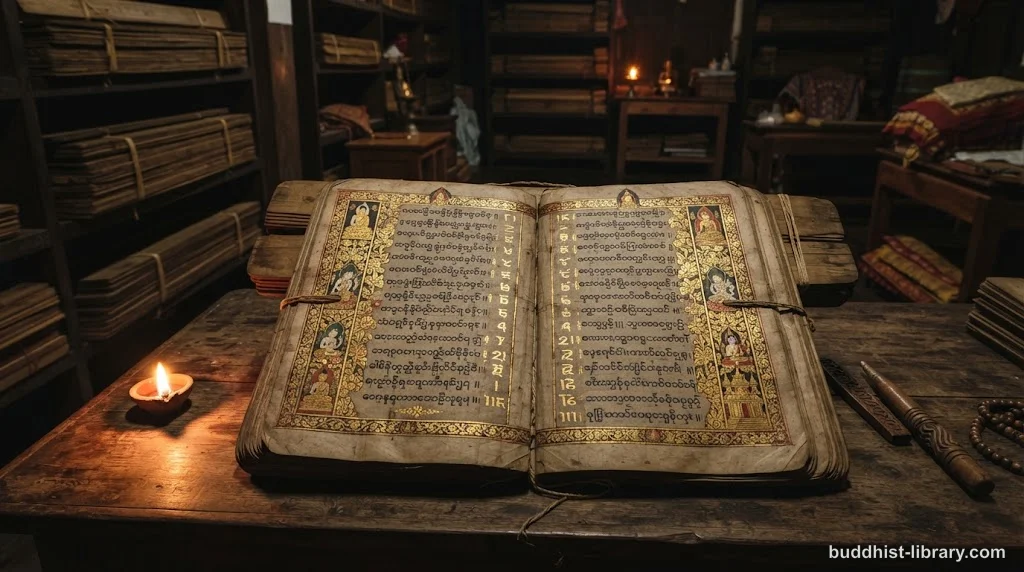
The Aṅguttara Nikāya is the fourth major collection of the Pali Canon, containing thousands of the Buddha’s discourses arranged by number—from the “Book of Ones” to the “Book of Elevens.” This numerical framework made the teachings easier to remember in an oral tradition and reveals the Buddha’s skill in organizing Dhamma for different audiences, from monastics to laypeople.
The name aṅguttara literally means “gradual” or “increased by one,” reflecting how each book (nipāta) adds one more item to its lists. This isn’t just filing. It’s pedagogy. The structure itself teaches—start simple, build complexity, let the pattern sink in.
What Is the Aṅguttara Nikāya?
The Aṅguttara Nikāya is one of the five nikāyas (collections) that make up the Sutta Piṭaka, the basket of discourses in the Pali Canon. While the Dīgha Nikāya contains long discourses and the Majjhima Nikāya contains middle-length ones, the Aṅguttara is organized not by length but by numerical sets.
The collection contains over 9,500 short discourses grouped into eleven books:
- Book of Ones (Ekaka Nipāta) — 627 suttas
- Book of Twos (Duka Nipāta) — 479 suttas
- Book of Threes (Tika Nipāta) — 352 suttas
- Book of Fours (Catukka Nipāta) — 783 suttas
- Book of Fives (Pañcaka Nipāta) — 1,152 suttas
- Book of Sixes (Chakka Nipāta) — 649 suttas
- Book of Sevens (Sattaka Nipāta) — 1,124 suttas
- Book of Eights (Aṭṭhaka Nipāta) — 627 suttas
- Book of Nines (Navaka Nipāta) — 432 suttas
- Book of Tens (Dasaka Nipāta) — 746 suttas
- Book of Elevens (Ekādasaka Nipāta) — 1,151 suttas
Each discourse focuses on a teaching enumerated in that number—three unwholesome roots, four divine abodes, five aggregates, seven factors of enlightenment, and so on.
Why Numbers?
Why organize by number? Several reasons, all practical:
Memorization. Before writing, monks preserved the teachings through oral recitation. Grouping concepts by number created mnemonic hooks. Once you knew there were five hindrances, you could more easily recall sloth-and-torpor, restlessness-and-worry, doubt, sensual desire, and ill will. The number was the handle.
Systematic teaching. The Buddha could introduce a framework—say, the four foundations of mindfulness—then elaborate on each foundation in separate talks. Students mentally filed each piece in the right category. No confusion about which teaching belonged where.
Cross-referencing. When the Buddha mentioned “the seven factors” in conversation, listeners familiar with the Aṅguttara structure immediately knew which seven he meant. Instant recognition.
Progressive understanding. Start with simple ones and twos, then advance to tens and elevens. The structure mirrors the gradual training itself—you don’t jump to the tenth rung before mastering the first.
Key Teachings in the Aṅguttara Nikāya
The Gradual Training
One of the most important contributions of the Aṅguttara Nikāya is its detailed exposition of the gradual training—the step-by-step path from initial faith to full awakening. Multiple suttas outline this progression: hearing the Dhamma, developing faith, taking up moral conduct, restraining the senses, practicing mindfulness, developing concentration, and finally cultivating liberating insight.
Lists That Became Foundational
Many numerical lists first detailed in the Aṅguttara became core to Buddhist practice across traditions:
- The Three Unwholesome Roots: greed (lobha), hatred (dosa), delusion (moha)
- The Five Hindrances: sensual desire, ill will, sloth-and-torpor, restlessness-and-worry, doubt
- The Seven Factors of Enlightenment: mindfulness, investigation, energy, joy, tranquility, concentration, equanimity
- The Ten Perfections (pāramī): generosity, virtue, renunciation, wisdom, energy, patience, truthfulness, determination, loving-kindness, equanimity
Practical Ethics
The Aṅguttara is unusually rich in teachings for laypeople. The Kālāma Sutta, with its famous advice on independent inquiry, appears here. So does the Sigālovāda Sutta, often called the “layperson’s code of discipline”—a practical guide to social responsibilities that addresses parents, children, employers, employees, friends, and spiritual teachers.
Other suttas get specific. How to choose friends. How to manage wealth wisely. Signs of a good teacher. Qualities of a noble disciple. How laypeople can practice while raising families and working jobs. The Buddha wasn’t interested only in monastics—he taught householders who couldn’t retreat to the forest but still wanted to walk the path.
Meditation Instructions
While the Satipaṭṭhāna Sutta and Ānāpānasati Sutta in the Majjhima Nikāya provide comprehensive meditation frameworks, the Aṅguttara offers hundreds of bite-sized meditation instructions. These include methods for removing distracting thoughts, cultivating jhānas, developing insight, and working with specific hindrances.
Cosmology and Karma
The Aṅguttara contains detailed explanations of karma, rebirth, and Buddhist cosmology. Suttas describe the mechanics of karma-result, the destinations of rebirth, and the workings of dependent origination in everyday life.
Structure and Style
Most Aṅguttara suttas are short. A page or two. The Buddha or a senior disciple states a teaching, elaborates briefly, and concludes. Some suttas are just lists with minimal explanation; others develop their themes more fully.
The style is more formulaic than the Majjhima or Dīgha Nikāyas. Repeated phrases. Stock descriptions. Modern readers sometimes find this tedious, but the original audience didn’t—they found it reassuring, like hearing a familiar melody. And it made accurate transmission more likely. When you recite the same formula a thousand times, mistakes stand out.
Many suttas begin with a question from a monk or layperson. The Buddha responds with a numbered teaching. Others record spontaneous talks given to various audiences—kings, brahmin priests, merchants, farmers, fellow monastics. The audience shaped the teaching.
Reading the Aṅguttara Nikāya
You don’t need to read this collection cover to cover. In fact, you probably shouldn’t—it’s over 9,500 suttas. Here are better ways in:
Browse by number. Want to understand the five hindrances or seven factors of enlightenment? Go directly to the relevant book and read all the suttas on that topic. You’ll see the same teaching from multiple angles.
Follow a theme. Use the indices in modern translations to track themes like meditation, ethics, or karma across different numerical books. Themes cut across numbers.
Start with the Book of Ones. It’s the most cryptic—some suttas are just a sentence or two—but it contains profound teachings distilled to their essence. “Monks, I do not see a single thing that is as beneficial as a mind well-developed through meditation.” That’s a complete sutta. One sentence. You could spend a year unpacking it.
Read selectively. Bhikkhu Bodhi’s translation includes helpful introductions to each book, guiding you to the most important or accessible suttas. Let him curate for you.
Relationship to Other Collections
The Aṅguttara frequently overlaps with other nikāyas. A discourse might appear in full in the Majjhima and then show up again, summarized, in the Aṅguttara under the appropriate numerical category. This redundancy was intentional—different organizational schemes helped different students.
The Saṃyutta Nikāya, organized by topic rather than number, is the Aṅguttara’s closest sibling. Both contain many short suttas; both were likely recited more frequently than the lengthy Dīgha or Majjhima collections.
Historical Significance
The Aṅguttara Nikāya preserves some of the earliest material in the Pali Canon. Scholars generally agree that the numerical framework is very old—likely dating to within a century of the Buddha’s death. The need for systematic memorization would have been most acute in that first generation, before the teachings spread across regions and languages.
But the collection also grew over time. Some suttas show signs of later composition or elaboration. The Book of Ones, for instance, contains material that looks like aphoristic summaries of longer teachings—possibly added as study aids by later editors. This doesn’t diminish their value. It just means the Aṅguttara, like all living traditions, evolved.
Key Suttas Worth Reading
Here are a few essential suttas from the Aṅguttara:
- AN 3.65 (Kālāma Sutta) — The Buddha on how to evaluate teachings through direct experience
- AN 4.41 (Samādhi Sutta) — Four types of concentration and their fruits
- AN 5.57 (Themes Sutta) — Five subjects for frequent reflection
- AN 7.49 (Perceptions Sutta) — Seven perceptions that lead to liberation
- AN 8.54 (Dīghajāṇu Sutta) — Four qualities that lead to a layperson’s happiness
- AN 10.48 (Threads Sutta) — Ten wholesome actions
These represent just a fraction of the riches in this collection.
Modern Translations
The standard English translation is Bhikkhu Bodhi’s The Numerical Discourses of the Buddha (Wisdom Publications, 2012), a comprehensive scholarly work with extensive notes. It’s thorough but long—over 1,900 pages.
Bhikkhu Sujato has also translated the full Aṅguttara Nikāya, available free at SuttaCentral.net. His translation aims for clarity and accessibility, sometimes prioritizing readability over literal precision.
Ṭhānissaro Bhikkhu has translated selected suttas from the Aṅguttara, available at dhammatalks.org. His renderings emphasize practical application and meditative context.
Practical Application
The Aṅguttara Nikāya isn’t just for scholars. Its numerical lists are practical tools.
Sit to meditate and mentally review the five hindrances—you’ll recognize what’s arising. Make an ethical decision and recall the five precepts—you have a framework. Cultivate loving-kindness and remember the four divine abodes—loving-kindness, compassion, sympathetic joy, equanimity—and your practice stays balanced.
The numerical structure isn’t dry classification. It’s a toolkit for transformation.
Conclusion
The Aṅguttara Nikāya demonstrates the Buddha’s pedagogical skill. By organizing teachings numerically, he created a system that was memorable, systematic, and adaptable. Beginners learn the basics. Advanced practitioners refine subtle aspects of meditation. The same collection serves both.
Its thousands of short suttas span the full range of Buddhist practice—from moral conduct to the highest meditative attainments, from household life to monastic discipline, from basic generosity to the realization of nibbāna. In its pages, the Dhamma appears as a lived path, taught to real people facing real challenges.
Pick a number that speaks to you. Five, seven, ten. Explore what the Buddha had to say about it. You may find exactly what you need.
Read more:
- The Majjhima Nikāya: The Buddha’s Middle Length Discourses Explained — Another major Pali Canon collection offering comprehensive teaching discourses.
- What Is the Pali Canon (Tipiṭaka)? Structure and Contents of Early Buddhist Scriptures — An overview of the entire Pali Canon and where the Aṅguttara fits within it.
- The Gradual Training in Buddhism: The Buddha’s Step-by-Step Path — A detailed look at the gradual training extensively covered in the Aṅguttara Nikāya.
📖 Source / license: Aṅguttara Nikāya, translated by Bhikkhu Bodhi (The Numerical Discourses of the Buddha, Wisdom Publications, 2012)
Frequently asked questions
What does Aṅguttara Nikāya mean?
Aṅguttara Nikāya means 'Gradual Collection' or 'Numerical Discourses' in Pali. It refers to the Buddha's teachings organized by ascending numerical sets, from teachings on one thing to teachings on eleven things.
How is the Aṅguttara Nikāya different from other parts of the Pali Canon?
Unlike other collections organized by length or theme, the Aṅguttara Nikāya is uniquely structured around numbers. This pedagogical approach made the teachings easier to memorize and transmit orally before they were written down.
What are the most important teachings in the Aṅguttara Nikāya?
Key teachings include the gradual training, the five hindrances, the seven factors of enlightenment, the ten perfections, and countless practical instructions on meditation, ethics, and daily life. The collection is particularly rich in laypeople-oriented teachings.
Is the Aṅguttara Nikāya suitable for beginners?
Yes. Many discourses in the Aṅguttara Nikāya are concise, practical, and accessible. The numerical structure helps beginners grasp core concepts systematically—for instance, understanding the three types of unwholesome roots before moving to the five hindrances.