The Unity of Samatha and Vipassanā: Why Both Are Essential
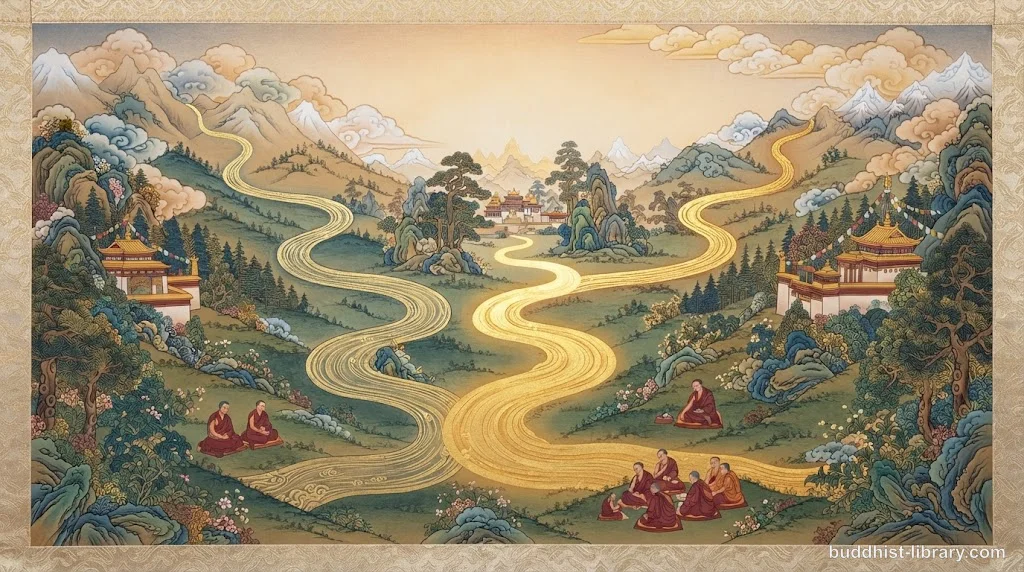
Samatha (calm) and vipassanā (insight) are not two separate meditation systems—they are complementary dimensions of a single path. Samatha steadies and unifies the mind, creating the clarity vipassanā needs to see things as they are. Without calm, insight is unstable; without insight, calm remains a temporary refuge. The Buddha taught both, and liberation requires both.
The relationship between samatha and vipassanā has sparked centuries of debate: which comes first? Can you practice one without the other?
The confusion arises partly from translation. “Tranquility” and “insight” sound like abstract opposites—fire and ice, mutually exclusive. But in the original Pali, samatha and vipassanā describe interdependent functions of a well-trained mind. They’re not rivals. They’re partners.
This article clarifies what each practice does, how they support each other, and why splitting them into “either/or” is a misunderstanding of the Buddha’s teaching.
What Is Samatha? The Function of Calm
Samatha means “calm” or “tranquility”—specifically, the calming of mental agitation and the unification of attention. When you practice samatha, you’re training the mind to settle on a single object (the breath, a kasiṇa, a phrase) and stay there, gently returning each time it wanders.
The result is samādhi: concentration, collectedness, a mind that is stable, bright, and workable. At deeper levels, samatha leads to the jhānas—states of absorbed concentration characterized by profound peace, joy, and equanimity.
What samatha does:
- Reduces the five hindrances (sensual desire, ill will, sloth, restlessness, doubt)
- Develops the five factors of jhāna (applied thought, sustained thought, rapture, happiness, one-pointedness)
- Creates a steady platform: a mind calm enough to see clearly
What samatha alone cannot do:
Samatha can bring bliss, refinement, and long stretches of mental peace. But here’s what it can’t do: uproot the deeper ignorance (avijjā) that fuels rebirth and suffering.
A meditator who masters the jhānas without insight may enjoy sublime states. But those states are conditioned and impermanent. When the concentration fades—and it always does—the underlying tendencies remain. Greed. Aversion. Delusion. Still there.
The Visuddhimagga (Path of Purification), the definitive Theravāda meditation manual compiled by Buddhaghosa, states clearly: samatha develops concentration; vipassanā develops wisdom. Both are necessary for liberation.
What Is Vipassanā? The Function of Insight
Vipassanā means “clear seeing” or “insight”—the direct perception of the three characteristics of all conditioned phenomena: impermanence (anicca), suffering/unsatisfactoriness (dukkha), and non-self (anattā).
Where samatha unifies the mind, vipassanā investigates experience. Instead of resting in one-pointed calm, the meditator observes the arising and passing of sensations, feelings, thoughts, and mental states, seeing their conditioned, unreliable, ownerless nature.
What vipassanā does:
- Reveals the impermanent, unsatisfactory, selfless nature of all phenomena
- Weakens and eventually uproots the ten fetters (saṃyojana) that bind beings to suffering and rebirth
- Leads progressively to the four stages of awakening: stream-entry (sotāpanna), once-returner (sakadāgāmī), non-returner (anāgāmī), and arahat
What vipassanā alone struggles with: Without a foundation of samatha, the mind attempting insight is like a lamp flickering in the wind—it may catch brief glimpses of impermanence, but it lacks the steadiness to sustain deep penetration. The five hindrances cloud perception; restlessness scatters attention; doubt undermines confidence. A scattered mind cannot clearly see the subtle arising and passing of phenomena.
Why the Buddha Taught Both Together
The Buddha did not separate samatha and vipassanā into rival schools. He taught them as paired wings (yuga-naddha), like the two wings of a bird—neither sufficient alone, but together enabling flight.
Consider the Mahāsaḷāyatanika Sutta (MN 149), where the Buddha explains the gradual training: moral conduct (sīla) leads to non-remorse; non-remorse to joy (pāmojja); joy to rapture (pīti); rapture to tranquility (passaddhi); tranquility to happiness (sukha); happiness to concentration (samādhi); and concentration to knowing and seeing things as they are (yathābhūta-ñāṇadassana)—which is vipassanā.
The sequence is not accidental. Concentration prepares the ground; insight does the liberating work. In another passage (AN 4.94), the Buddha describes four types of individuals:
- One who has calm but not insight (develops jhāna, but lacks wisdom)
- One who has insight but not calm (sees impermanence, but the mind is unstable)
- One who has neither
- One who has both (the ideal)
The teaching is unambiguous: liberation requires both. Calm without insight is a pleasant dead-end; insight without calm is shaky and incomplete.
The Practical Relationship: Which Comes First?
Traditionally, meditation teachers have answered this question in different ways, leading to what seem like competing systems. The reality is more flexible.
The Samatha-First Approach (Vehicle of Serenity)
The classical path outlined in the Visuddhimagga recommends establishing strong samatha first—ideally, mastery of at least the first jhāna—before turning to vipassanā. The reasoning:
- A concentrated mind is pliable, bright, and capable of sustained investigation
- Jhāna naturally suppresses the five hindrances, clearing the major obstacles
- Deep calm provides a stable refuge when insight becomes destabilizing
Once concentration is established, the meditator then directs that focused mind toward observing the three characteristics, dismantling clinging piece by piece.
The Vipassanā-First Approach (Dry Insight)
Some teachers—particularly in the Burmese vipassanā tradition (Mahasi Sayadaw, S.N. Goenka)—begin directly with insight practice, using only “momentary concentration” (khaṇika-samādhi) rather than full jhāna. The method:
- Observe each moment of experience as it arises and passes
- Note sensations, feelings, thoughts continuously
- Build concentration through the act of noting, rather than through one-pointed stillness
The result is sometimes called “dry insight” (sukkha-vipassanā) because it proceeds without the lubrication of deep jhānic bliss. It’s a leaner path—more stripped-down, but still effective. The suttas validate this: stream entry is possible with access concentration (upacāra-samādhi) alone.
The Buddha’s pragmatic middle: He didn’t mandate a single sequence. In the Yuganaddha Sutta (AN 4.170), he describes meditators who develop samatha first, then vipassanā; others who develop vipassanā first, then samatha; and still others who develop both in tandem (yuga-naddha, “yoked together”).
The key point: eventually, you need both. How you get there can vary.
How Samatha and Vipassanā Support Each Other
Rather than seeing them as separate practices, it’s more accurate to think of samatha and vipassanā as two functions the mind learns to perform:
- Samatha function: stabilizing, collecting, calming
- Vipassanā function: investigating, discerning, penetrating
In actual meditation, they interweave:
- You use samatha to steady attention on the breath
- As the mind settles, you begin to notice the breath’s impermanence—each in-breath arises and ceases, nothing stays the same
- That noticing is vipassanā
- The clarity of that seeing depends on the calmness you’ve cultivated
- The calmness deepens as clinging loosens through insight
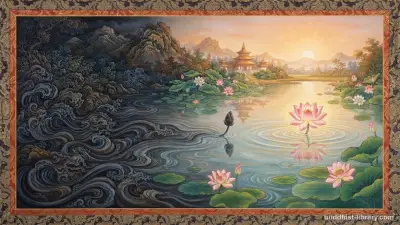
At advanced stages, the two become nearly indistinguishable. Ṭhānissaro Bhikkhu describes this in The Wings to Awakening: when samatha is fully developed, it naturally reveals the three characteristics; when vipassanā is ripe, it automatically generates samādhi. The distinction dissolves—what remains is a mind both still and penetrating, like a perfectly clear, undisturbed pond reflecting the sky without distortion.
Practical Guidance: Balancing Calm and Insight in Your Practice
For most meditators, the practical question is not “which path?” but “how do I bring more balance to my practice right now?”
Signs You Need More Samatha
- Your mind is constantly restless or scattered
- Insights feel fleeting, unstable, not “sticking”
- You’re overwhelmed by the speed or intensity of sensations
- Meditation feels like a battle rather than a settling
Remedy: Spend more time developing calm. Work with a simple object like the breath at the nostrils, counting breaths, or a single meditation phrase. Prioritize stability over investigation. Let the mind rest and unify.
Signs You Need More Vipassanā
- Your meditation is peaceful, but nothing seems to change
- You’re attached to pleasant meditation states
- Concentration is strong, but understanding of the Dhamma hasn’t deepened
- You use meditation as an escape rather than investigation
Remedy: Begin applying investigation. Notice the arising and passing of phenomena. Ask: “Is this permanent? Is this satisfactory? Is this me?” Observe how even the calmest state is conditioned, changing, unreliable.
The Middle Way: Practicing Both Together
Many contemporary teachers blend samatha and vipassanā from the start:
- Begin each session establishing a baseline of calm (5–10 minutes with the breath)
- Once settled, shift to mindful investigation: notice the breath’s texture, temperature, rhythm—see its changing nature
- When the mind wanders or becomes agitated, return to pure samatha
- When calm is re-established, resume investigation
This “yoked-together” approach mirrors the Buddha’s teaching in the Yuganaddha Sutta and prevents the common pitfalls of samatha-only (stagnation) or vipassanā-only (instability).
Common Misconceptions About Samatha and Vipassanā
Misconception 1: “Samatha is Hindu; vipassanā is uniquely Buddhist.”
False. The Buddha taught both. What’s uniquely Buddhist is the purpose: samatha is not an end in itself but a tool for developing the insight that liberates. Hindu samādhi practices aim for union or absorption; Buddhist samādhi aims for clarity that sees through clinging.
Misconception 2: “Vipassanā alone is enough; samatha is optional.”
Partial truth. Technically, yes—stream entry is possible with light concentration. But here’s what the texts don’t emphasize enough: every meditation master, ancient and modern, agrees that deeper samatha makes the path vastly easier, safer, and more stable.
Trying to do insight work with a wildly scattered mind? You’re threading a needle in an earthquake. It might work eventually. But why make it harder than it needs to be?
Misconception 3: “They’re two separate meditation techniques you do at different times.”
Misleading. In mature practice, they function simultaneously. The Visuddhimagga’s detailed stage-maps can give the impression they’re sequential, but the Buddha’s own instructions show them as complementary dimensions of wise attention (yoniso manasikāra).
Key Takeaways: The Unified Path
- Samatha calms and unifies the mind; vipassanā penetrates and liberates. One is not superior—both are necessary.
- The Buddha taught flexibility: some develop calm first, some insight first, some both together. All paths converge: you cannot reach full awakening without both.
- Samatha without insight = temporary peace. Vipassanā without calm = shaky, unstable insight.
- At advanced stages, the distinction dissolves: a fully concentrated mind naturally sees impermanence; a fully insightful mind naturally generates calm.
- Practical balance: If your meditation is scattered, develop more samatha. If it’s stagnant, develop more vipassanā. Most of us need both, in tandem, adjusted to current conditions.
The unity of samatha and vipassanā is not a philosophical compromise—it’s the Buddha’s pragmatic recognition that a liberated mind is both calm and clear, both stable and penetrating, both at peace and awake.
Read more:
- Samatha and Vipassanā: The Two Wings of Buddhist Meditation—a complete comparison of calm and insight practices, with practical examples and their distinct results
- What Are the Jhānas? Understanding Meditative Absorption in Buddhism—explore the eight progressive states of deep concentration that samatha develops, from first jhāna to the formless attainments
- Vipassanā: Insight Meditation Practice in Buddhism—step-by-step guide to insight practice, including how to observe the three characteristics and navigate the stages of purification
📖 Source / license: Visuddhimagga (Path of Purification), Bhikkhu Bodhi; MN 149 Mahāsaḷāyatanika Sutta, SuttaCentral; The Wings to Awakening, Ṭhānissaro Bhikkhu, Access to Insight
Frequently asked questions
Can I practice samatha alone without vipassanā?
Yes, samatha alone can bring deep states of calm and the jhānas, but without vipassanā, it won't lead to liberation (nibbāna). The Buddha emphasized that both are needed—samatha provides the stable foundation, vipassanā the penetrative insight that ends suffering.
Which should I practice first—samatha or vipassanā?
Traditional advice varies: the Visuddhimagga recommends establishing samatha first to build a steady, workable mind. However, some teachers begin with vipassanā, using a lighter level of calm. Both approaches work; the key is that eventually you need both working together.
Is 'dry insight' (pure vipassanā) without jhāna valid?
Yes, the Buddha taught that stream entry is possible without deep jhāna, using only access concentration (upacāra-samādhi). This is the 'dry insight' approach. However, most texts emphasize that stronger samatha makes the path smoother and insight more stable.
How do I know when I have enough samatha to do vipassanā?
A practical sign is when you can sustain attention on your meditation object for several minutes without gross distraction—this is at least access concentration. You don't need full jhāna, but you do need a mind that isn't constantly pulled away by wandering thoughts or restlessness.